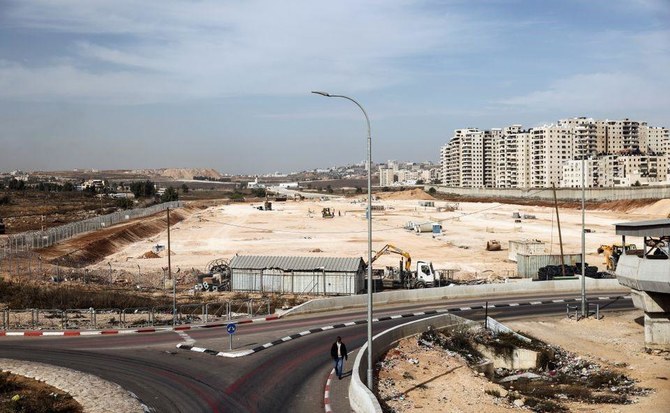
JERUSALEM: Israeli authorities on Monday advanced a plan to build nearly 500 homes in a new settlement in east Jerusalem that rights groups say will further sever it from the nearby Palestinian city of Bethlehem and the southern West Bank.
The planned Givat HaShaked settlement is part of a cluster of settlements on the southern edge of east Jerusalem, many of which have already been built up into full-fledged residential neighborhoods. Critics say they further undermine any hopes for a two-state solution.
Ir Amim, an Israeli rights group that closely follows developments in Jerusalem, said the plan for the settlement was approved on Monday to be deposited for objections, a key step in a bureaucratic process that could continue for months or years before construction begins.
There was no immediate comment from the Jerusalem municipality. City officials, who consider the settlements to be ordinary Jewish neighborhoods, have previously said they are committed to building in all areas of Jerusalem for the benefit of Jewish and Arab residents.
Israel captured the West Bank and east Jerusalem in the 1967 Mideast war and has built settlements across both territories that are now home to some 700,000 Jewish settlers. The Palestinians want both territories to form part of their future state and view the settlements as the biggest obstacle to peace. Most countries consider the settlements to be illegal.
Israel annexed east Jerusalem in a move not recognized by the international community and considers the entire city its unified capital. Palestinian residents of the city face systematic discrimination, especially when it comes to urban planning, making it extremely difficult for them to build new homes or expand existing ones.
The US and other Western countries have pressed Israel to rein in settlements, with little success. Israel’s outgoing government, which included dovish parties and even an Arab faction, approved the construction of thousands of settler homes despite US objections.
The latest settlement will be built adjacent to the Palestinian neighborhood of Beit Safafa, which is already mostly encircled by settlements, further preventing its growth.
“While there’s constant investment, robust development for Israelis, there’s a complete suppression of urban planning (for Palestinians), which ultimately serves as a mechanism of displacement for Palestinians because it pushes them out of the city,” said Amy Cohen, the director of advocacy for Ir Amim. “They have no means to build or expand their neighborhoods.”


![]()

Israel advances plans for another east Jerusalem settlement
Short Url
https://arab.news/yrggk
Israel advances plans for another east Jerusalem settlement
- The planned Givat HaShaked settlement is part of a cluster of settlements on the southern edge of east Jerusalem, many of which have already been built up into residential neighborhoods
- Palestinian residents of the city face systematic discrimination, especially when it comes to urban planning, making it extremely difficult for them to build new homes or expand existing ones


Latest updates


Recommended


© 2026 SAUDI RESEARCH & PUBLISHING COMPANY, All Rights Reserved And subject to Terms of Use Agreement.