

Bupa Arabia at forefront of digital transformation in health insurance sector

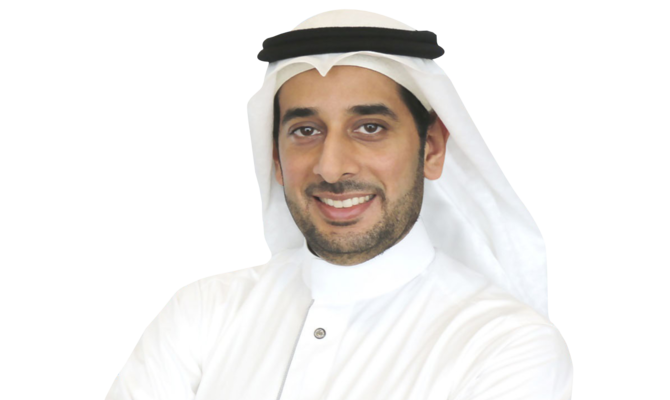
Al-Shereef Hamideddin, director of marketing and customer experience design at Bupa Arabia.
Short Url
Updated 20 August 2022
Follow

Bupa Arabia at forefront of digital transformation in health insurance sector

The COVID-19 pandemic accelerated the digital transformation of the Saudi insurance market, aided in part by the Kingdom’s strong telecommunications and information technology infrastructure, the availability of 4G and 5G network services, and the widespread usage of smartphones. This launched a frantic race among insurance companies to develop their apps to serve millions of customers, meet their needs in ways they want, and at their convenience.

This competition among insurance companies to win the digital transformation race has resulted in major development of the sector, which is a key pillar of the national economy. The insurance sector grew by 8.4 percent during 2021, and the total written premiums reached SR42 billion ($11.2 billion), according to an annual report of the Saudi Central Bank.

Bupa Arabia has been at the forefront of Saudi insurance companies that adopted their operations to the evolving technological landscape and has played a leading role in the digital transformation of the insurance sector, pioneering the development of cutting-edge software solutions and apps.

Al-Shereef Hamideddin, director of marketing and customer experience design at Bupa Arabia, said the company has established a special department to lead its digitization efforts. This department has been instrumental in designing the company’s strategies, with the aim of improving the delivery of health services to its customers.

Moreover, Bupa Arabia has made significant investments to develop digital solutions, which in turn has contributed to enhancing the customer experience.

“The contribution of Bupa Arabia in advancing the development of this sector, includes the development of our app, which facilitates members to access many services from the comfort of their homes, such as booking appointments in hospitals, selecting clinics and specialties, choosing where to receive medication, receiving medical approvals, as well as booking virtual appointments with specialized doctors in less than a minute.”

These features, which previously took longer, are now available at the touch of a button,” Hamideddin said, adding that the app processes hundreds of thousands of approvals in an hour.

He pointed out that 22 million transactions have so far been carried out through the easy-to-use app, which has a rating of 4.5 on the App Store. Moreover, 98 percent of reimbursement claims have been processed digitally.


Abdul Latif Jameel Motors, Toyota conclude Phase 2 of hydrogen mobility pilot

Updated 10 February 2026
Follow

Abdul Latif Jameel Motors, Toyota conclude Phase 2 of hydrogen mobility pilot

Abdul Latif Jameel Motors, the authorized distributor of Toyota vehicles in Saudi Arabia, together with Toyota Motor Corporation and Toyota Tsusho Corporation, has completed the second phase of the hydrogen mobility pilot in collaboration with the Engineering College at Princess Nourah bint Abdulrahman University and supporting entities at the university’s campus.
The pilot ran from Jan. 26 to 28, in alignment with the MoU signed between PNU and the Ministry of Energy for the implementation and deployment of hydrogen fuel cell mobility pilot projects. The program’s opening day ceremony featured prominent government, academia, and industry figures, who gathered to reaffirm the long-term importance of hydrogen solutions in Saudi Arabia.
The first phase, completed last September, focused on feasibility and initial testing, while the second focused on scalability, operational expansion, and diversification of hydrogen-powered mobility and stationary solutions within the university environment.
In addition to the previously deployed Toyota Mirai fuel cell electric vehicles, the pilot included the Caetano H2.City Gold hydrogen fuel cell bus, the Toyota hydrogen fuel cell forklift, and the GEH2 stationary hydrogen generator, all powered by Toyota’s hydrogen fuel cell technology. Together, these additions support a broader assessment of hydrogen technology across multiple uses.
Mazin Ghazi Jameel, managing director of marketing operations, Toyota, Abdul Latif Jameel Motors, said: “The second phase of this hydrogen pilot represents a strategic step forward in advancing hydrogen mobility and stationary solutions in the Kingdom. By expanding the scope of hydrogen-powered transport and stationary applications at Princess Nourah bint Abdulrahman University, we are moving beyond exploration toward scalability, gaining practical insights into how this technology can deliver long-term value at scale while supporting Saudi Vision 2030’s sustainability objectives.”
Nobuyuki Takemura, chief representative of the Middle East regional office, Toyota Motor Corporation, said: “Toyota is proud to work alongside the Kingdom of Saudi Arabia and our valued partners to advance hydrogen mobility. Through practical pilots such as this, we are strengthening real-world understanding of hydrogen applications, engaging students directly and inspiring the next generation to shape the future of clean transport. This reflects Toyota’s multi-pathway approach to carbon neutrality, grounded in the belief that progress is accelerated when innovation is tested in real environments.”
Saud Alsultan, deputy general manager of Toyota Tsusho Corporation, Saudi Arabia, added: “This second phase marks an important milestone in translating hydrogen mobility from pilot testing into scalable real-world applications. By expanding beyond passenger vehicles to include buses and stationary solutions, we are gaining valuable insights into how hydrogen can support integrated mobility ecosystems and contribute meaningfully to Saudi Arabia’s clean energy and sustainability ambitions.”
The initiative builds on Abdul Latif Jameel Motors and Toyota’s growing portfolio of Saudi hydrogen mobility and research projects. This includes the Jeddah hydrogen taxi pilot, the Makkah Caetano H2.City Gold bus trials, and a region-specific fuel cell research collaboration with King Abdullah University of Science and Technology.
The conclusion of both phases reflects Abdul Latif Jameel Motors, Toyota Motor Corporation, and Toyota Tsusho Corporation’s long-term commitment to be part of the Kingdom’s sustainability journey in mobility and beyond through a diversified, market-responsive approach.