

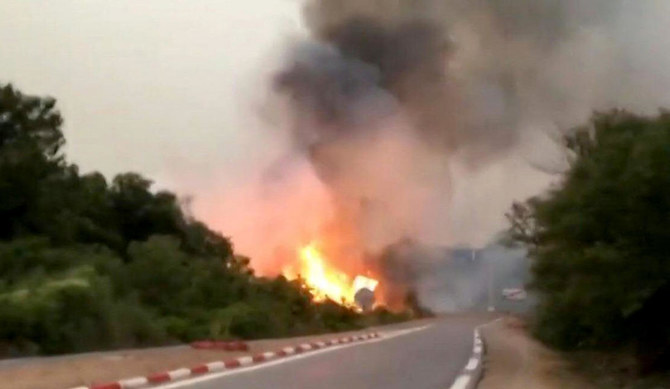

ALGIERS: Wildfires which killed at least 38 people across northern Algeria have been contained, firefighters said Friday, as volunteers mobilized to help those who lost homes and livelihoods in the tragedy.
“All of the fires have been completely brought under control,” said fire brigade Col. Farouk Achour, of the civil defense department.
Fierce fires have become an annual fixture in Algeria’s parched forests where climate change exacerbates a long-running drought.
Since the beginning of August, almost 150 blazes have devastated hundreds of hectares.
BACKGROUND
Experts have called for a major effort to bolster the firefighting capacity of Algeria, which has more than four million hectares of forest.
In the badly hit region of El Tarf, farmers examined the charred remains of their animals killed when flames swept through the area.
The fire “didn’t spare anything,” said one farmer, Hamdi Gemidi, 40, who walked in rubber sandals on the ash-covered earth where the carcasses of what appeared to be sheep lay.
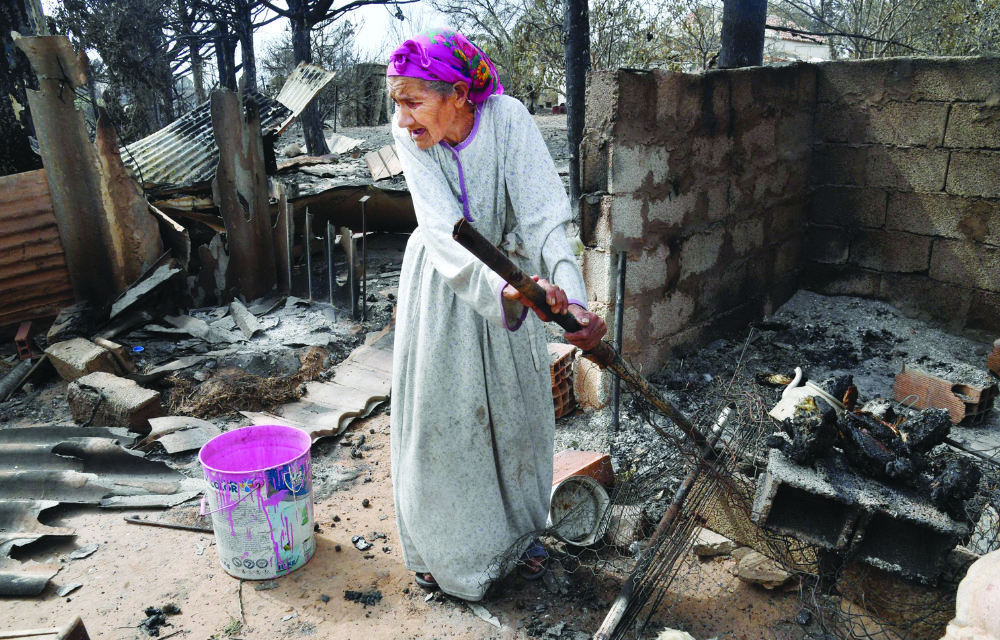
An elderly Algerian woman reacts inside the ruins of her home. (AFP)
“This is our livelihood ... We have nowhere to go and nothing to make a living from.”
Ghazala, 81, said she had been rescued along with a few animals after flames came dangerously close to her house.
“I don’t know where to go now. Should I stay in the fields, forests or mountains?” she asked, on the verge of tears.
“I really don’t know where I should go.”
The Justice Ministry launched an inquiry after Interior Minister Kamel Beldjoud suggested some of this year’s blazes were started deliberately, and authorities on Thursday announced four arrests of suspected arsonists.
But officials have also been accused of a lack of preparation, with few firefighting aircraft available despite record casualties in last year’s blazes and a cash windfall from gas exports with global energy prices soaring.
Authorities said they deployed more than 1,700 firefighters over Wednesday and Thursday.
The dead included more than 10 children and a similar number of firefighters, according to multiple sources including local journalists and the fire service.
Most were in the El Tarf region near Algeria’s eastern border with Tunisia, an area which was sweltering earlier this week in 48 degree Celsius heat.
Algerians both at home and in the diaspora have mobilized to collect clothing, medicines and food to help those affected.
Late on Thursday, dozens of trucks carrying humanitarian aid from various cities arrived in El Tarf, regional authorities said.
European Union foreign policy chief Josep Borrell also offered support to Algerians “hard-hit by the terrible fires.”
Writing on Twitter, he said: “The EU stands by your side in these difficult times.”
Twelve people burned to death in their bus as they tried to escape when fire ripped through an animal park, a witness who asked not to be named said.
When “nobody came to help us, neither the fire service nor anyone else,” park staff assisted families with young children to escape as flames encroached on the area, Takeddine, a worker at the park, said.
Fires last year killed at least 90 people and seared 100,000 hectares of forest and farmland in the country’s north.
Experts have called for a major effort to bolster the firefighting capacity of Algeria, which has more than 4 million hectares of forest.
Algeria had agreed to buy seven firefighting aircraft from Spanish firm Plysa, but canceled the contract following a diplomatic row over the Western Sahara in late June, according to specialist website Mena Defense.
Spain, too, has this year battled hundreds of wildfires following punishing heat waves and long dry spells.
On Thursday, Algeria’s Prime Minister Aimene Benabderrahmane defended the government’s response.
He said his country had ordered four new firefighting aircraft but they would not be available until December.
The prime minister added that strong winds had exacerbated the fires and authorities deployed “all their means” to extinguish them.


