



JEDDAH: Hadeel Al-Obaid, a Saudi artist from Eastern Province, with over 20 years of farming experience, took a leap of faith when she turned her childhood hobby into a unique business idea.
Offering hand-painted pot bags, Al-Obaid was creative enough to mix between art, farming, and gifting.
She told Arab News: “I inherited the love of farming from my late father — he taught me a lot of gardening skills since I was 13. So, at first, I used to share on social media tips and tricks on how to take care of plants and a few posts of my paintings.”
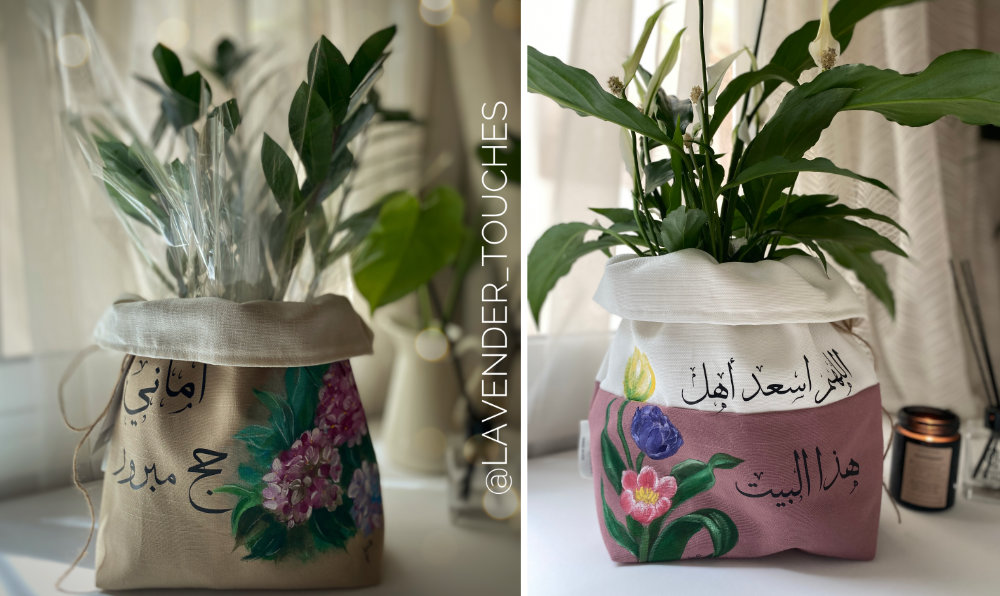
Al-Obaid offers a fusion of art and farming through her project. (Photo/Hadeel Al-Obaid)
Al-Obaid has gained extensive knowledge about plants. “I have a good relationship with my plants, I want everyone to benefit from my experience — and I am glad that my art-related business is also related to farming,” she said.
During the COVID-19 pandemic, Al-Obaid had the time to practice painting styles inspired by Korean and Japanese art, and also by her indoor home garden and flowers. That was when the idea of her project, “Lavender touches,” was sparked.
FASTFACTS
• Offering hand-painted pot bags, Hadeel Al-Obaid was creative enough to mix between art, farming, and gifting.
• Al-Obaid says the main aim of her project, next to offering a fusion between painting and plants, is to change the gifting concept of flower bouquets.
“As a self-taught artist, in the beginning, I started with painting on the table serving mats, dinner table linens, and coasters, which (was) admired by many. Then, due to the number of indoor and outdoor plants I am surrounded by, I thought of adding a touch of art to these pots by covering them with hand-painted fabric bags to make them look more vibrant.”
Al-Obaid makes these hand-painted pot bags from scratch, sewing the bags according to pot size, and then she selecting a drawing to apply to the fabric, usually flowery. Then she colors it using paints, and finally, she applies an interesting Arabic phrase or a quote.
“I draw only flowers on the canvas bags after I sew them, most of which are inspired by my home garden (plants) such as peace lily, tulip, French hydrangea, common zinnia, Arabian jasmine, lavender, and pansy,” she said.
The name of her project, “Lavender,” is also inspired by her favorite color and flower.
Al-Obaid said that the main aim of her project, next to offering a fusion between painting and plants, is to change the gifting concept of flower bouquets.
“I personally think that the idea of gifting a flower bouquet to anyone on different occasions is respected, however, it is over-consumed and it really lacks the element of surprise, and if replaced with a well-decorated plant of any type, it will be more valued,” she said.
Al-Obaid also offers custom-made pot bags with customers’ selection of colors, shapes, types of flowers painted, English or Arabic names, or phrases about different occasions, as well as different types of indoor home plants and flowers.
“Each painting takes from an hour to three hours depending on the flower type,” she said.
The fabric pot bags also feature a water resistant color of a velvety texture, to maintain the beauty of the paintings once the plant is splashed with water, and can be found on Instagram @lavender_touches.


