Saudi artist with disability draws praise for combating stereotypes

1 / 4
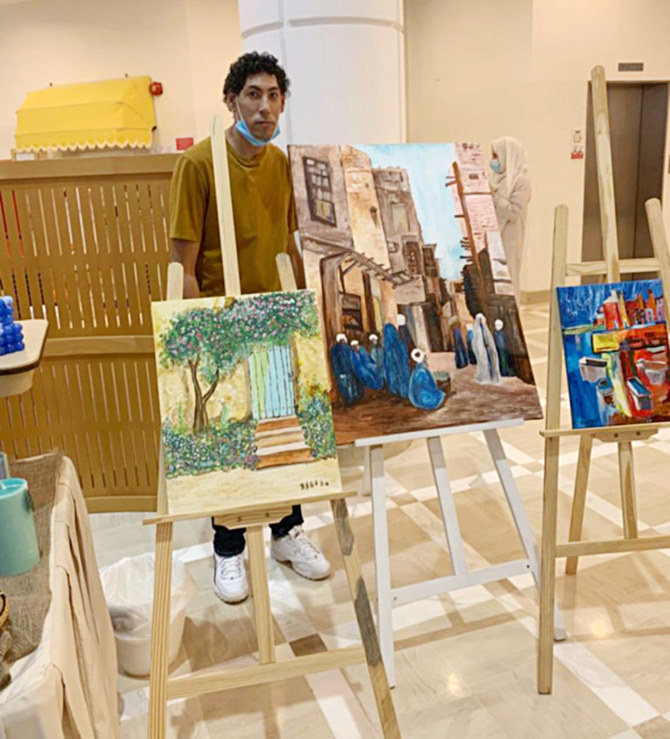
Ahmed Hakeem’s paintings were displayed at Markaz Al-Oun Bazaar, which is a help center and nonprofit organization that helps people with intellectual disabilities. (Supplied)
2 / 4
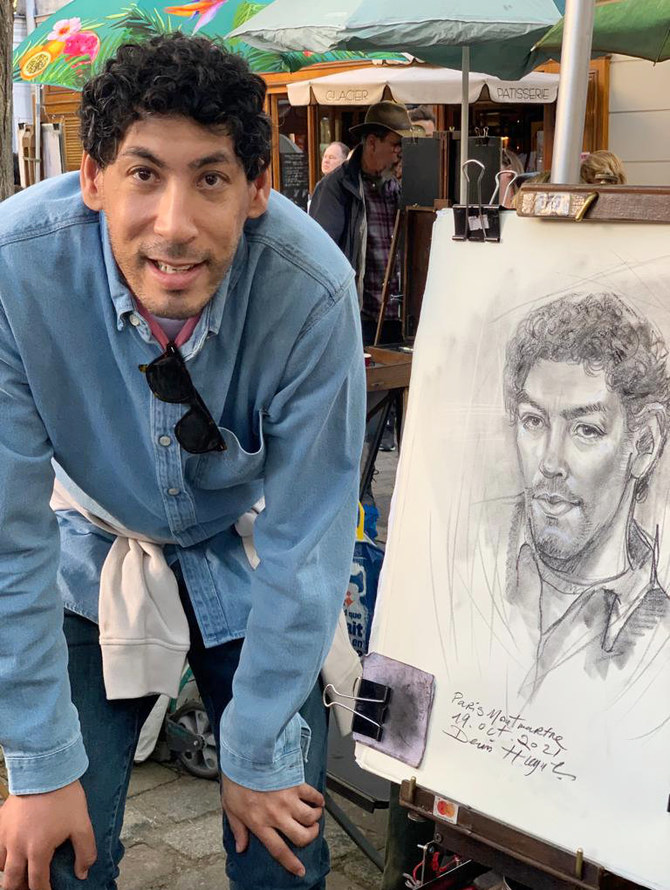
Ahmed Hakeem’s paintings were displayed at Markaz Al-Oun Bazaar, which is a help center and nonprofit organization that helps people with intellectual disabilities. (Supplied)
3 / 4
Ahmed Hakeem’s paintings were displayed at Markaz Al-Oun Bazaar, which is a help center and nonprofit organization that helps people with intellectual disabilities. (Supplied)
4 / 4
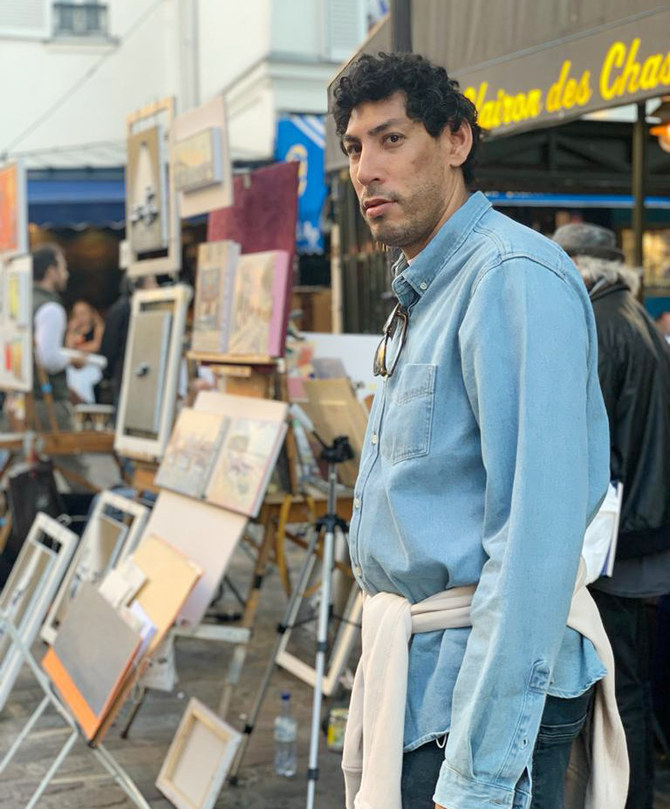
Ahmed Hakeem’s paintings were displayed at Markaz Al-Oun Bazaar, which is a help center and nonprofit organization that helps people with intellectual disabilities. (Supplied)
Short Url
Updated 08 August 2022
Follow

Saudi artist with disability draws praise for combating stereotypes

  • Ahmed Hakeem’s love of creativity helps him to forget the difficulties he faces to draw some amazing art pieces
  • Hakeem has not let his disability be an impediment to what he likes doing, which is painting

RIYADH: With joy, Ahmed Hakeem holds his brush, starts picking vibrant colors, and then he paints cubic and abstract shapes on an empty canvas.

Hakeem is a 34-year-old Saudi artist who has a mild intellectual disability. Individuals with mild ID are slower in all areas of conceptual development and social and daily living skills.

But Hakeem’s love of art helps him to forget the difficulties he faces as a person with a disability to draw some amazing art pieces. He has not let his disability be an impediment to what he likes doing, which is painting.
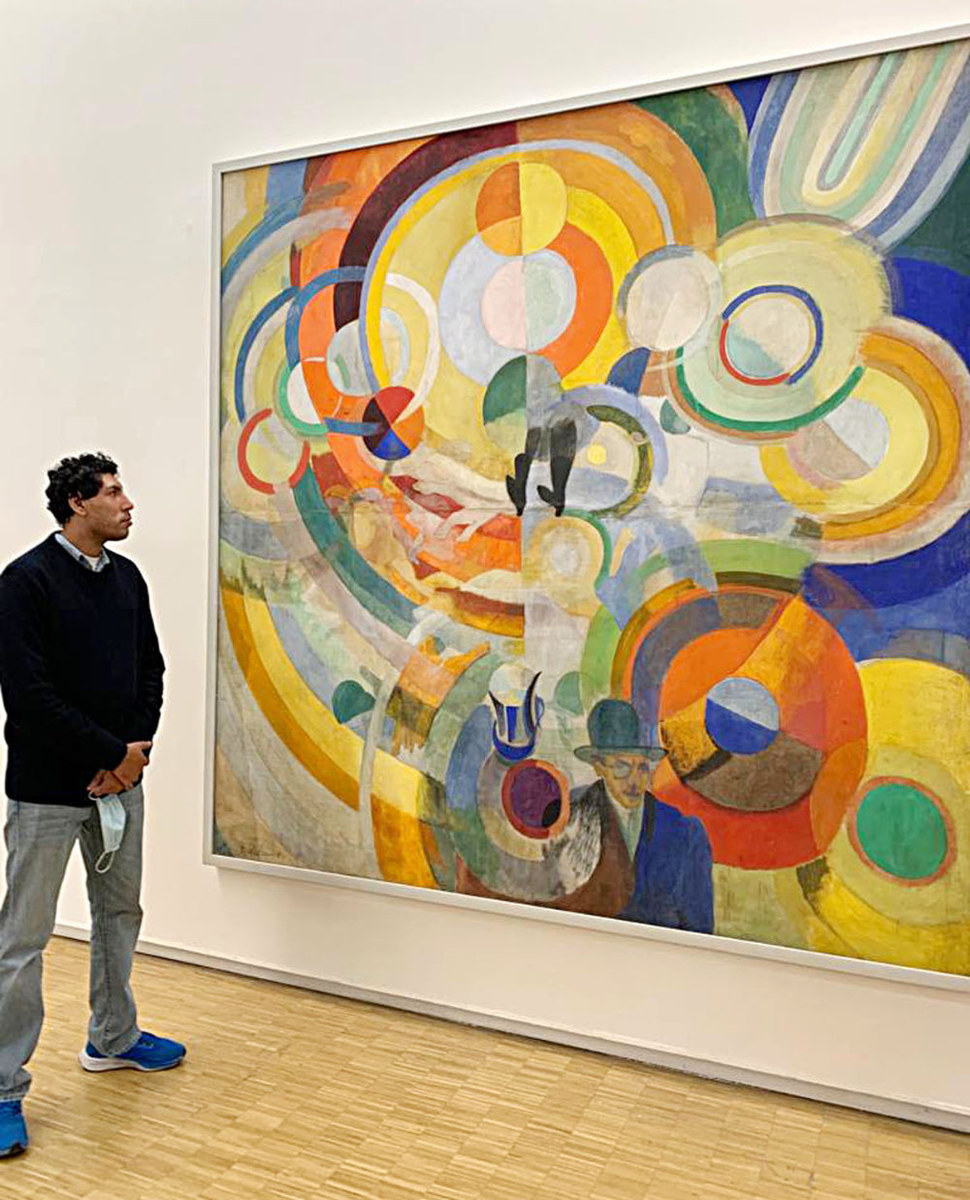
Not only is he a dab hand at painting, but he also enjoys a variety of sporting activities, including basketball, swimming and running, as well as hiking, ping pong and padel.

FASTFACTS

• Hakeem is a 34-year-old Saudi artist who has a mild intellectual disability. Individuals with mild ID are slower in all areas of conceptual development and social and daily living skills.

• He has not let his disability be an impediment to what he likes doing, which is painting.

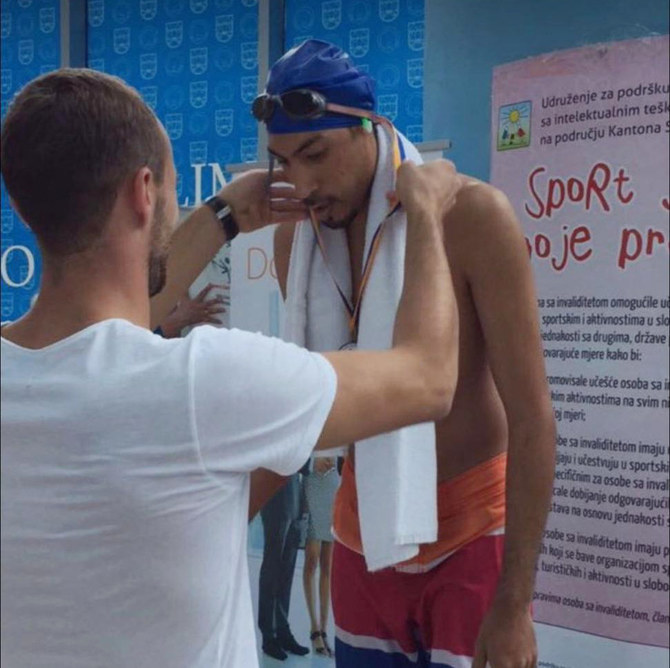
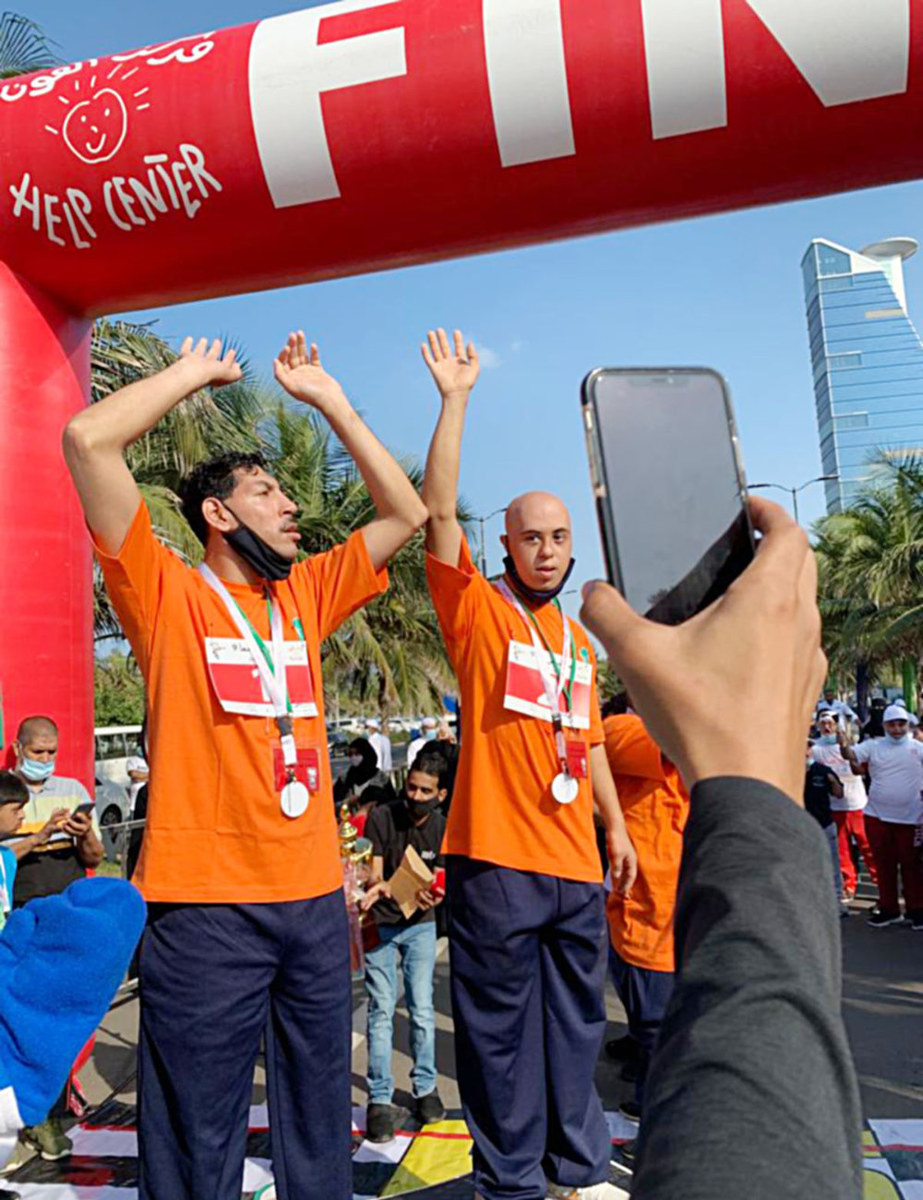
• He is also an athlete. He is a good swimmer, he plays basketball, he loves running, he has won bronze and silver medals in sports.

His paintings were displayed at Markaz Al-Oun Bazaar, which is a help center and non-profit organization that helps people with intellectual disabilities, and he wants to have his own gallery in the future.

Hakeem, who works at Juffali Heavy Equipment as an assistant, also talked about how hard it is for people with disabilities to find a good job.
“You need to know about the challenges that I am having with the community in general. Most people with disabilities are usually unemployed and don’t have access to powerful governmental aid, but their families have to enroll them in special clubs, and this can be financially stressful to the parents, so there is a lack of community and activities for us,” Hakeem told Arab News.

Noura Hakeem, his sister, said: “Because Hakeem looks normal and is not in a wheelchair, many places we go, they see him as a normal person, and every time we go out, I have to have proof that he is mentally challenged, which is very hard.”

“Even though the plane’s tickets are more expensive than the economy ticket and the discount they give us isn’t that much, so basically we book him a normal economy ticket but hopefully with time this is going to change soon because there is more attention by the authorities on people with disabilities,” she said.

According to APD, the official association of people with disabilities, the percentage of people with disabilities in the Kingdom is 7.1 percent, or 1,445,723 people out of a population 32.94 million. The association is set to organize its efforts and build an integrated institutional system to remove barriers to people with disabilities and empower them to live in society without discrimination.


Rare sighting of critically endangered leatherback turtle in Red Sea

Updated 05 February 2026
Follow

Rare sighting of critically endangered leatherback turtle in Red Sea

  • Turtles travel thousands of kilometers to Red Sea
  • Nesting 6,500km away in India’s Andaman Islands

RIYADH: Saudi Arabia’s National Center for Wildlife has documented a rare sighting of a leatherback sea turtle in the Red Sea, marking a significant biological record for one of the planet’s most critically endangered marine species.

The sighting occurred approximately 30 km off the coast of Al-Qunfudhah within the Blue Holes Protected Area, a newly established marine reserve, according to a recent report from the Saudi Press Agency.

The NCW said the presence of a leatherback in these waters was an exceptional event.

Recognized as the largest turtle species on Earth, the leatherback can weigh up to 900 kilograms. It has a unique leathery, black carapace — distinguished by five longitudinal ridges rather than a hard bony shell — and able to dive to depths exceeding 1,000 meters.

Shutterstock image

Noting the species’ migratory nature, the center explained that leatherbacks travel thousands of kilometers foraging for jellyfish. The specimen likely navigated through the Bab Al-Mandeb Strait in search of food.

This is considered a remarkable journey, the NCW said, noting that the nearest known populations reside in the Indian Ocean, spanning waters from South Africa to Sri Lanka (roughly 7,000 to 8,000 km away).

The closest known nesting grounds are located in India’s Andaman Islands, approximately 6,500 kilometers away. No nesting activity has been recorded in the Red Sea.

According to the Red List of the International Union for Conservation of Nature, the leatherback is Critically Endangered in the Indian Ocean.

While data for the Red Sea and Arabian Gulf is scarce, recent isolated sightings include a juvenile recorded in Jordan in December 2025 and another off Djibouti in 2019.

The NCW emphasized that these rare appearances highlight the ecological importance of the Kingdom's marine conservation efforts in the Red Sea.

The center pointed to the Farasan Islands Marine Protected Area, along with the new Blue Holes and Ras Hatiba reserves, as critical sanctuaries that could support the expansion in range of such endangered species.