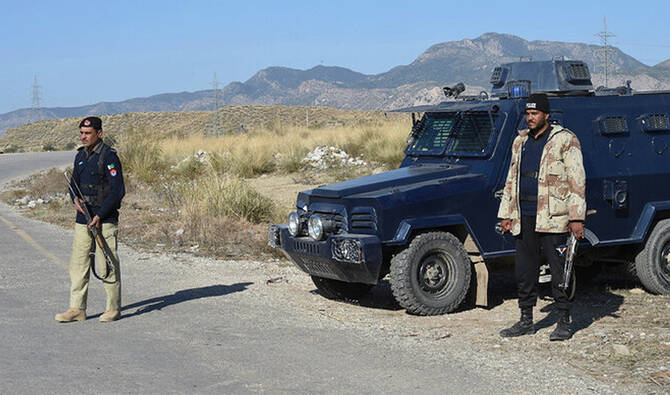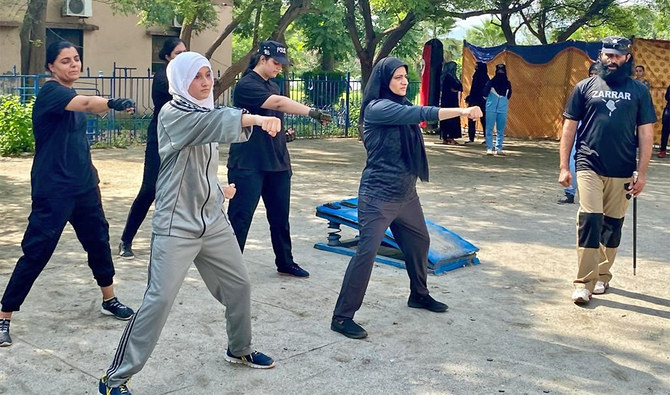

ISLAMABAD: Over two dozen students have enrolled in a self-defense course launched by Islamabad Police earlier this month, with most participants saying last year’s headline-grabbing murder of Noor Mukadam was the reason they had decided to join the program.
The body of Noor Mukadam, 27, was found in Islamabad on July 20 last year. Police charged Zahir Jaffer, from one of Pakistan’s wealthiest families and a childhood friend of the victim, with the murder that dominated headlines unlike any other recent crime against women in Pakistan. Jaffer was sentenced to death this February.
Investigators said Jaffer lured Mukadam, the daughter of Pakistan’s former envoy to South Korea, to his home, held her there for two days and then brutally murdered her.
Participants at the two-week-long self-defense course that began on July 18 and promises to introduce trainees to small arms, firing practice and unarmed combat said Mukadam’s brutal killing had drawn them to the training.
“I thought about Noor Mukadam when I heard about the self-defense course organized by the police and decided to learn how to protect myself in difficult situations,” Sineen Jan, a student from Islamabad, told Arab News this week.
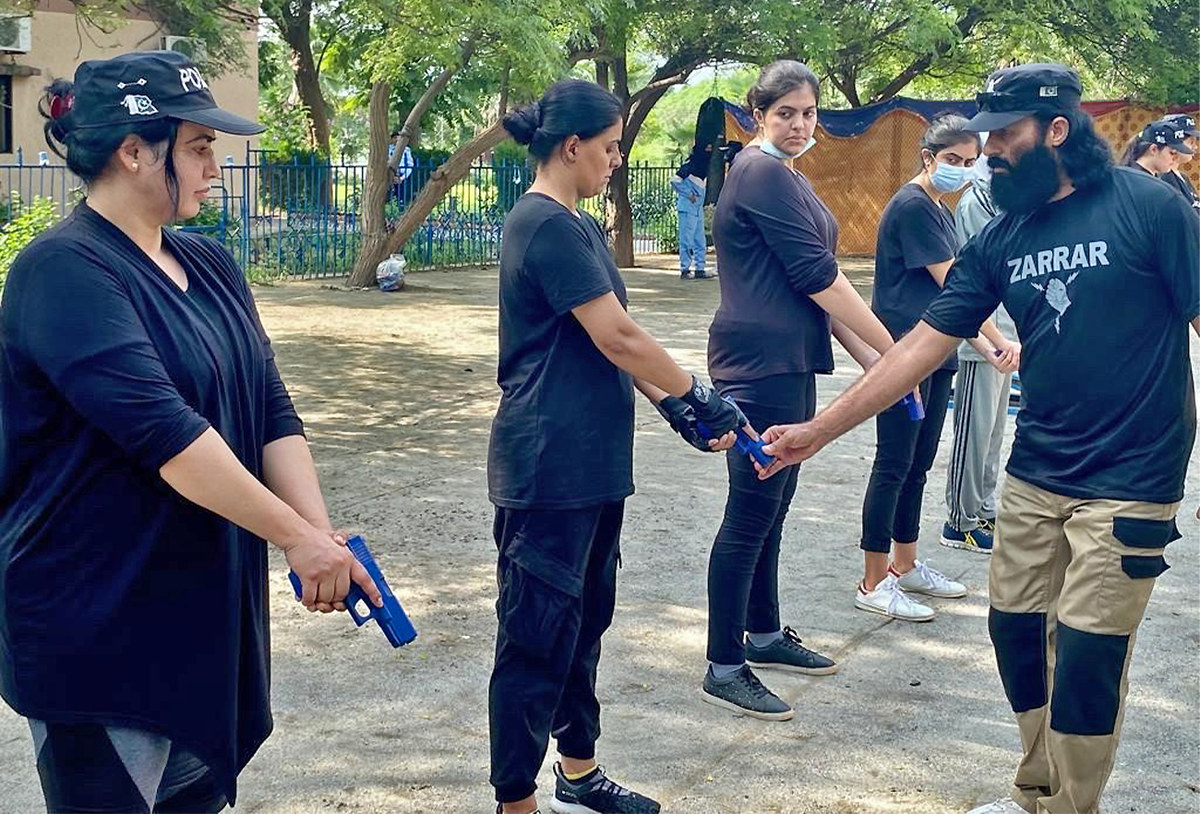
Participants of a self-defense course organized by the Islamabad Police learn to handle weapons in Islamabad, Pakistan, on July 26, 2022. (AN Photo)
In May 2021, Islamabad Police established a Gender Protection Unit (GPU) to handle cases of harassment and violence against women. The special police division has since registered 547 cases of gender-based violence, 164 complaints of harassment, and 116 threats of abuse toward women.
Hundreds of women are killed in Pakistan each year and thousands more are victims of brutal violence, but few cases get sustained media attention and only a small fraction of perpetrators are ever punished.
Maria Mahmood, a senior superintendent of police supervising the course, said the aim of the program was to equip women with essential skills to help them handle difficult and threatening situations.
A majority of participants of the program, she added, were aged between 18 and 30 years.
“As police officials, we are responsible for public safety and security,” Mahmood said. “We are trying to provide an opportunity to people to get some training where women and girls can come and learn about self-defense since it will not only boost their confidence but also give them an idea of how to handle challenging situations.”
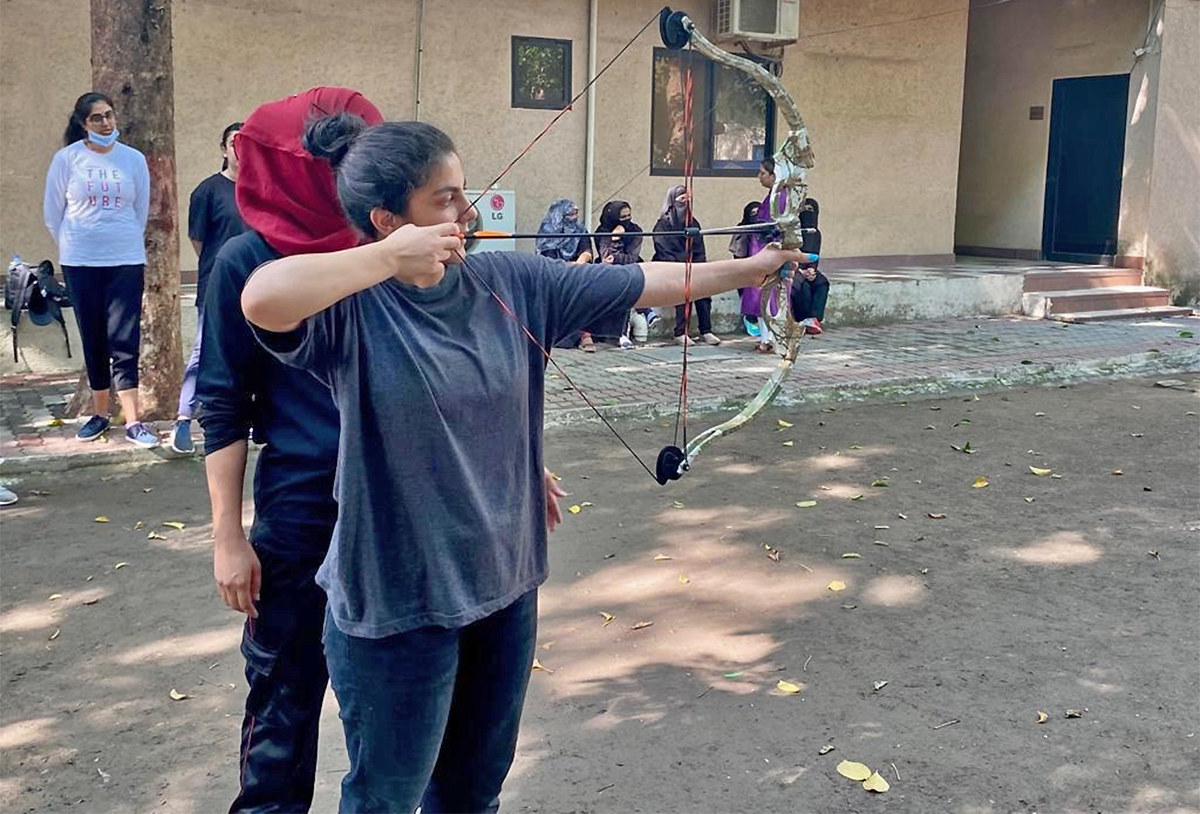
Participants of a self-defense course arranged by Islamabad Police learn archery in Islamabad, Pakistan, on July 26, 2022. (AN Photo)
Incidents like the Mukadam murder had raised awareness among women, she said, and many now wanted to learn self-defense skills.
“With women occupying more public spaces, they are required to step out of their comfort zone for work, education and other day-to-day needs,” she added. “When they are out of their homes, they can confront situations where they need to protect themselves.”
The self-defense course, Mahmood hoped, would also bridge the gap between Pakistani women and police and create a greater level of trust between them.
“Several cases of gender-based violence have been reported to the police during the last few months,” the policewoman said. “That is why we are trying our best to have a mechanism to address this issue where women and girls are not afraid of coming to the police to report incidents threatening their safety.”
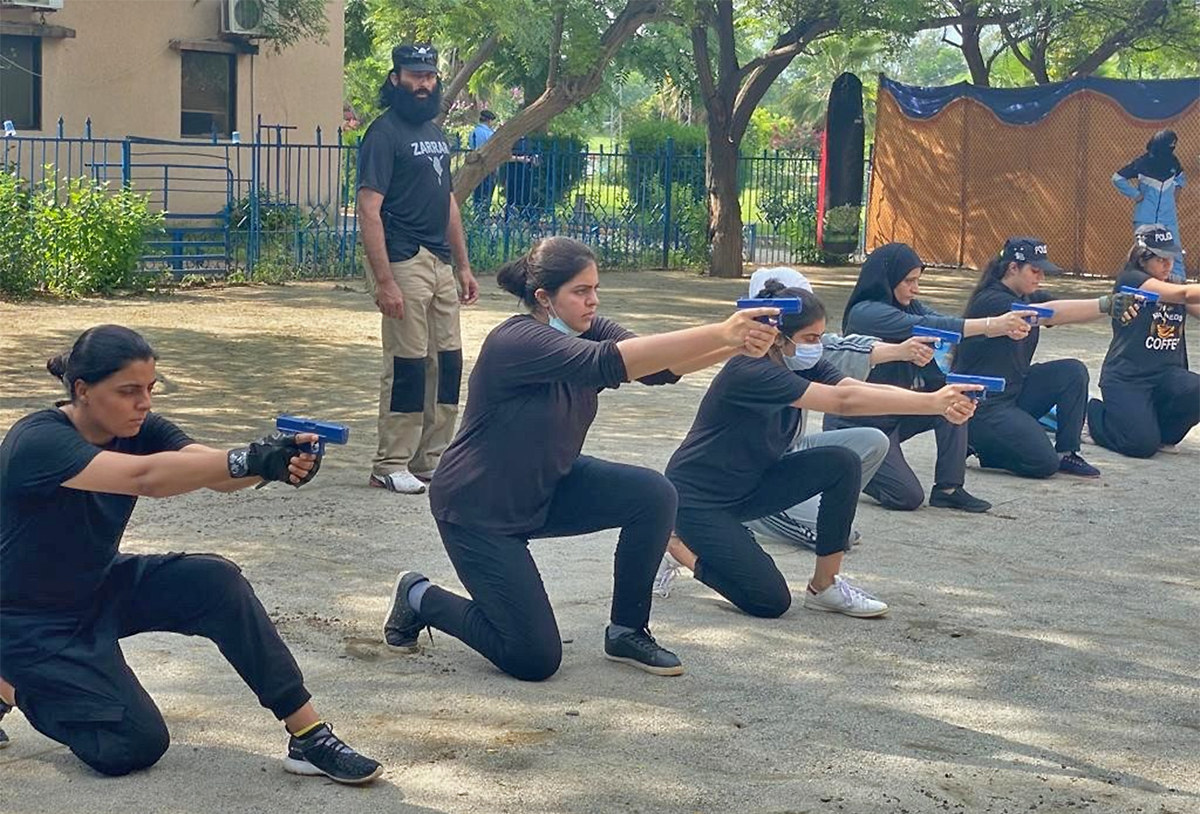
Participants of a self-defense course organized by the Islamabad Police learn to handle weapons in Islamabad, Pakistan, on July 26, 2022. (AN Photo)
Jan, the student from Islamabad, said in just a few days of training, the women had “learned quite a lot about how to defend ourselves in public.” She added that the program, which cost Rs20,000 per person, also included swimming, horse riding, archery and physical training lessons.
Sana Khalid Khan, a lawyer from Islamabad, said the course had improved her physical strength and instilled a sense of empowerment by giving her a better understanding of legal procedures related to the safety of women in Pakistan.
“Women are not mentally strong and don’t know how to address many problems,” she said. “This course particularly enables us to cope with these challenges.”
Fatima Nawaz, a student from Islamabad, said women needed to learn to defend themselves instead of waiting for others to come to their rescue.
“I believe that police can defend us, but there are times when they cannot be reached, so we have to equip ourselves and know how to fight for our protection,” she told Arab News.
“Things have changed after the Noor Mukadam murder case,” she said. “People are more aware now that crime can happen anywhere and it is not confined to any specific place or scenario.”