China In-Focus — Central Bank’s daily cash injection falls; Industrial profits rebound; Q2 smartphone sales fall 

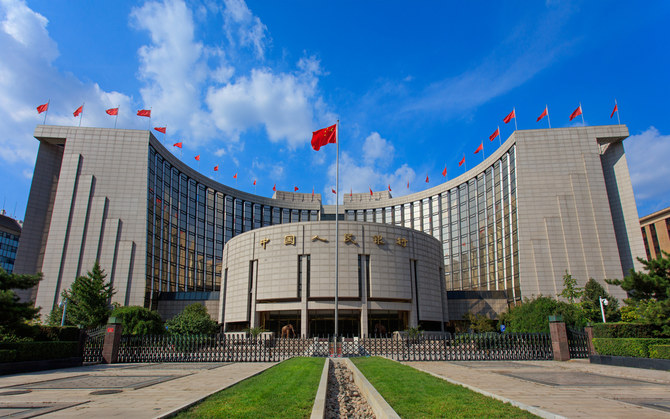
The People’s Bank of China ploughed 2 billion yuan ($295.76 million) through seven-day reverse repos on Wednesday. (Shutterstock)
Short Url
Updated 27 July 2022
Follow

China In-Focus — Central Bank’s daily cash injection falls; Industrial profits rebound; Q2 smartphone sales fall 

RIYADH: China’s central bank continued injecting liquidity in small doses into the banking system in the run-up to the month-end.

The People’s Bank of China ploughed 2 billion yuan ($295.76 million) through seven-day reverse repos on Wednesday, the tiniest daily cash injection since January 2021.

With 3 billion yuan worth of such a liquidity tool maturing on Wednesday, the PBOC drained 1 billion yuan on a net basis on the day.

China’s industrial profits rebound in June 

China’s industrial profits in June grew 0.8 percent from a year earlier, rebounding from a 6.5 percent decline in May, according to data released by the National Bureau of Statistics on Wednesday.

Buoyed by easing pandemic curbs and government stimulus, June’s data shows industrial firms are gradually coming back from painful supply chain disruptions in the second quarter.

As the pandemic was effectively controlled and the industrial chain further recovered, industrial firms’ efficiency improved markedly, NBS Senior Statistician Zhu Hong said in a statement.

China’s economy braked sharply in the April-June quarter, highlighting the colossal toll on activity from widespread lockdowns that hit domestic consumption and business confidence.

Industrial firms saw their combined profits rise 1 percent to 4.27 trillion yuan from January to June from the same period a year earlier. That matched the 1.0 percent growth pace in the first five months, the data showed.

Liabilities at industrial firms jumped 10.5 percent at the end-June, also remaining the same as the 10.5 percent growth as of end-May.

In June, China’s industrial output grew 3.9 percent from a year earlier, while factory-gate inflation hit a 15-month low as the country continues to buck the global trend of accelerating prices. 

China Q2 smartphone sales fall

Chinese smartphone sales in April-June fell 14.2 percent on year and volumes hit a decade low, Counterpoint Research said on Wednesday, as China struggles to recover from the impact of COVID-19 lockdowns and the industry braces for more uncertainty.

Quarterly sales volumes were 12.6 percent lower than those seen in the first quarter of 2020, when the pandemic hit China and sales were the worst since the fourth quarter of 2012, when the iPhone 5 was introduced, according to Counterpoint.

The research firm does not give unit sales estimates.

(With input from Reuters) 


Saudi Arabia surpasses $400bn in investment volume, minister announces

Updated 6 sec ago
Follow

Saudi Arabia surpasses $400bn in investment volume, minister announces

RIYADH: Saudi Arabia’s total investment volume surpassed SR1.5 trillion ($400 billion) for the first time in 2025, the Kingdom’s minister of investment has announced.

Speaking at the Government Press Conference in Riyadh, Khalid Al-Falih highlighted unprecedented growth across the financial landscape, with foreign capital inflows playing a central role.

The Kingdom is aiming to attract $100 billion in annual foreign direct investment by the end of the decade as part of its Vision 2030 economic diversification plan. 

“We expect foreign investment flows into Saudi Arabia in 2025 to range between SR140 billion and SR150 billion,” Al-Falih said, noting that this projection represents a five-fold increase from the SR28 billion recorded in 2017, a sign of rising global investor confidence.

The surge in international business activity is further reflected in the number of foreign companies operating in the Kingdom. Al-Falih revealed that licensed foreign firms have reached 62,000, a dramatic increase from just 6,000 in 2016.

Furthermore, the nation has attracted more than 700 regional headquarters for leading global corporations, solidifying its position as a premier commercial hub for the Middle East and North Africa.

The investment boom is creating substantial opportunities for Saudis. The minister highlighted that 800,000 new jobs have been created in the Saudi economy, with private sector wages rising by 45 percent. He also noted that women’s labor force participation has doubled, marking a significant societal shift.

The domestic entrepreneurial spirit remains robust, with the number of active commercial registrations held by Saudi investors reaching 1.86 million by the end of 2025.

Al-Falih also stated that 500,000 Saudis have been employed out of 1.5 million workers in foreign companies, and that three major companies have begun automobile manufacturing in the Kingdom.

The economic outcomes cited by Al-Falih are direct results of the nation’s Vision 2030 reform agenda. This transformation is being accelerated by the systematic opening of Saudi Arabia’s capital markets. 

On Feb. 1, the Capital Market Authority will allow all foreign investors direct access to the Main Market, eliminating previous qualification barriers. This follows a period of rapid growth in international participation, with foreign ownership exceeding SR590 billion by the third quarter of 2025. 

On this, the minister said that Tadawul is “prideworthy,” noting that it’s now one of the biggest 10 stock markets worldwide. He stated that the old restrictions on foreign investors were found to limit market access for all international investors. He confirmed that the new rules, which will be announced soon, are designed to be “balanced.”