

Saudi Ministry of Hajj and Umrah cancels licenses of five companies, refers them to authorities

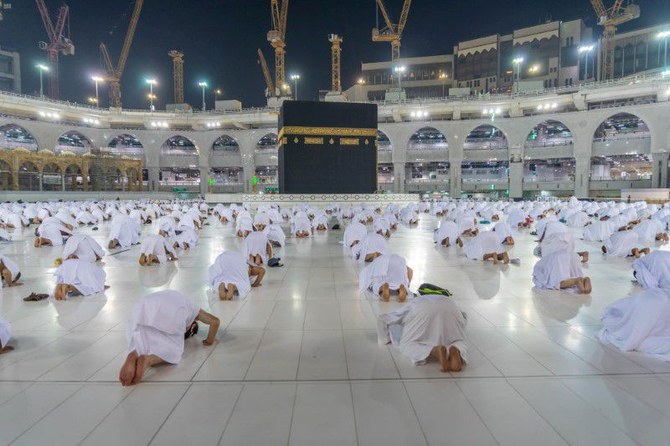
Muslims, keeping a safe social distance, pray as they perform Umrah at the Grand Mosque in the holy city of Makkah, Saudi Arabia, (SPA/Reuters)
Short Url
Updated 22 July 2022
Follow

Saudi Ministry of Hajj and Umrah cancels licenses of five companies, refers them to authorities

MAKKAH: Saudi Arabia’s Ministry of Hajj and Umrah has canceled the licenses of five Umrah companies for failing to fulfil their obligations toward pilgrims, and for violating the provisions of regulating Umrah services provided to pilgrims and visitors to ensure the best quality.
The ministry made it clear that it receives all observations and complaints, and deals with them immediately to ensure that the experience of pilgrims is enriched, and that they are offered the highest quality standards to perform their rituals with calm and ease, stressing that it will not allow complacency or negligence in serving pilgrims.

Hajj and Umrah services adviser, Ahmed Saleh Halabi, told Arab News that the Ministry of Hajj and Umrah had taken a completely new approach.

He said: “Under the new approach, those who do their work well are honored but, at the same time, wrongdoers are punished. What happened to the five Umrah companies that were recently written off (had their licenses cancelled), confirms this.

“It said that the companies were punished for their shortcomings in the obligations and services provided to the Umrah performers.”

He noted that it was clear the ministry was paying more attention to the comfort of pilgrims and Umrah performers, and visitors to the Prophet’s Mosque in Madinah.

“What Umrah companies offer must be consistent with the state’s interest and care for pilgrims and Umrah performers.

“While I agree with the ministry in this procedure, which certainly came after several warnings, I think that the ministry needs to support Umrah companies and study the obstacles that service providers face, as there are many obstacles that it needs to address,” Halabi added.

The ministry said it had began receiving requests to issue visas for pilgrims coming from outside the Kingdom from around the world to perform the rituals of Umrah and visit the Prophet’s Mosque, starting from last Thursday, and the first batch of pilgrims coming from inside and outside the Kingdom will arrive on July 29.
Permits can be issued to pilgrims from inside the Kingdom through the Umrah app, amid an integrated system of services, stressing the need to adhere to health measures to maintain the safety and health of pilgrims and visitors, and to facilitate procedures to ensure the performance of Umrah rituals.


UNESCO honors Al-Bisht Al-Hasawi as thousands flock to Al-Ahsa festival

Updated 06 February 2026
Follow

UNESCO honors Al-Bisht Al-Hasawi as thousands flock to Al-Ahsa festival

RIYADH: The third edition of Al-Bisht Al-Hasawi Festival is drawing thousands of local and international visitors to Ibrahim Palace in Al-Hofuf.

Running until Feb. 7 at the historic palace, the event features a bisht exhibition, a rare bisht gallery, a handicrafts zone and workshops led by skilled artisans.

The festival showcases a convergence of cultures, with international pavilions highlighting the global appeal of this authentic Saudi heritage. 

The bisht’s allure has drawn international visitors eager to explore Al-Ahsa’s rich history and traditional crafts.

Tourists enthusiastically don the traditional robe, admiring its royal designs. Many participate in workshops with master artisans, learning the intricate art of Zari embroidery.

Organized by the Heritage Commission, this year’s festival celebrates the inscription of the bisht on UNESCO’s Representative List of the Intangible Cultural Heritage of Humanity, the Saudi Press Agency reported.

The event showcases Al-Ahsa’s centuries-old tradition of hand-weaving and gold embroidery, a craft passed down through generations of local families.

Visitors can explore interactive displays, participate in live workshops, and witness the meticulous process of tailoring this iconic symbol of prestige.

With UNESCO’s participation and representatives from six countries, the festival has evolved into a global platform for cultural dialogue, cementing the bisht’s status as a world-class cultural treasure.

At the heart of the festival is the story of the “Golden Threads” (Al-Zari), intricate gold-plated silver threads that define the bisht’s character and prestige.

Visitors can discover them in the Golden Threads VIP Area, where they can watch master artisans demonstrate the full bisht-making process at the Host’s Majlis, offering insight into Al-Ahsa’s centuries-old craftsmanship.