

14,000 people displaced following tribal clashes in the Sudanese Blue Nile region: UN report

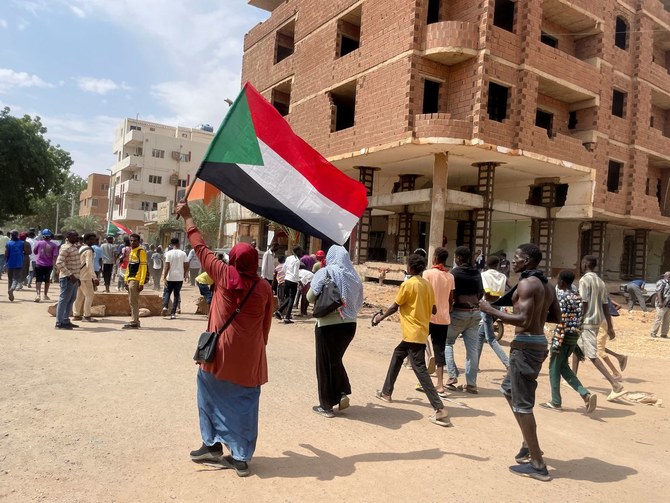
Protesters march through Khartoum during a rally against the country's military leadership. (File/Reuters)
Short Url
Updated 21 July 2022
Follow

14,000 people displaced following tribal clashes in the Sudanese Blue Nile region: UN report

  • UN calls for urgent support to de-escalate the situation and protect civilians from further attacks

About 14,000 people displaced from Ar Rusayris, Sudan are sheltering in three schools in Ed Damazine town, according to a report by the UN Office for the Coordination of Humanitarian Affairs released on Tuesday.

The UN revealed in its report that an additional 1,000 people had been displaced in Ar Rusayris, as well as 500 in Geisan. There is a possibility that the total number will increase pending verification.

In addition, an estimated 1,800 people have been displaced to Sennar State.  The UN office warned that urgent support is required to de-escalate the situation and ensure civilians are protected from further attacks.

Safe water and latrines are required, as is the establishment of temporary health units in areas where people are internally displaced.

According to the report, the security situation in Blue Nile is calm “but unpredictable,” and local authorities agreed on cautionary road travel from Khartoum to Ed Damazine, as well as the resumption of UNHAS flights to Ed Damazine.

The governor has also met with humanitarian partners and requested that they assist the newly displaced people.

The UN office said that a needs assessment of the displaced people was carried out at the three school locations on the same day.

The preliminary findings indicate that internally displaced people should be organized and redistributed into five locations, as the gathering points have become overcrowded and congested.

The National Health Insurance Fund in Blue Nile is committed to providing health staff and medicines, while the Sudanese Red Crescent Society has provided volunteers, with eight people in each health unit.

Two medical doctors, two pharmacists, one nurse, one medical assistant, and two lab technicians will work at each location.

However, requests have been received to increase Damazine hospital’s capacity to deal with the growing caseload.


UN rights chief Shocked by ‘unbearable’ Darfur atrocities

Updated 18 January 2026
Follow

UN rights chief Shocked by ‘unbearable’ Darfur atrocities

  • Mediation efforts have failed to produce a ceasefire, even after international outrage intensified last year with reports of mass killings, rape, and abductions during the RSF’s takeover of El-Fasher in Darfur

PORT SUDAN: Nearly three years of war have put the Sudanese people through “hell,” the UN’s rights chief said on Sunday, blasting the vast sums spent on advanced weaponry at the expense of humanitarian aid and the recruitment of child soldiers.
Since April 2023, Sudan has been gripped by a conflict between the army and the paramilitary Rapid Support Forces that has left tens of thousands of people dead and around 11 million displaced.
Speaking in Port Sudan during his first wartime visit, UN Human Rights commissioner Volker Turk said the population had endured “horror and hell,” calling it “despicable” that funds that “should be used to alleviate the suffering of the population” are instead spent on advanced weapons, particularly drones.
More than 21 million people are facing acute food insecurity, and two-thirds of Sudan’s population is in urgent need of humanitarian aid, according to the UN.
In addition to the world’s largest hunger and displacement crisis, Sudan is also facing “the increasing militarization of society by all parties to the conflict, including through the arming of civilians and recruitment and use of children,” Turk added.
He said he had heard testimony of “unbearable” atrocities from survivors of attacks in Darfur, and warned of similar crimes unfolding in the Kordofan region — the current epicenter of the fighting.
Testimony of these atrocities must be heard by “the commanders of this conflict and those who are arming, funding and profiting from this war,” he said.
Mediation efforts have failed to produce a ceasefire, even after international outrage intensified last year with reports of mass killings, rape, and abductions during the RSF’s takeover of El-Fasher in Darfur.
“We must ensure that the perpetrators of these horrific violations face justice regardless of the affiliation,” Turk said on Sunday, adding that repeated attacks on civilian infrastructure could constitute “war crimes.”
He called on both sides to “cease intolerable attacks against civilian objects that are indispensable to the civilian population, including markets, health facilities, schools and shelters.”
Turk again warned on Sunday that crimes similar to those seen in El-Fasher could recur in volatile Kordofan, where the RSF has advanced, besieging and attacking several key cities.
Hundreds of thousands face starvation across the region, where more than 65,000 people have been displaced since October, according to the latest UN figures.