

China In-Focus — Stocks rise; Loan-support to developers amid mortgage boycott; Stellantis terminates JV with GAC

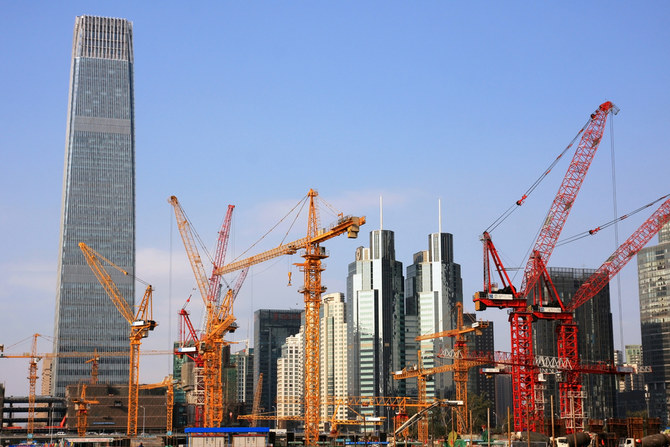
Construction in the Beijing Capital Business District (Shutterstock)
Short Url
Updated 18 July 2022
Follow

China In-Focus — Stocks rise; Loan-support to developers amid mortgage boycott; Stellantis terminates JV with GAC

RIYADH: China stocks rose on Monday after the governor of the country’s central bank vowed to increase the implementation of prudent monetary policy to support the real economy.

Financials and property developers’ shares led the gains, as regulators stepped up efforts to encourage lenders to extend loans to qualified real estate projects. This followed a widening mortgage-payment boycott on unfinished houses.

The CSI300 index rose 1.2 percent to 4,297.55 at the end of the morning session, while the Shanghai Composite Index gained 1.5 percent to 3,276.17.

The Hang Seng index added 2.6 percent to 20,820.87 points. The Hong Kong China Enterprises Index gained 2.9 percent, to 7,162.31.

China steps up loan-support efforts to developers amid mortgage boycott

Chinese regulators stepped up efforts to encourage lenders to extend loans to qualified real estate projects as the beleaguered property sector faced fresh risks from a widening mortgage-payment boycott on unfinished houses.

The China Banking and Insurance Regulatory Commission told the official industry newspaper on Sunday that banks should meet developers’ financing needs where reasonable.

The CBIRC expressed confidence that with concerted efforts, “all the difficulties and problems will be properly solved,” the China Banking and Insurance News reported.

The remarks come as a growing number of home buyers across China threatened to stop making their mortgage payments for stalled property projects, aggravating a real estate crisis that has already hit the economy. 

Stellantis terminates China GAC joint venture in U-turn

Stellantis has announced the “orderly termination” of its loss-making joint venture with Chinese carmaker GAC, which has been producing Jeep vehicles, only four months after saying it would raise its stake in the business.

The U-turn comes after GAC reprimanded the world’s fourth largest carmaker in January for announcing plans to raise its stake to 75 percent from 50 percent, stating the two parties had not yet signed a formal agreement.

“We came to the conclusion that it was better to close the joint venture,” a Stellantis spokesperson said, adding that the venture had been loss-making and that the carmaker could still operate in China through its dealer network.

Stellantis will recognize a non-cash impairment charge of approximately 297 million euros ($299.5 million) for its first half 2022 results, said the carmaker.

“The Jeep brand will continue to strengthen its product offering in China with an enhanced electrified line-up of imported vehicles meant to exceed Chinese customer expectations,” Stellantis added.

(With input from Reuters) 


Global trade isn’t deglobalizing — it’s reshuffling, Harvard economist says

Updated 16 min 52 sec ago
Follow

Global trade isn’t deglobalizing — it’s reshuffling, Harvard economist says

ALULA: Global trade is not retreating into deglobalization despite geopolitical shocks, but is instead undergoing a structural reshuffling led by US-China tensions, according to Harvard University economist Pol Antras. 

Presenting research at the AlUla Emerging Market Economies Conference, Antras said there is no evidence that countries are systematically turning inward. Instead, trade flows are being redirected across markets, creating winners and losers depending on export structure and exposure to Chinese competition. 

This comes as debate intensifies over whether supply-chain disruptions, industrial policy and rising trade barriers signal the end of globalization after decades of expansion. 

Speaking to Arab News on the sidelines of the event, Antras said: “I think the right way to view it is more a reorganization, where things are moving from some countries to others rather than a general trend where countries are becoming more inward looking, in a sense of producers selling more of their stuff domestically than internationally, or consumers buying more domestic products than foreign products.”  

He said a change of that scale has not yet happened, which is important to recognize when navigating the reshuffling — a shift his research shows is driven by Chinese producers redirecting sales away from the US toward other economies. 

He added that countries are affected differently, but highlighted that the Kingdom’s position is relatively positive, stating: “In the case of Saudi Arabia, for instance, its export structure, what it exports, is very different than what China exports, so in that sense it’s better positioned so suffer less negative consequences of recent events.” 

He went on to say that economies likely to be more negatively impacted than the Kingdom would be those with more producers in sectors exposed to Chinese competition. He added that while many countries may feel inclined to follow the United States’ footsteps by implementing their own tariffs, he would advise against such a move.  

Instead, he pointed to supporting producers facing the shock as a better way to protect and prepare economies, describing it as a key step toward building resilience — a view Professor Antras underscored as fundamental. 

Elaborating on the Kingdom’s position amid rising tensions and structural reorganization, he said Saudi Arabia holds a relative advantage in its economic framework. 

“Saudi Arabia should not be too worried about facing increased competitive pressures in selling its exports to other markets, by its nature. On the other hand, there is a benefit of the current situation, which is when Chinese producers find it hard to sell in US market, they naturally pivot to other markets.” 

He said that pivot could benefit importing economies, including Saudi Arabia, by lowering Chinese export prices. The shift could increase the Kingdom’s import volumes from China while easing cost pressures for domestic producers.