Hajj nears end as pilgrims complete second day of Tashreeq in Mina

1 / 8
As Hajj nears its end, most pilgrims completed their second day of Tashreeq with the symbolic “stoning of the devil” ritual in Mina on Monday. (AN Photo/Huda Bashatah)
2 / 8
As Hajj nears its end, most pilgrims completed their second day of Tashreeq with the symbolic “stoning of the devil” ritual in Mina on Monday. (AN Photo/Huda Bashatah)
3 / 8
As Hajj nears its end, most pilgrims completed their second day of Tashreeq with the symbolic “stoning of the devil” ritual in Mina on Monday. (AN Photo/Huda Bashatah)
4 / 8
As Hajj nears its end, most pilgrims completed their second day of Tashreeq with the symbolic “stoning of the devil” ritual in Mina on Monday. (AN Photo/Huda Bashatah)
5 / 8
As Hajj nears its end, most pilgrims completed their second day of Tashreeq with the symbolic “stoning of the devil” ritual in Mina on Monday. (AN Photo/Huda Bashatah)
6 / 8
As Hajj nears its end, most pilgrims completed their second day of Tashreeq with the symbolic “stoning of the devil” ritual in Mina on Monday. (AN Photo/Huda Bashatah)
7 / 8
As Hajj nears its end, most pilgrims completed their second day of Tashreeq with the symbolic “stoning of the devil” ritual in Mina on Monday. (AN Photo/Huda Bashatah)
8 / 8
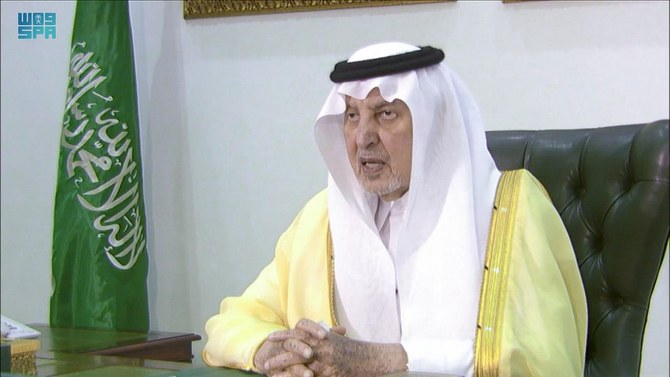
Prince Khalid Al-Faisal, Governor of Makkah Region and Chairman of the Central Hajj Committee. (SPA)
Short Url
Updated 11 July 2022
Follow

Hajj nears end as pilgrims complete second day of Tashreeq in Mina

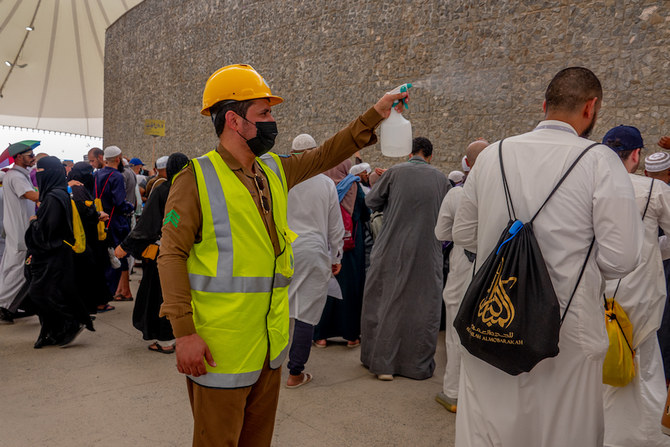
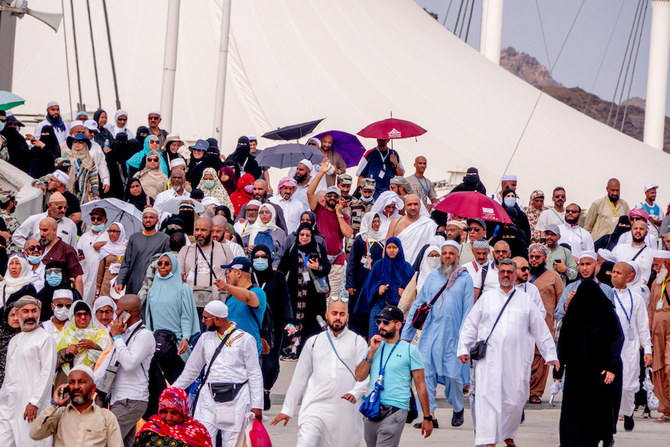
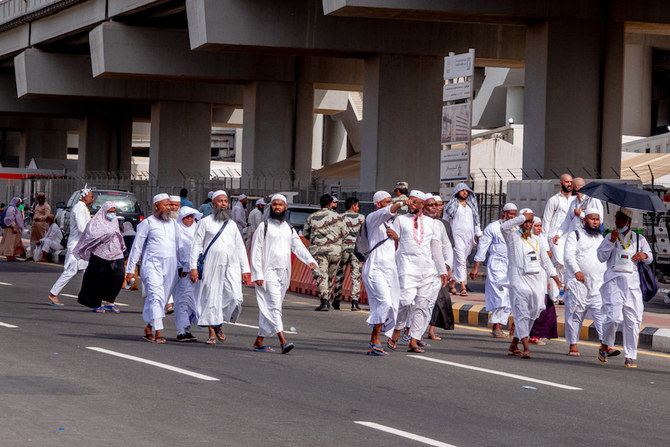
MINA: As Hajj nears its end, most pilgrims completed their second day of Tashreeq with the symbolic “stoning of the devil” ritual in Mina on Monday.

Amid similar scenes to Sunday, each pilgrim threw 21 pebbles at the three designated sites representing the devil, before heading to Makkah in tranquility to end their Hajj.

Excluding the third day of Tashreeq, pilgrims so far have used 44 million small stones in their stoning rituals, including pebbles thrown at Jamrat Al-Aqaba on the day of Eid Al-Adha.

If the third day of Tashreeq is included, more than 62 million pebbles will have been thrown.

Almost 900,000 worshippers rushed to the Grand Mosque to carry out the Tawaf Al-Wada’a, or farewell circumambulation, after the stoning ritual.

Pilgrims normally spend three days in Mina for Tashreeq. However, it is permissible to stay for two on the condition that a pilgrim leaves before sunset on the second day. 

In the Islamic jurisprudence, ending Hajj pilgrimage in two days is called “Ta’ajul,” or hastened Hajj. Otherwise, pilgrims should remain in Mina for a third day and are required to repeat the stoning ritual.

The stoning ritual is an emulation of Prophet Abraham’s stoning of the Jamarat, where the devil is said to have appeared trying to discourage Abraham from obeying the heavenly order of sacrificing his son Ishmael.

According to the National Center of Meteorology, temperatures in Makkah and the holy sites will vary from 30 C to 43 C, and the sky will be partially cloudy, with a chance of thunderstorms preceded by active winds.

Fatimah Ashour, a female Saudi pilgrim in her late fifties, told Arab News that services provided to worshippers were “praiseworthy,” adding that she had performed her Hajj rituals in comfort and tranquility.

“After stoning the pillars yesterday, I felt a bit unwell and I asked a nearby scout boy to call a doctor. In around five minutes, a health practitioner approached me and provided the necessary assistance I then needed,” Ashour said.

Earlier today, Prince Khalid Al-Faisal, gov. of Makkah region and chairman of the Central Hajj Committee, announced the success of this year’s Hajj.

Prince Khalid said: “I extend congratulations to the Custodian of the Two Holy Mosques King Salman bin Abdulaziz Al-Saud and His Royal Highness the Crown Prince on the occasion of the success of this great Islamic gathering, thanks to Allah Almighty, and then to the great efforts and development projects provided by the Kingdom’s government, and human cadres serving the pilgrims and preparing all means for them to perform their rituals in tranquility and ease.” 

He added: “I also thank all sectors taking part in this Hajj season and serving the pilgrims, particularly the security personnel and medical cadres who had prominent roles in serving the pilgrims and working to secure them and provide them with the necessary medical services.”



Kingdom key player in regional peace, EU official says

Updated 17 January 2026
Follow

Kingdom key player in regional peace, EU official says

  • Hana Jalloul Muro highlights Riyadh’s role in regional stability, economic growth and advancing EU-Saudi strategic ties

Riyadh: Hana Jalloul Muro, vice-chair of the European Parliament’s Foreign Affairs Committee, has praised Saudi Arabia’s role as a “reliable partner” to the EU.

Describing the Kingdom as a “key international actor,” she highlighted its pivotal role in regional stability, including brokering peace talks on Ukraine, promoting peace in Palestine, and supporting stable governments in Lebanon and the Syrian Arab Republic.

“Saudi is a reliable partner because it is a country that has demonstrated that with Vision 2030, only in the last five, six years, it has changed impressively. It has a major women’s labor force, a very low youth unemployment rate and is growing very fast,” Muro told Arab News.

Speaking on the sidelines of the Future Minerals Forum in Riyadh, she added: “Saudi Arabia is becoming a key major player in the international arena now — for peace conversations on Ukraine, supporting the Syrian government, paying Syria’s external debt, stabilizing the government in Lebanon, promoting peace in Gaza, in Palestine and pushing for a ceasefire, too.

“So, I think it is a very key international actor, very important in the region for stability,” Muro added.

Explaining why she considers the Kingdom a reliable partner, Muro said: “It’s a country that knows how to see to the East and to the West.”

Muro also serves as the European Parliament’s rapporteur for Saudi Arabia, and is responsible for drafting reports on legislative and budgetary proposals and other key bilateral issues.

In mid-December 2025, the European Parliament endorsed a road map to elevate EU-Saudi relations into a full-fledged strategic partnership, which Saudi Ambassador to the EU Haifa Al-Jedea described as “an important milestone” in bilateral ties.

The report highlighted the possibility of Saudi-EU visa-free travel, reaffirming the EU’s commitment to advancing a safe, mutually beneficial visa-free arrangement with the five GCC countries to ensure equal treatment under the new EU visa strategy.

“One of the key hot topics is the visa waiver to Saudi Arabia, which I always support,” Muro said. “Saudi Arabia has, as you are aware, been in cascade for five years, and I think we need to work toward a visa waiver.”

The report also highlighted the economic significance of Saudi tourists to EU member states, particularly for the hospitality, retail and cultural sectors, while emphasizing that Saudi citizens do not pose a source of irregular migration pressure.

When asked about the status of the visa waiver, Muro said: “The approval, it is the recommendation to the commission to take into account its importance. We need to advance on that because we are in the framework of this strategic partnership agreement that covers many topics, so this is why the visa waiver is a central key issue.”

She added: “I think by now we recognize the international role of Saudi Arabia and how important it is to us as a neighbor — not only for security, counter-terrorism and energy, but for everything. We need to get closer to partners like the GCC, Saudi specifically.

“And I think that we need to take Saudi Arabia as a very big ally of ours,” Muro said.

During her time in Riyadh, Muro took part in a panel at the forum focused on the EU-KSA business and investment dialogue, and advancing the critical raw materials value chain.

On the sidelines, she met Saudi Vice Foreign Minister Waleed Elkhereiji to discuss ways to further strengthen Saudi-EU relations.

She also met Hala Al-Tuwaijri, chairwoman of the Saudi Human Rights Commission, saying: “I have to congratulate you and the government, your country, on doing a great job.”