

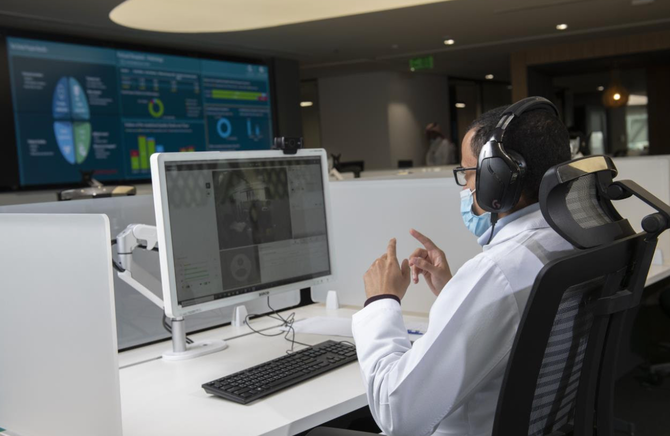

RIYADH: Telemedicine services in Saudi Arabia have played their part in ensuring a healthy Hajj season, with doctors in Riyadh successfully treating pilgrims in Makkah.
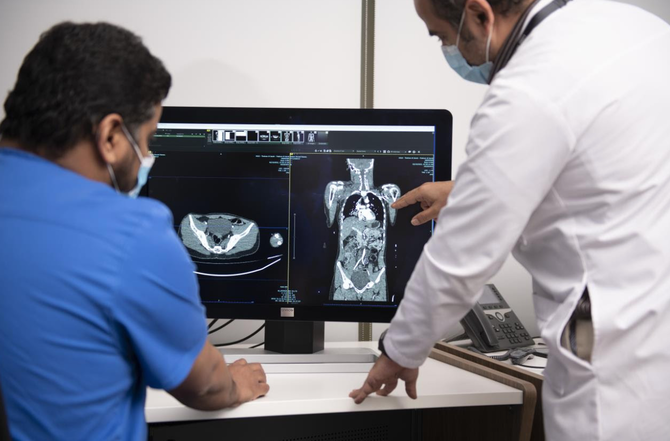
Seha Virtual Hospital in Riyadh provided a range of services, including the diagnosis of four cases of stroke and analysis of six remote X-rays, the Kingdom’s Health Ministry said on Monday.
The virtual hospital also helped save the life of one pilgrim needing remote critical care.
According to the ministry, more than 1,700 pilgrims benefited from virtual medical consultations through its Sehhaty app.
Medical services provided by SVH have been linked with the holy sites hospitals at Mina, Arafat and Muzdalifah under the supervision of a team of consultants working around the clock within three main departments: Virtual radiology, virtual stroke and virtual intensive care.
The departments provided support for 13 hospitals working within the holy site.
A digital target for this year’s Hajj season was to provide a comprehensive report on all types of X-rays and scans, including CTs, MRIs and ultrasounds, within 30 minutes of the procedure being carried out.
The ministry said that it added virtual stroke services this year in order to treat one of the most common causes of death and permanent disability.
It added that the “golden window” for treatment is no more than 4.5 hours, and there is a scarcity of specialists working in the field.
Stroke and intensive care teams at the SVH made several visits to hospitals before the start of the Hajj season to ensure their readiness.
Staff was given lectures and field training on identifying and diagnosing cases, and how to use telemedicine equipment to facilitate virtual tours, the ministry added.
The Kingdom’s first virtual hospital SVH was launched by the Health Ministry this year as part of efforts to digitalize the healthcare sector.
With a growing live network of 130 connected hospitals, SVH is the largest of its kind in the world. The only other virtual hospital to rival it is in the US, with 43 connected hospitals.
Patients of SVH no longer need to travel to different parts of the Kingdom to be seen by specialized physicians, nor limited by 9 a.m. to 5 p.m. clinical hours, and can receive second and third medical opinions from the same consulting room.
Unlike simple video calls with doctors, SVH allows patients to visit their local hospital and attend a real-time live video clinical session with top specialists from across the Kingdom. During the session, vital signs can be shared momentarily, while tests and X-rays can also be taken and shared with the network of specialists.
Emergency interventions can be provided round the clock, and real-time consultations with top specialists will also guide local junior staff in dealing with complex cases.
SVH covers 12 main specialties and more than 35 subspecialties, including hospital-at-home follow-ups, where chronically ill patients, from the comfort of their homes, can stay connected with doctors.


