


RIYADH: Leading pharmaceutical company Pfizer has launched ‘An Accord for a Healthier World,’ a ground-breaking initiative aimed to provide patented, high-quality medicines and vaccines on a not-for-profit basis to 1.2 billion people in 45 lower-income countries to reduce health inequalities, a senior executive of the company said.
Patrick van der Loo, Pfizer’s regional president for Africa and the Middle East, told Arab News that the company plans to reduce by 2023 the number of people in low-income countries without access to its medicines by 50 percent.
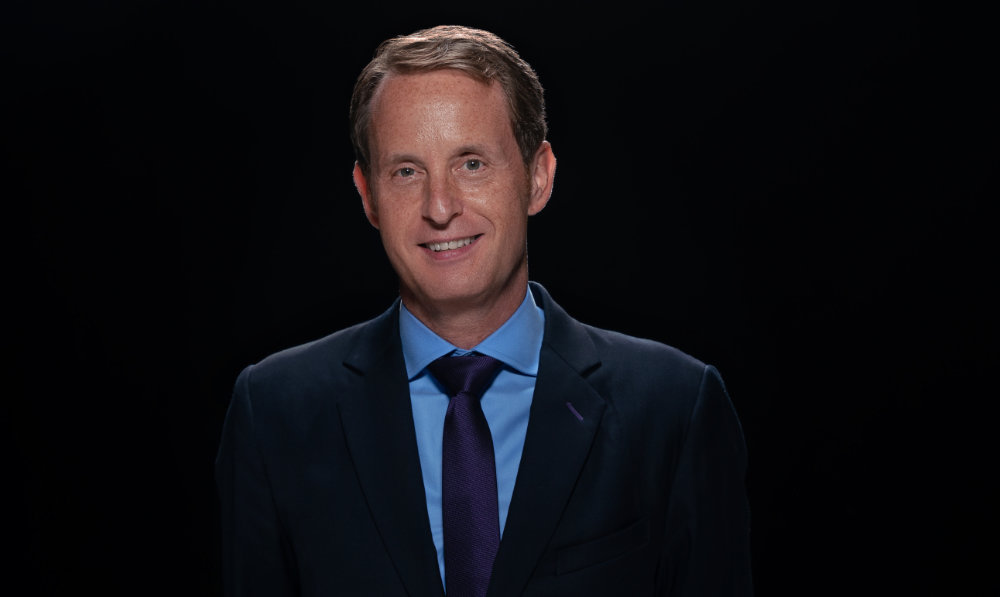
Patrick van der Loo, Pfizer’s regional president for Africa and the Middle East.
“We wanted to make sure that these products are now available to these 45 low-income and low-middle-income countries, which means 1.2 billion people will additionally get access to these innovative Pfizer medicines,” said van der Loo.
The countries in the accord include 27 low-income countries and 18 lower-middle-income countries that have transitioned from low to lower-middle-income classification in the last 10 years.
Pfizer will work with healthcare officials in Rwanda, Ghana, Malawi, Senegal and Uganda to ensure that the medicines and vaccines reach those in need.
The initiative will include expertise to support diagnosis, education and training for healthcare professionals and improve supply chain management.
The company will apply the lessons learned from these five countries to support the program’s rollout in the remaining 40 countries, it said in a statement.
Van der Loo added that the program also covers at least two countries in the Middle East that met the World Bank criteria.
“We selected the countries based on the World Bank classification of a nation. So, we looked at the classification for low income. And that’s why we included countries like Syria and Yemen,” he said.
Economics of the program
The top executive of Pfizer clarified that his company had no intention to make any profit from this program, assuring that it was based on humanitarian considerations.
“We are only charging manufacturing and minimal distribution costs. So that means all other costs, whether the regulatory work, the diagnosis work, or all the other elements mentioned before, will be borne by us. So we have a budget to get this started,” explained van der Loo.
He was optimistic that the initiative would not just end with Pfizer and hoped that other companies that have expertise in diagnosis or other areas would also join. He added that Pfizer is looking for a partnership with governments to ensure that this program succeeds.
“Together, we can move this forward. We know we are a big company, but we’re only one company. So that’s why we need these partnerships with governments. We need this partnership with the Gates Foundation. We need these partnerships with development funding institutions to get the core properly off the ground,” he added.
Pfizer seeks to include all or most countries that fit into this category on board.
“We expect that we will have the majority of the countries on board by the second half of this year,” van der Loo pointed out.
Lessons from COVID-19 experience
Van der Loo also highlighted that Pfizer has assessed the effectiveness of its COVID-19 vaccine and continued to work on improving other types of medication.
“Let me start by saying it’s very effective,” he said. “We have made lifecycle improvements already on our COVID-19 vaccine. So earlier, the product could be stored only at a very deep freeze temperature and for a very short time. But now we are talking weeks. We have also developed a special vaccine for six months to five years and ready-to-use type formulations.”
He added that his company is also working on other types of vaccines and medications.
“We’re working on other types of formulations like if there is a need to develop specific variant vaccines. We can do that from start to finish in about 100 days.”
Van der Loo also pointed out that Pfizer has rolled out more than three billion vaccines.
“We’ve rolled out more than three billion COVID-19 vaccines in 180 countries. So, I think all these experiences in these countries have proven invaluable in determining how we can best roll out this accord. And that’s why we were also able to switch so quickly with countries like Rwanda, Malawi, Senegal or Uganda.”
Partnering with Saudi Arabia and UAE
Pfizer has a massive manufacturing network, which includes over 60 sites across the globe.
The company has a significant collaboration with a biotech institute in South Africa that manufactures the COVID-19 vaccine for countries in the Africa Union.
It also has a presence in the Middle East and North Africa, including a factory in Saudi Arabia.
“We are also interested in collaborating with governments like we are doing here in the region by improving the skill level so that countries can take more of the steps themselves.”
Van der Loo revealed that Pfizer is looking at a broader collaboration with Saudi Arabia and the UAE.
“So, there’s much more to localization than just brick-and-mortar and building a factory. And I think it’s that broader collaboration that Pfizer is looking at in partnering with the countries as we do in the UAE and Saudi Arabia.”


