

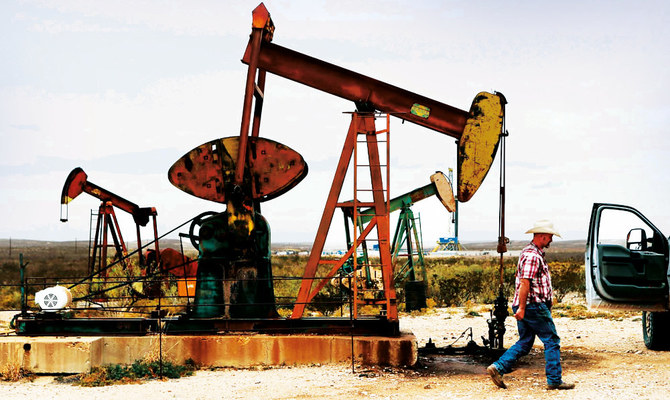
Exxon signals operating profits could double over Q1

The Q2 results will be the first quarterly earnings report since Exxon decided to report results by four business units. (Reuters)
Short Url
Updated 02 July 2022
Follow

Exxon signals operating profits could double over Q1

  • Energy prices have shot up this year with oil selling for more than $105 per barrel

HOUSTON: Exxon Mobil Corp. has signaled that skyrocketing margins from fuel and crude sales could generate a record quarterly profit, according to a securities filing.

Energy prices have shot up this year with oil selling for more than $105 per barrel and gasoline at about $5 per gallon in the United States. The enormous earnings are likely to ignite new calls for windfall profit taxes.

The largest US oil producer projected a sequential increase of about $7.4 billion in operating profits compared with the first quarter. In the first quarter, Exxon posted an $8.8 billion profit, excluding a Russia writedown.

The filing indicates a potential profit of more than $16 billion for the second quarter. The company’s peak quarterly profit was $15.9 billion in 2012.

The filing showed Exxon expects higher oil and gas prices will add about $2.9 billion to results. Margins from selling gasoline and diesel will add another $4.5 billion to operating profits.

“High energy prices are largely a result of underinvestment by many in the energy industry over the last several years and especially during the pandemic,” Exxon said in a statement on the profit gains.

Analysts tracked by IBES Refinitiv forecast a per share profit of $2.99, up from $1.10 in the same quarter a year ago. Official results for the period will be released on July 29, according to a summary of factors influencing the period disclosed late Friday.

Exxon’s profits led US President Joe Biden last month to say the company and other oil majors were capitalizing on a global oil supply shortage to fatten profits.

The company said it is investing more than any other producer in the US to expand oil and natural gas production, including in the Permian, the country’s largest unconventional basin.

US Representative Ro Khanna said Exxon’s record-breaking profits reinforce his call for Congress to pass a windfall tax on Big Oil.

“Big Oil companies should be providing relief to their customers, not pouring billions into stock buybacks to enrich their investors,” he said in a statement.

Exxon’s shares closed up 2.2 percent at $87.55 on Friday.

Exxon, which lost more than $22 billion in 2020, has been using the extra cash from higher energy prices sales to pay debt and raise distributions to shareholders. It plans to buy back up to $30 billion of its shares through 2023.

Despite losses during the pandemic, Exxon continued to invest in additional production and expects to increase output in the Permian by 25 percent in 2022, the company’s spokesperson said.

The second-quarter results will be the first quarterly earnings report since Exxon decided to report results by four business units, giving a more detailed breakout of its petrochemical operations. The snapshot showed that margins in its chemical and specialty products units were flat in the second quarter compared with the first.

The company estimated the impact of exiting Russia would cut oil and gas profits by about $150 million compared with the first quarter. Exxon wrote down $3.4 billion in Russia assets earlier this year.

Exxon also signaled a contribution of about $300 million from asset sales in the quarter.


EU investments in Saudi Arabia to prosper over next 5 years, says ambassador

Updated 8 sec ago
Follow

EU investments in Saudi Arabia to prosper over next 5 years, says ambassador

RIYADH: European investments in Saudi Arabia are set to see notable growth over the next five years, encompassing green energy, metals, critical raw materials, advanced industry, and the digital sector.

Christophe Farnaud, the EU Ambassador to Saudi Arabia, confirmed to Al-Eqtisadiah that an anticipated memorandum of understanding with the Kingdom in the energy field will provide an organized framework for cooperation in energy transition and sustainability, boosting investor confidence in the long-term partnership between the two sides.

The volume of trade in goods and services between Saudi Arabia and the EU amounts to €90 billion ($105.6 billion), according to the latest data from 2024, making the EU the Kingdom’s second-largest trading partner, according to Farnaud. 

Currently, 2,500 European companies operate within the Saudi market, highlighting the depth of economic relations between the two sides.

A qualitative development in relations

Farnaud affirmed that Saudi-European relations are witnessing qualitative development, especially since the EU’s adoption in 2022 of its strategy towards Gulf Cooperation Council countries, which is based on enhancing political, security, and economic cooperation, in addition to cultural and humanitarian exchange. 

He noted that Saudi Arabia’s Vision 2030 constitutes an attractive framework for strengthening this partnership.

The ambassador also pointed out that the launch of the European Chamber of Commerce in the Kingdom of Saudi Arabia during 2024 represented an important step to support cooperation between European and Saudi companies and enhance mutual investments, reflecting a positive outlook for the future of economic relations. 

Economic relations are no longer limited to traditional trade exchange but have transformed into a multi-sector partnership, including investment, services, manufacturing, energy, and sustainability, according to Farnaud.

Christophe Farnaud, the EU Ambassador to Saudi Arabia meeting Crown Prince Mohammed bin Salman in 2025. X/@EUAmbGCC

Relaunching Free Trade Agreement negotiations

The ambassador revealed ongoing discussions to relaunch negotiations for a Free Trade Agreement between the EU and GCC countries, which have been stalled since 2008, aiming to reach a modern agreement covering investment, services, intellectual property protection, technical standards, and government procurement.

He also indicated readiness to launch negotiations for a bilateral strategic partnership agreement with Saudi Arabia, including industrial cooperation, critical raw materials, energy, and sustainability, alongside working to sign a memorandum of understanding in the energy field in the coming period.

The EU, according to Farnaud, is the largest foreign investor in Saudi Arabia, holding 29 percent of the total foreign direct investment stock, which amounted to 30.7 billion euros in 2023. 

Investments are concentrated in the transport, energy, industry, tourism, education, and training sectors, with major European companies participating in strategic projects like the Riyadh Metro.

Sectors of common priority

The ambassador explained that the energy sector, especially renewable energy and green hydrogen, represents a common priority, amidst the global shift towards sustainability, in addition to significant opportunities in the high-tech manufacturing sector, industrial localization, and knowledge transfer.

He pointed to the growing interest of European investors in Saudi Arabia’s tourism sector, driven by Vision 2030’s targets to raise tourism’s contribution to the gross domestic product to 10 percent.

Wide opportunities stand out in areas of hospitality, tourist destination management, cultural tourism, transport, and sustainability, especially in major projects like NEOM, AlUla, the Red Sea Project, and Diriyah.

Farnaud cited existing partnerships with leading European companies such as Accor and Kempinski, in addition to French cooperation in developing AlUla as a global heritage and tourist site.