At Gwadar’s first boat cafe, a sip of tea with view of Arabian Sea

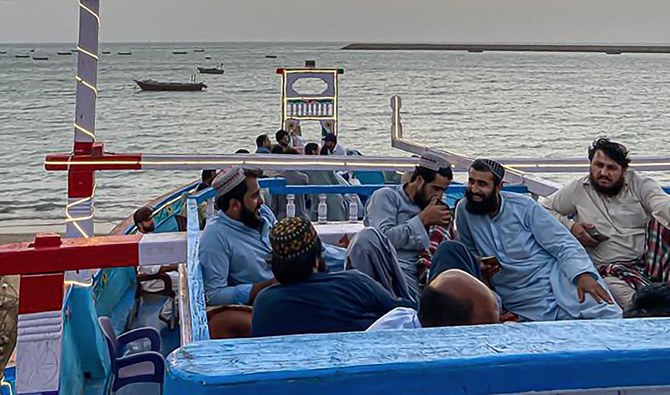
Visitors enjoy tea and snacks at Cafe Padizar, the first boat cafe in the southern Pakistani port of Gwadar on June 20, 2022. (Photo courtesy: Fahad Ishaq)
Short Url
Updated 27 June 2022
Follow

At Gwadar’s first boat cafe, a sip of tea with view of Arabian Sea

  • Opened last month, Cafe Padizar, is one of very few hangout spots in the impoverished, underdeveloped region
  • Fahad Ishaq, 21, opened the cafe with his brother after renovating their family’s old fishing boat 

QUETTA: Fahad Ishaq and his brother Qadeer are busy arranging chairs and tables, as visitors arrive from different parts of Gwadar to enjoy a sip of tea and watch the sunset from their three-story boat cafe — the first of its kind in the southwestern Pakistani port.

Opened last month, Cafe Padizar takes its name from the beach where it is docked, overlooking the high, rocky cliffs of the coast of Balochistan province and the Arabian Sea.

The boat, which belongs to Ishaq’s family, has not been used for years after its engines broke down.

In 2021, when he graduated in business administration, Ishaq decided to put his degree to good use and started renovating the old vessel. Together with his brother, the 21-year-old invested Rs1.5 million ($7,200) to bring the boat back to shape and two years later turned it into a hangout spot — one of the very few in the impoverished, underdeveloped region.

“We had decided to turn the boat into a cafe,” Ishaq told Arab News. “The internal parts of the boat were completely damaged, and now there is a space of more than 100 customers.”
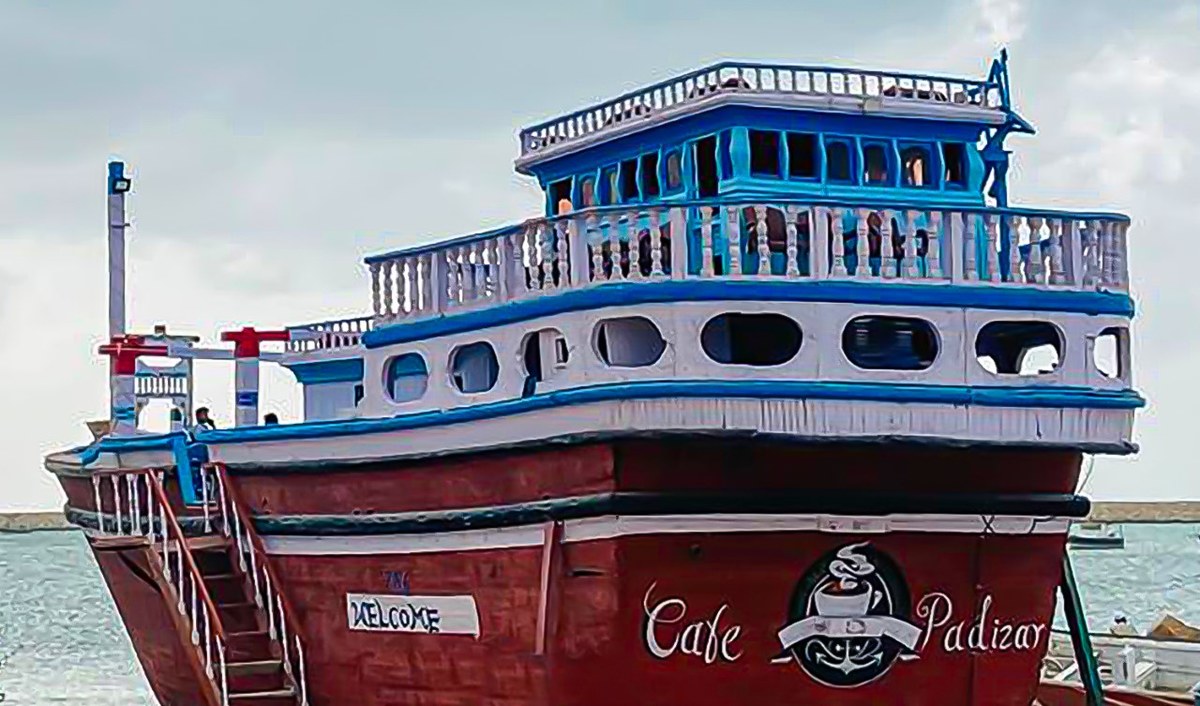


Cafe Padizar stands on the coast of the southern Pakistani port of Gwadar on June 20, 2022. (Photo courtesy: Fahad Ishaq)

The cafe serves tea, coffee and snacks. In the future, the brothers are also going to introduce more food items to its menu and give work to more people.

“Right now, we have hired six workers to serve customers in Cafe Padizar,” Ishaq said. “But in the future, we have plans to expand the cafe.”

Business ventures are not always a sure success in Balochistan, a sparsely populated mountainous region bordering Afghanistan and Iran. Despite Gwadar being the center of the China-Pakistan Economic Corridor, it has been reaping few rewards from the multibillion-dollar infrastructure and energy plan.
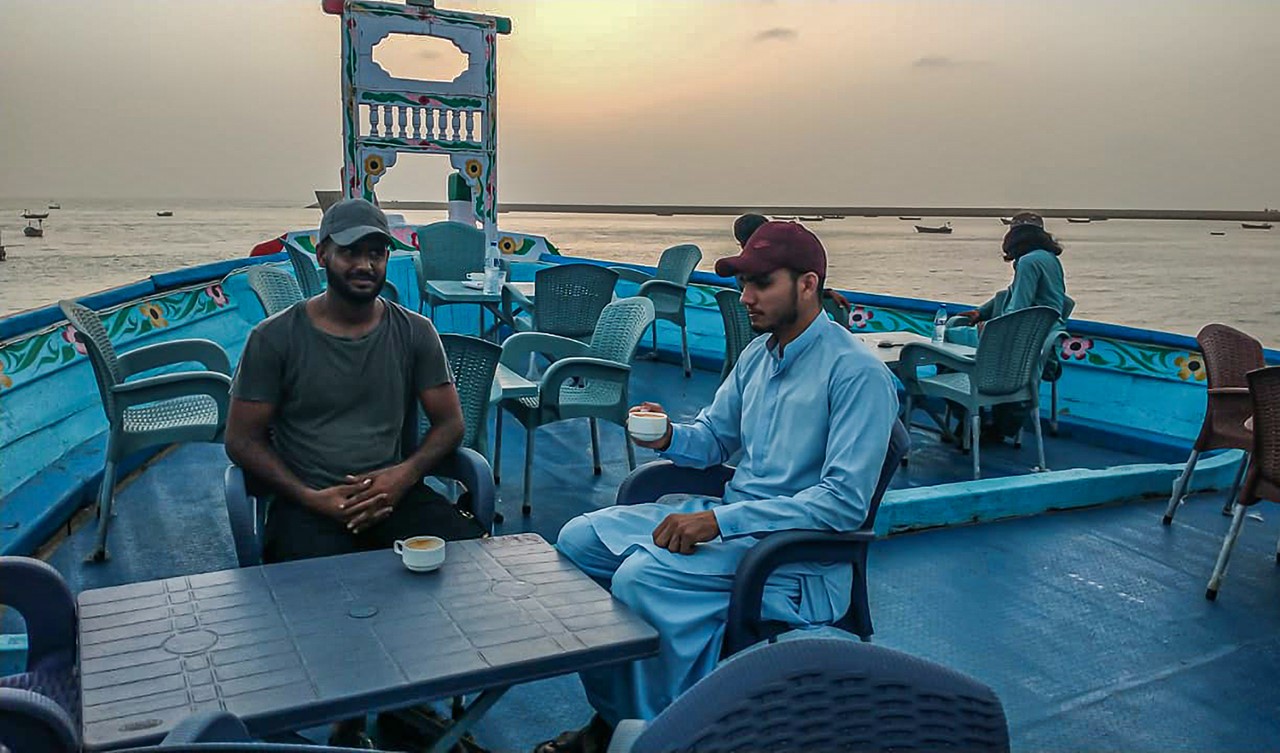


Aurangzaib Abdul Rauf, right, drinks tea at Cafe Padizar, the first boat cafe in the southern Pakistani port of Gwadar on June 20, 2022. (Photo courtesy: Fahad Ishaq)

Cafe Padizar is not the only business Ishaq runs. His company BOASIS Tourism specializes in bringing visitors from Karachi, Quetta and Islamabad to the sandy beaches of Balochistan. 

“Tourism and traveling have been my passion since childhood,” he said. “Cafe Padizar will help in fostering tourism in Gwadar.”

The first place of its kind in the whole city, Cafe Padizar has so far been successful in attracting visitors, as something entirely new in the city where the last cinema closed nearly two decades ago.
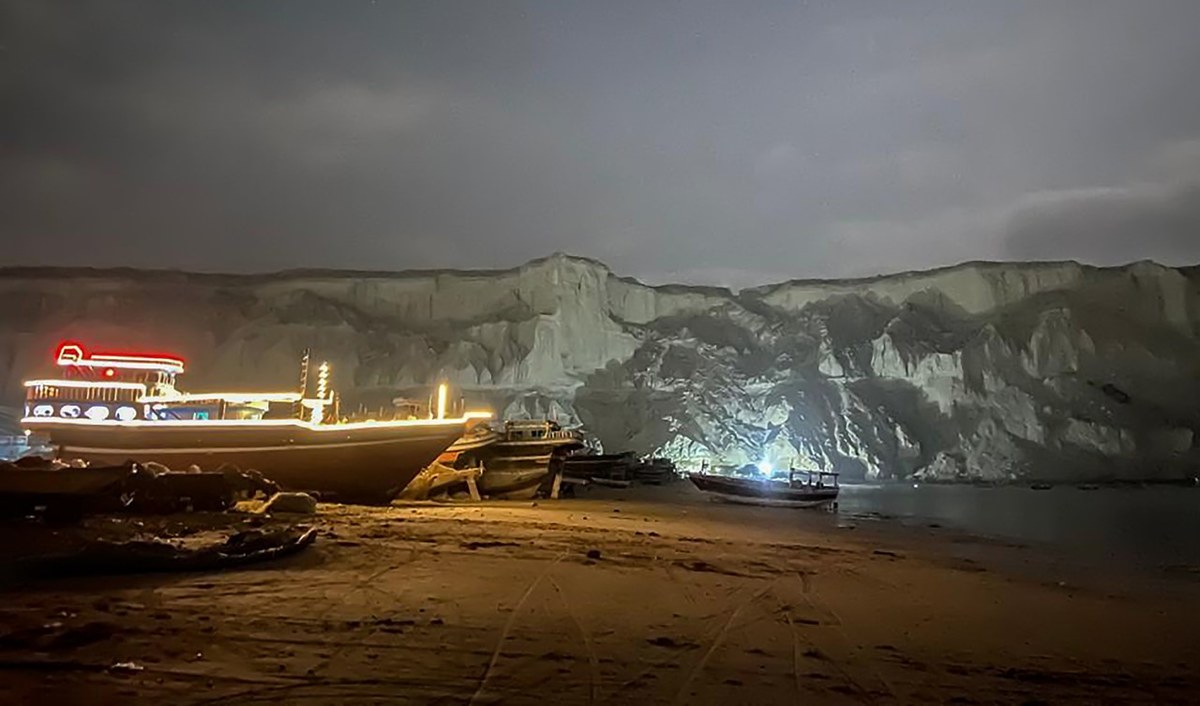


Cafe Padizar is seen in the evening on the coast of the southern Pakistani port of Gwadar on June 20, 2022. (Photo courtesy: Fahad Ishaq)

One of the cafe’s visitors, Aurangzaib Abdul Rauf, said that previously only fishermen had the opportunity to enjoy the views that everyone can now see from the top deck of the former fishing boat.

“The café has been attracting tourists from the nearest towns,” he told Arab News. “The majority of us come here in the evening to enjoy the sea covered by the mountains.”


Pakistan urges UN Security Council to sanction separatist BLA group after recent attacks

Updated 05 February 2026
Follow

Pakistan urges UN Security Council to sanction separatist BLA group after recent attacks

  • Separatist BLA launched attacks in multiple Balochistan cities last week, killing over 50 as per official figures
  • Pakistan envoy says since Taliban assumed control of Afghanistan, BLA, other militant groups have a “new lease of life“

ISLAMABAD: Pakistan’s UN Ambassador Iftikhar Ahmed this week urged the Security Council to impose sanctions against the separatist Baloch Liberation Army (BLA) militant group and designate it as a “terrorist” group, after its recent coordinated attacks in southwestern Balochistan province. 

Pakistan’s military said on Thursday it has concluded security operations in Balochistan against separatists that was launched since Jan. 29, killing 216 militants. The military launched counteroffensive operations in Balochistan after the BLA said it launched coordinated attacks in several parts of the province last Friday and Saturday. 

The attacks killed 36 civilians and 22 law enforcement and security forces personnel, Pakistan’s military said. Pakistan’s government has accused India of being involved in the attacks, charges that New Delhi has dismissed. 

“We hope the Council will act swiftly to designate BLA under the 1267 sanctions regime acceding to the listing request that is currently under consideration,” Iftikhar said on Wednesday during a UNSC briefing on the topic ‘Threats to International Peace and Security caused by Terrorist Acts.’

The 1267 sanctions regime is a UNSC program that seeks to impose sanctions on individuals and entities associated with “terrorism.”

The regime seeks to impose travel bans, freeze assets and impose an arms embargo on individuals and groups primarily associated with Al-Qaeda or the Taliban. 

Ahmad said that after the Taliban takeover of Afghanistan in 2021, “externally sponsored and foreign-funded proxy terrorist groups” such as the Tehreek-e-Taliban Pakistan and the BLA have got a “new lease of life.”

“Operating with virtual impunity from Afghan soil and with the active support of our eastern neighbor, these groups are responsible for heinous terrorist attacks inside Pakistan,” he said. 

The Pakistani envoy said it has become imperative to prevent billions of dollars of sophisticated weapons and equipment, which were left behind by foreign forces in Afghanistan, “from falling into the hands of terrorists.”

“There must be accountability of external destabilizing actors who support, finance and arm these groups, including their proxies in Afghanistan,” Ahmad said in a veiled reference to India. 

Pakistan’s largest and poorest province, mineral-rich Balochistan borders Iran and ‌Afghanistan and is home to China’s investment in the Gwadar deep-water ‍port and other projects.

Balochistan has been the site of a ‍decades-long insurgency led by ethnic Baloch separatists seeking greater autonomy and a larger share of its natural ‍resources. 

They accuse the state of denying locals a fair share of the province’s mineral wealth, charges that are denied by the Pakistani government.