KARACHI: A high-level Saudi trade delegation visiting Pakistan has identified “promising opportunities” for business cooperation and exports to the Kingdom, the chairman of the Saudi-Pakistan Business Council told Arab News on Saturday.
The delegation, comprising representatives of 30 Saudi companies who want to explore business and joint venture opportunities in Pakistan, arrived in the country last week and for seven days held meetings with business leaders and Pakistani government officials in Islamabad, Lahore, Faisalabad, Sialkot, and Karachi.
“The outcome of this visit is unexpectedly good. The entire team saw great opportunities in various sectors and attracted attention and hopefully there will be collaborations between businesses from Saudi Arabia,” Fahad bin Mohammed Al-Bash, the business council’s chairman leading the delegation, said in an exclusive interview with Arab News.
“The delegation has visited different sectors … there seems (to be) a lot of promising opportunities for exports to Saudi Arabia and also for potential partnerships.”
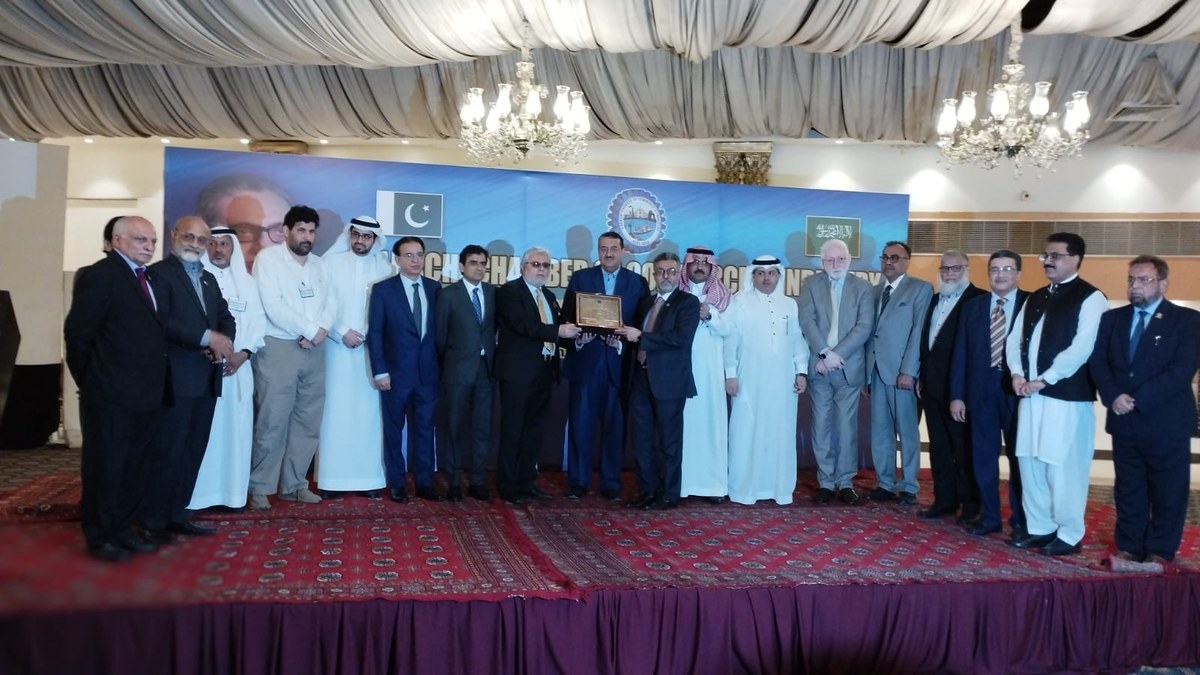
Members of a high-level Saudi trade delegation pose for photo with Pakistani businessmen in Karachi on June 25, 2022. (AN Photo)
He added that the trip was aimed at “planting the seeds for more collaborations” and that the establishment of direct trade links between Saudi Arabia and Pakistan will benefit both countries as they will not have to engage intermediaries.
“Hopefully in the near future there would be agreements signed,” he said, adding that Saudi investors were interested especially in the sectors of IT, agriculture, surgical equipment, sportswear, textile and construction.
Trade between Islamabad and Riyadh is heavily dominated by Pakistan’s oil imports. Last year, the South Asian nation exported to Saudi Arabia goods worth only $417 million, while its import bill was $3.45 billion, according to imports and exports payments data of State Bank of Pakistan.
Al-Bash invited Pakistani businessmen to visit the Kingdom to explore opportunities to increase their exports.
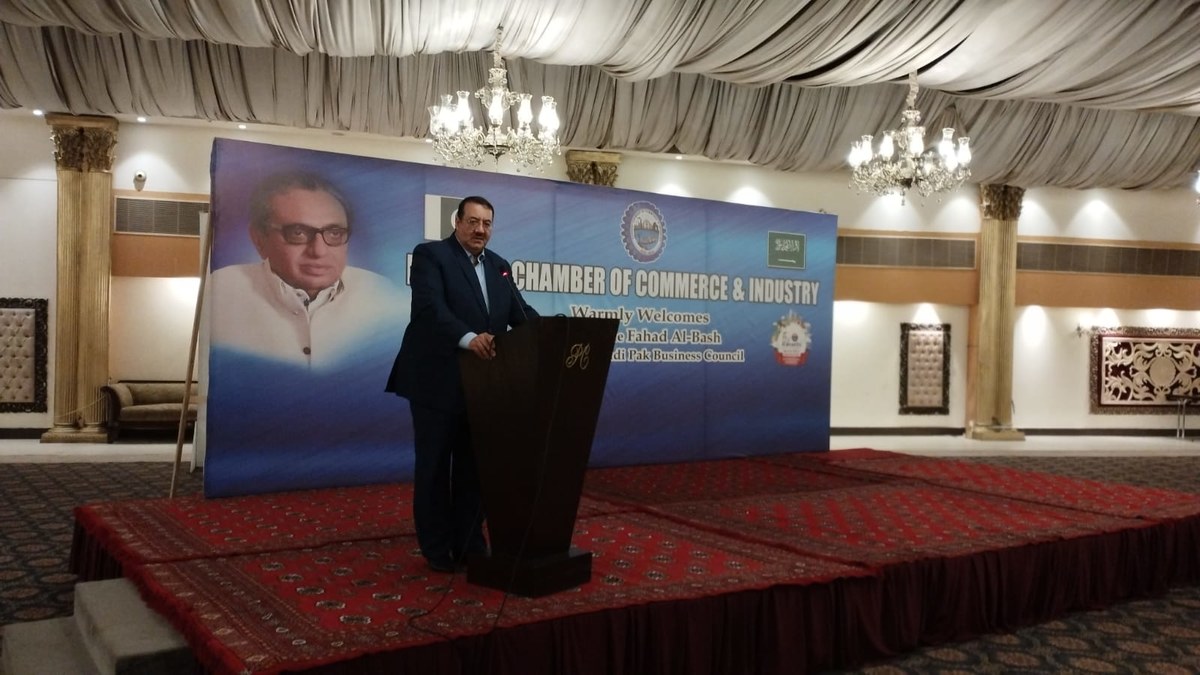
Fahad bin Mohammed Al-Bash, chairman of Saudi-Pak Business Council speaks at an event organized by Karachi Chamber of Commerce and Industry (KCCI) in Karachi on June 25, 2022. (AN Photo)
“As chairman, I want to see a different level of trade between Saudi Arabia and Pakistan in the areas where there is added valued for each of our companies,” he said. “We have two missions: first to bring commodities at reasonable prices to help our economy and also give Pakistan a chance to create jobs for its citizens and we will work hard toward these missions.”
On Saturday, the delegation met members of the Pakistan-Saudi Arabia Business Council of the Federation of Pakistan Chambers of Commerce and Industry, as well as business groups in Karachi.
Pakistan-Saudi Arabia Business Council chairman Junaid Esmail Makda told Arab News they had discussed the current trade imbalance, as well as some projects, “including the Saudi intention to invest $1 billion in desalination plant in Karachi, setting up an oil refinery in Pakistan.”
Zubair Motiwala, chairman of the Businessmen Group at Karachi Chamber of Commerce and Industry said during an event organized for the Saudi delegation that Pakistan particularly needed investment to establish a naphtha cracking plant.
“That will change the dynamics of the country, as it lacks such facility at present. One who will install it first would get best returns because the country imports billions of dollars worth of petrochemical products every year,” he said.
“Construction, especially of low-cost housing is in high demand in Pakistan, textile sector also offer great potential for Saudi investment as Pakistan is currently supplying products to topmost global brands, while IT also offers huge potential as well.”