The Red Sea project discovers fossils of 80m-year-old marine reptiles in initial survey 

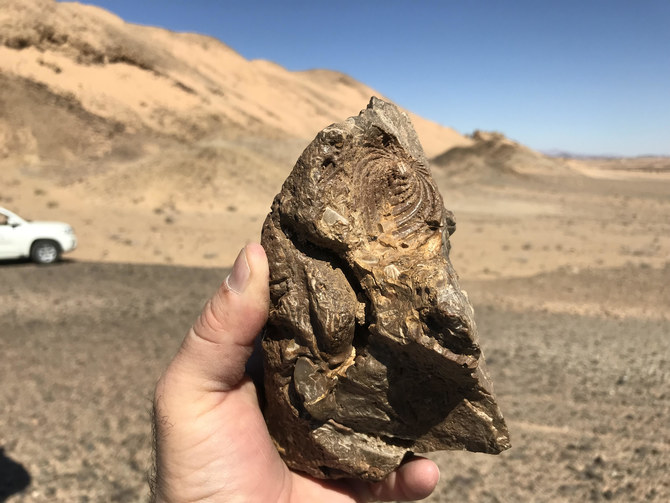
Bivalve fossils found at the Red Sea area date back to 80 million years. (Supplied)
Short Url
Updated 03 June 2022
Follow

The Red Sea project discovers fossils of 80m-year-old marine reptiles in initial survey 

RIYADH: A survey at the Red Sea area has unraveled some significant findings, with the initial excavation leading to the discovery of fossils of the giant Mosasaur — often called “The T-Rex of the Sea” — dating back more than 80 million years.

The project is considered to be one of the largest surveys in the Kingdom of Saudi Arabia. 

The Red Sea Development Co., the developer behind the ambitious regenerative tourism project, and the exploration authority Saudi Geological Survey have discovered remains of marine reptiles during their 10-day initial digging, besides unearthing various samples spanning from the late Cretaceous to the Eocene period — roughly 80 to 45 million years ago, a press release stated. 


Turtle humerus was found at the site. (Supplied)

It said approximately half of the sites surveyed produced rare fossils, with researchers expecting to discover many more on future digs. “The findings represent the first record of marine mammals from the Paleogene period to be found in the Red Sea coastal area,” the release added. 

TRSDC said it will continue to work with the authority to identify areas of unique geological importance, which will add to the tourism experiences offered by the Red Sea destination. 


“This partnership is an extension of our firm commitment as a real estate development company responsible for locating, protecting and showing the world these natural treasures under our feet in the most appropriate way,” TRSDC CEO John Pagano said in a statement.

Given the growing interest in Saudi Arabia in “paleontology”, he said they expect their work will be an additional reason to promote interest in the discovery of ancient heritage buried along our coast. 
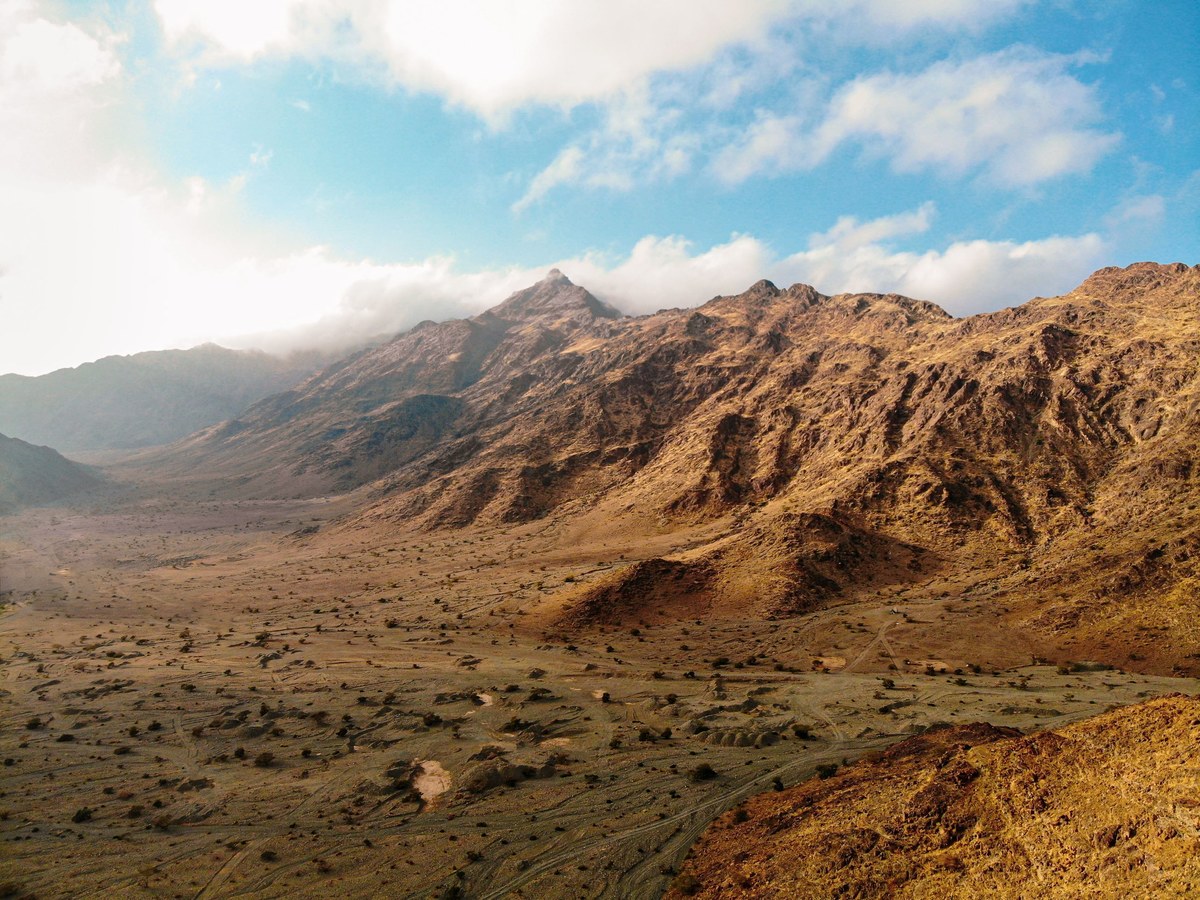


The survey was the first step on a journey to uncover the rich history of the region. (Supplied)

Upon completion in 2030, The Red Sea Project is expected to have 50 resorts, offering up to 8,000 hotel rooms and more than 1,000 residential properties across 22 islands and six inland sites. The project will also include an international airport, luxury marinas, golf courses, entertainment, and leisure facilities. 


Rare sighting of critically endangered leatherback turtle in Red Sea

Updated 05 February 2026
Follow

Rare sighting of critically endangered leatherback turtle in Red Sea

  • Turtles travel thousands of kilometers to Red Sea
  • Nesting 6,500km away in India’s Andaman Islands

RIYADH: Saudi Arabia’s National Center for Wildlife has documented a rare sighting of a leatherback sea turtle in the Red Sea, marking a significant biological record for one of the planet’s most critically endangered marine species.

The sighting occurred approximately 30 km off the coast of Al-Qunfudhah within the Blue Holes Protected Area, a newly established marine reserve, according to a recent report from the Saudi Press Agency.

The NCW said the presence of a leatherback in these waters was an exceptional event.

Recognized as the largest turtle species on Earth, the leatherback can weigh up to 900 kilograms. It has a unique leathery, black carapace — distinguished by five longitudinal ridges rather than a hard bony shell — and able to dive to depths exceeding 1,000 meters.

Shutterstock image

Noting the species’ migratory nature, the center explained that leatherbacks travel thousands of kilometers foraging for jellyfish. The specimen likely navigated through the Bab Al-Mandeb Strait in search of food.

This is considered a remarkable journey, the NCW said, noting that the nearest known populations reside in the Indian Ocean, spanning waters from South Africa to Sri Lanka (roughly 7,000 to 8,000 km away).

The closest known nesting grounds are located in India’s Andaman Islands, approximately 6,500 kilometers away. No nesting activity has been recorded in the Red Sea.

According to the Red List of the International Union for Conservation of Nature, the leatherback is Critically Endangered in the Indian Ocean.

While data for the Red Sea and Arabian Gulf is scarce, recent isolated sightings include a juvenile recorded in Jordan in December 2025 and another off Djibouti in 2019.

The NCW emphasized that these rare appearances highlight the ecological importance of the Kingdom's marine conservation efforts in the Red Sea.

The center pointed to the Farasan Islands Marine Protected Area, along with the new Blue Holes and Ras Hatiba reserves, as critical sanctuaries that could support the expansion in range of such endangered species.