

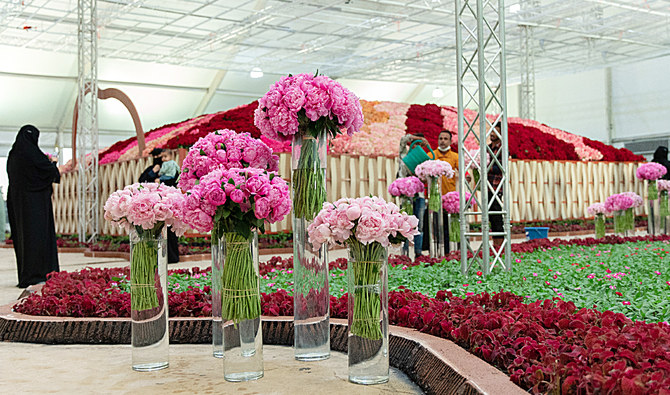

JEDDAH: At this time every year the mountainous city of Taif is adorned with the hues of bright pink roses that produce some of the world’s most alluring perfumes and oils.
The Taif Rose Festival is the modern iteration of a tradition of cultivation and harvesting that has taken place in this region over the past nine centuries.
It was launched on May 6 at Al-Rudaf Park in the southern part of the city, and is open from 4 p.m. to 12 midnight.
The Ministry of Culture, in cooperation with Taif Municipality and under the patronage of Makkah Gov. Prince Khaled Al-Faisal, have organized the festival for two years in a row.
However, it has been running for the past 17 years, Arab News was told by Ahmad Al-Joaid, a tour guide from Taif who has been operating for 15 years in the field.
Al-Joaid said: “A number of new activities are added to the festival every year. Al-Rudaf Park is an area of over half-a-million square meters … a theater has also been created for the festival … Concerts (are) also a new addition.”
The ministry tweeted on its account @MoC_Engage: “Between the beauty of roses and the creativity of art, we welcome you to Taif roses festival.”
The festival has 13 sections featuring 50 live performances and folkloric dances from across the Kingdom in the park, and music shows by male and female artists.
The organizers have set up a workshop aimed at young people that provides information on how to become involved in the perfume-making industry.
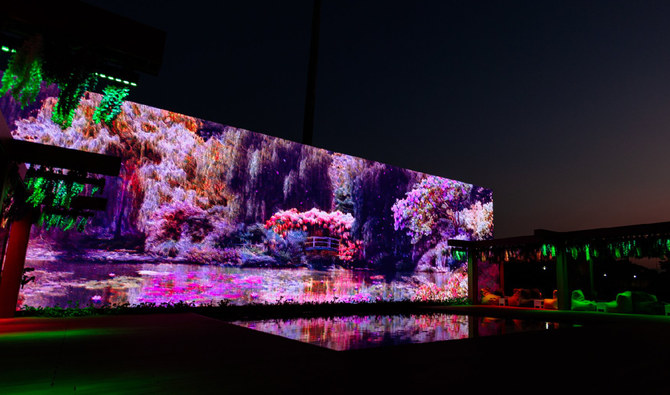
There is also an exhibition titled “Claude Monet,” named after the French painter and founder of impressionism, who portrayed nature with such startling creativity. Several of Monet’s renditions are on display.
The festival also provides an opportunity for aspiring Saudi artists to display their paintings at “Cultural Street,” and drawings and other artwork at “Drawing Exhibit.”
Many families have set up booths to sell byproducts of Taif’s produce such as rose water, perfumes, deodorants, soaps, body and skincare products, food and sweets.
The festival is also a great place for social media enthusiasts because it has several picturesque backdrops for photographs such as the Rose Dome, which contains a giant painting made of natural roses, the largest basket of the flowers in the city, and models and gates decorated with the produce.
Visitors can also view and listen to various rare birds.
Taif roses have historic, economic and religious importance. The oil is used to perfume the walls of the Kaaba, which is also washed twice annually with its scented water.
The region has more than 2,000 flower farms producing over 200 million roses every season.
Residents of Makkah and Jeddah visit Taif regularly in summer. “People can do plenty of things in Taif in addition to visiting the festival during their one-day visit … (including) museums, local markets, rose factories in Al-Shafa and Al-Hada, the cable car, strawberry farm, zoo, and historical castles,” the tour guide said.


