BAGHDAD: Violence and sluggish reconstruction have prevented the return to Iraq’s northwestern town of Sinjar of its predominantly Yazidi population after the abuses of militant rule, the Norwegian Refugee Council said Wednesday.
Five years after the defeat of the Daesh group, which committed massacres against the Yazidis and used their women as sex slaves, the town’s Yazidi, Muslim Kurdish and Arab residents are no closer to returning home, especially after a surge in violence earlier this month.
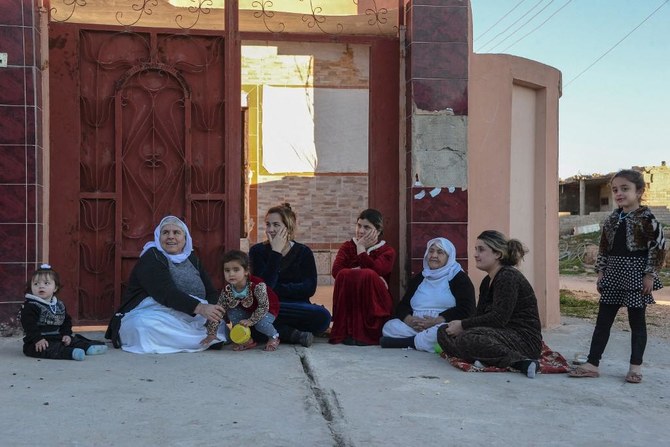
The aid group said that “nearly two-thirds of Sinjar’s population — over 193,000 Yazidis, Arabs, and Kurds — remain displaced.”
The Yazidis are a Kurdish-speaking minority who were persecuted by Daesh for their non-Muslim faith after its capture of the town in 2014.
“Widespread destruction of civilian houses, new clashes, and social tensions” are preventing returns, NRC said in a report.
Out of 1,500 people surveyed by the aid group to determine how decisions to return home are made, about 64 percent “said their homes were heavily damaged.”
“A staggering 99 percent of those who applied for government compensation had not received any funding for damaged property,” it said.
“Families from Sinjar remain in displacement, with thousands still living in camps,” NRC’s country director for Iraq, James Munn, said.
“We need durable solutions put in place so Iraqi families can once again start living their lives and plan for a safer future.”
The aid group called on the Iraqi government and the authorities in the autonomous Kurdistan region to “prioritize the rehabilitation of infrastructure and the restoration of services to allow for safe housing, land, and property, alongside public infrastructure.”
Some “80 percent of public infrastructure and 70 percent of civilian homes in Sinjar were destroyed” during the conflict years ago, the NRC said.
In early May, fighting broke out between Iraqi troops and Yazidi fighters affiliated with Turkey’s banned Kurdistan Workers’ Party (PKK), killing at least one Iraqi soldier.
The Iraqi army was seeking to apply an agreement between Baghdad and the Kurdistan region for the withdrawal of Yazidi and PKK fighters from Sinjar.
More than 10,000 people fled the latest fighting, adding to the population of displaced.


![]()

‘Conflict, destruction’ prevent return to Iraq’s Yazidi heartland: NGO
Short Url
https://arab.news/jg54m
‘Conflict, destruction’ prevent return to Iraq’s Yazidi heartland: NGO
- ‘Nearly two-thirds of Sinjar’s population — over 193,000 Yazidis, Arabs, and Kurds — remain displaced’
- The Yazidis are a Kurdish-speaking minority who were persecuted by Daesh for their non-Muslim faith


Latest updates




Recommended


© 2026 SAUDI RESEARCH & PUBLISHING COMPANY, All Rights Reserved And subject to Terms of Use Agreement.