

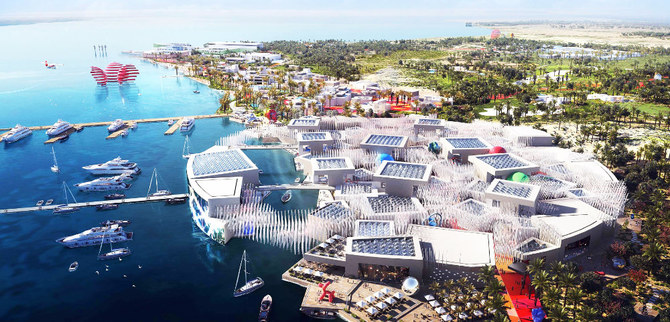
More than 75% of TRSDC buildings aiming for top global sustainability rating

TSRDC has adopted a value-driven approach involving ecological services that ensure every step of the grand design is in harmony with nature. (Supplied)
Short Url
Updated 03 May 2022
Follow

More than 75% of TRSDC buildings aiming for top global sustainability rating

  • They aim to protect the environment, invest in clean energy and preserve natural habitats

RIYADH: Placing environmental capital at the heart of their operations, The Red Sea Development Co. and AMAALA have resolved to protect the environment, invest in clean energy and preserve natural habitats, buildings and beaches around the coast.

Top officials connected with the project were determined to introduce the latest advancements in environmental technology to drastically reduce carbon emissions and protect the pristine waters along the west coast of Saudi Arabia.

TSRDC has already adopted a value-driven approach involving ecological services that ensure every step of the grand design is in harmony with nature.

“We explore opportunities provided by the natural environment and work with the design team to capitalize on them to enhance the design, maximize guest experience and protect our environmental capital,” Ruba Farkh, environmental assessment director at TRSDC, told Arab News.

The outcome is outstanding. Over 75 percent of the buildings in the area are targeting the LEED Platinum, the highest rating in Leadership in Energy and Environmental Design, the rating system used by the US Green Building Council to measure a building’s sustainability and resource efficiency. 
The rest of the buildings are eyeing “Mostadam Diamond,” the highest rating in the Kingdom’s new green building rating system. These ratings ensure environmental preservation while developing assets and bring transparency to the projects due to their independent assessment.

“All our buildings meet the Saudi Building Code, including the Saudi Green Building Code (1001), which is aligned with the International Building Code,” she explained.

The project’s master plan has also factored in LEED for Cities and Communities, which revolutionizes how cities and communities are planned, developed, and operated to improve their overall sustainability and quality of life.

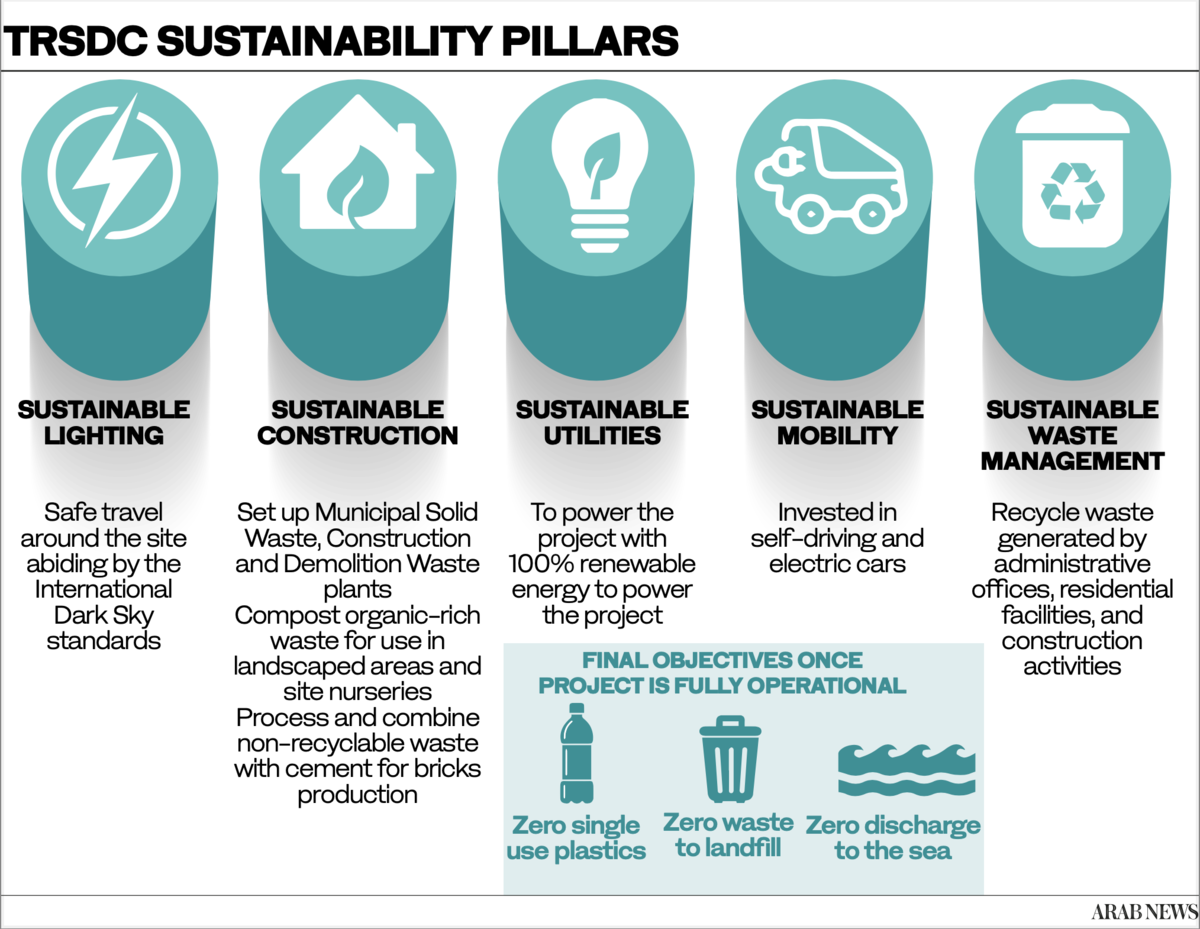
“For example, we will install and operate our own 100 percent renewable energy power supply to meet all utility demands across the entire project,” explained Farkh.

She added that all their assets were designed to meet stringent requirements for ecological lighting and dark sky access.
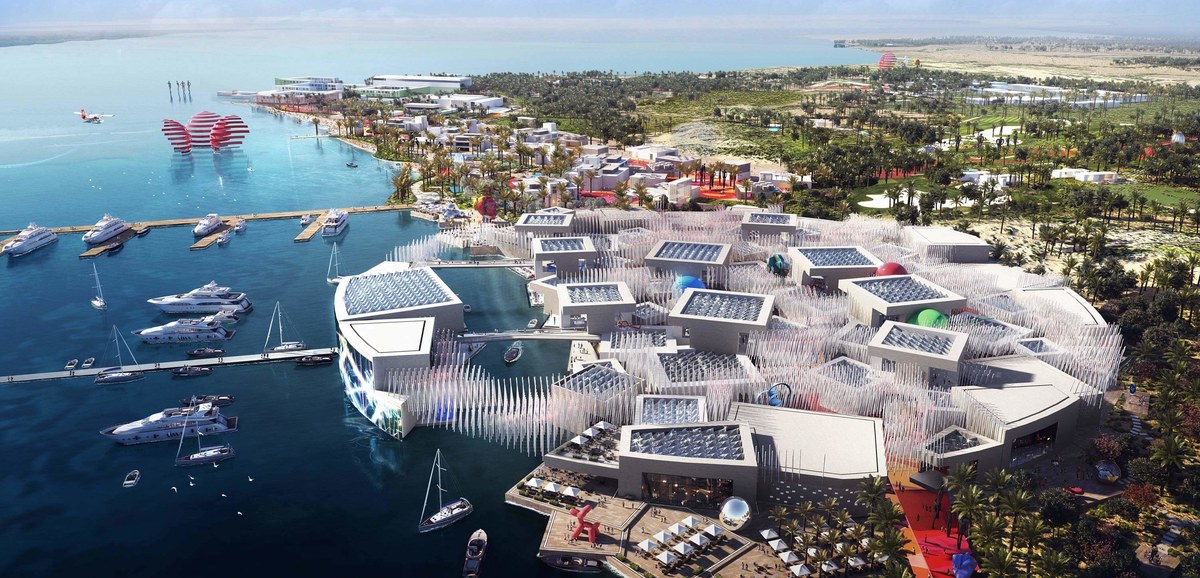


An impression of the cultural village at AMAALA (supplied)

The company is already pushing the envelope to ensure environmental assessments act as a beacon to design their master plans and minimize their impact on the ecosystem.

David McKenna, sustainability performance director at TRSDC and AMAALA, also shared the current and future measures taken to utilize the abundance of sunlight to generate electricity.

“We have abundant sunshine all year round, so we have harnessed it to power our resorts using centralized solar farms. This renewable energy approach is inherently a low-carbon design approach. We also applied strict standards to reduce our water consumption across our landscape.

One hundred percent of wastewater is treated and recycled for irrigation use on our landscaped areas,” McKenna said.

The company’s designs are also committed to minimize the use of concrete to ensure a low embodied carbon impact over their lifetime.

“For example, we are also finding ways to lower the carbon footprint of our concrete by focusing on all main ingredients to reach our Green Concrete goals,” said McKenna.
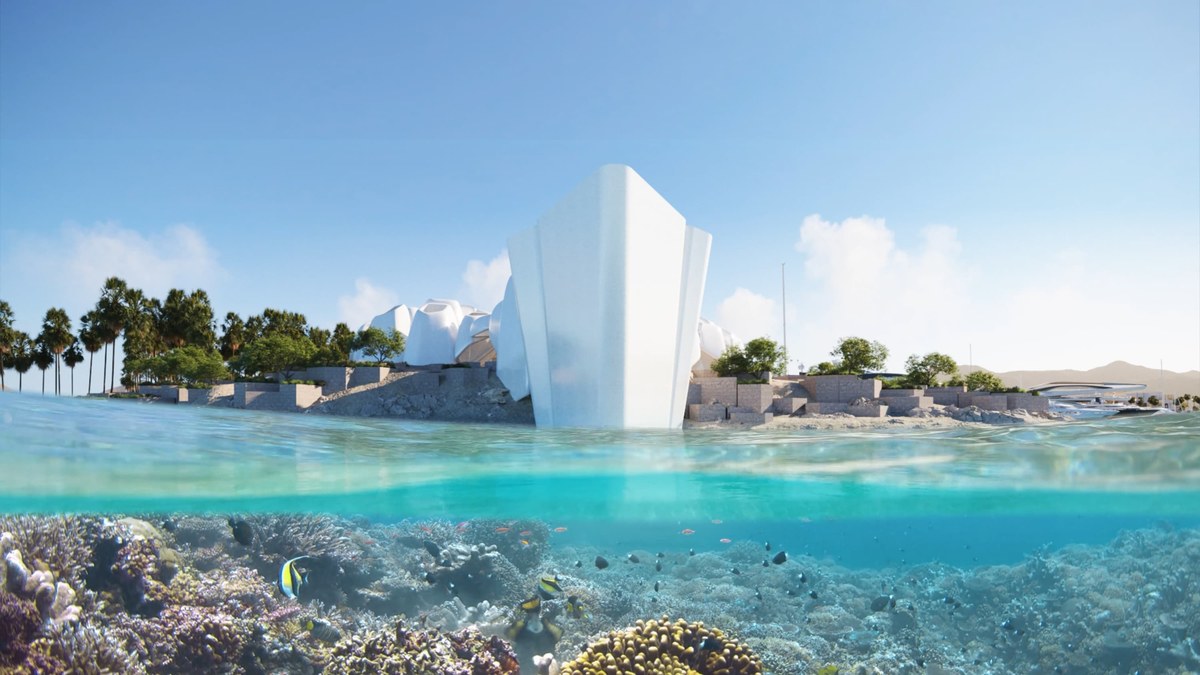


An impression of a feature of the AMAALA (supplied)

He said the company focuses on cement because many of these cement types contain fly ash or ground granulated blast-furnace slag, altering the compressive strength-time.

He added that prominent among the green goals are O Steel, which prioritizes recycling content, and O Aggregates, which focuses on local suppliers with good environmental management systems.

“We are strategically using modular design and lean constru tion approaches to lower person hours worked on-site, plus construction waste produced on-site. In addition, our logistics hub for the construction stage ensures efficient handling of materials, and it brings new standards for effective waste management in this region,” McKenna said.


Read more: TRSDC showcases starry night in bid to become world’s largest dark sky reserve


The other crucial component in achieving carbon neutrality is the mitigation of emissions from mobility.

“We have adopted a mobility strategy based on the use and utilization of electric vehicles, electric boats for all transport needs for the destination,” McKenna indicated.

While sustainability is not a want but a need of the hour, it will take giga-projects such as TSRDC and AMAALA to set an example for companies looking to make environmental consciousness a natural extension of their business priorities.


Supplier hub to anchor Saudi car industry, says TASARU CEO

Updated 09 February 2026
Follow

Supplier hub to anchor Saudi car industry, says TASARU CEO

RIYADH: Saudi Arabia’s Public Investment Fund is stepping up efforts to localize automotive manufacturing, with its portfolio company TASARU announcing partnerships with five Tier-1 global suppliers to localize advanced component manufacturing in the Kingdom. 

The agreements were announced at the fourth PIF Private Sector Forum in Riyadh. TASARU also revealed plans to establish a new Supplier Hub in the King Salman Automotive Cluster in King Abdullah Economic City, designed to support next-generation vehicle development and strengthen the national automotive ecosystem in alignment with Vision 2030. 

TASARU also revealed plans to establish a new Supplier Hub in the King Salman Automotive Cluster in King Abdullah Economic City. Supplied

Speaking to Arab News on the sidelines of the forum, Michael Mueller, CEO of TASARU, said: “You cannot build cars without having the right partners from the supplier side, and with that, together with the OEMs, we selected the partners that we just announced today to localize them.” 

He added that the presence of large international suppliers is expected to attract smaller Tier-2 and Tier-3 manufacturers, helping the ecosystem scale. 

The five partners include Shin Young for metal stamping and body structures, JVIS for exterior plastics, and BENTELER for chassis and hot-formed steel components. Guangxi Fangxin will supply interior systems, while Lear Corp. completes the group, with all expected to establish manufacturing operations in the Kingdom. 

Founded more than three years ago, TASARU was established to introduce new technologies into Saudi Arabia’s mobility sector. The company has prioritized localizing smaller OEM and supplier businesses while bringing next-generation solutions into the Kingdom. 

Mueller said visible progress on factory construction by Ceer, Lucid and Hyundai is shifting perceptions about the sector’s viability. 

“A lot of people on the sideline watched whether automotive is really happening,” he said. “Now they recognize that the factories … are under construction, so that’s the first signal that it’s not just the bubble. It’s not just PowerPoint. It’s getting real now on the ground.” 

The CEO shares that KAEC is positioned as a hub for Saudi Arabia’s automotive industry, making it a strategic location for the TASARU Supplier Hub. The facility is designed to support OEMs and next-generation vehicles, including Ceer and Lucid Motors, through a shared, just-in-time manufacturing model with integrated logistics and regulatory support. 

TASARU will provide infrastructure and operational support, while partners bring technical expertise and gradually develop training centers to build a local workforce, Mueller said. 

He positioned Saudi Arabia as an attractive base for global suppliers because of its access to minerals and rare earth resources, energy availability and coordination across PIF portfolio companies and government entities.  

“They have access to minerals. They have access to rare earth. They can benefit from what is already existing. They have stable energy solutions. I think this footprint might benefit from the whole ecosystem as it is, not just automotive,” he said. 

Companies without a Saudi footprint risk missing a “huge opportunity,” Mueller added. 

He said advancing the industry will require clearer regulatory frameworks, including defined trigger points and licensing pathways that allow companies to execute their mandates. 

“Of course, you need to have more or less the regulatory framework to allow autonomous cars, sooner or later, on the streets. But it's happening, and this is a huge chance also for Saudi Arabia,” Muller said. 

He added: “If you are advanced in bringing such regulations onto a fast track, then you have a huge opportunity to be one of the first countries that establish this.”  

With rising traffic levels in Riyadh, Mueller said emerging mobility technologies could help solve first- and last-mile transportation challenges. 

“If the Metro is already full, that is good because people are using it. Now, you have to connect the dots. You have to finally make sure that people get from home to the metros and or to the bus station. So this first last-mile transportation is something where new technologies might help to bridge that,” he said. 

The CEO said the project is expected to take roughly one and a half to two years for suppliers to go live. More broadly, the initiative reflects Saudi Arabia’s transition from investment attraction to full-scale industrial localization, strengthening local content, private-sector participation, and long-term industrial resilience in line with Vision 2030.