



LONDON: Dozens of professional Arab women, including doctors, lawyers, entrepreneurs and influencers, living in Britain gathered in the UK capital during the Muslim holy month of Ramadan to celebrate Emirati culture.
“We decided to have our iftar event at an Emirati restaurant, Al-Fanar, because we wanted to bring Dubai culture to London through the restaurant and to welcome our new co-founder who is Emirati,” Dyna Fayz, co-founder of the Prestigious Ladies London Club, told Arab News.
“We also wanted to help our members to understand everything about Emirati culture.”

Dyna Fayz (L), co-founder of the Prestigious Ladies London Club, hosted the event as a tribute to her new Emirati co-founder Shaikha Almazrouei (2nd R). (AN Photo)
About 70 women representing different corners of the Arab world were asked to come dressed in traditional dress to share their traditions, culture, identity and backgrounds with other Arab and non-Arab women at the event.
The women enjoyed Emirati dishes, including samboosas, lamb machboos, prawn biryani, legaimat for dessert and karak tea, in the restaurant, which has traditional surroundings dating back about 100 years.
Emirati traditions featured included a henna tattoo artist, an abaya fashion show, bakhoor (Arabian oud) burning, a raffle and an oud performer serenading the women as they sang along.
The organization, which aims to support and empower professional women and entrepreneurs, has about 500 members and is active throughout the year, holding monthly networking and social events.
With the lifting of pandemic restrictions, the club plans to hold events exploring Egyptian, Palestinian, Iraqi and other Arab multinational cultures, Fayz said.
The Syrian journalist and presenter said that it is important Arab women from similar backgrounds have the chance to network and meet.
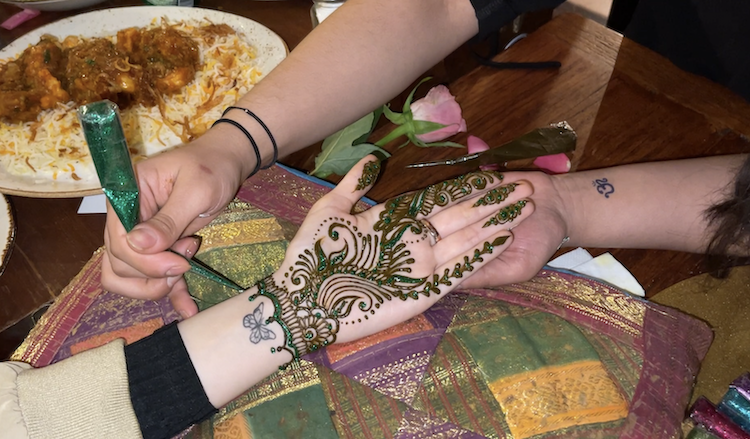
Emirati traditions featured at the iftar event included a henna tattoo artist, who went round and drew different colored designs. (AN Photo)
“I don’t think there is any other Arab women’s club here in the UK, and that’s why by making our club open to different nationalities, but also specifically for Arabs, we are hoping that it will attract more and more women from all over the Middle East,” she said.
Shaikha Almazrouei, co-founder of the club, said that she was pleased with the turnout, which also included British, American, Portuguese and Brazilian professionals.
Almazrouei, who is head of UAE Stem Cell Group at King’s College London and was the first Emirati to specialize in stem cell transplantation, used the event to call on expecting mothers to contribute toward curing disease.
Tissue and cord blood stored during delivery play a valuable role in the treatment of a range of illnesses, she said.
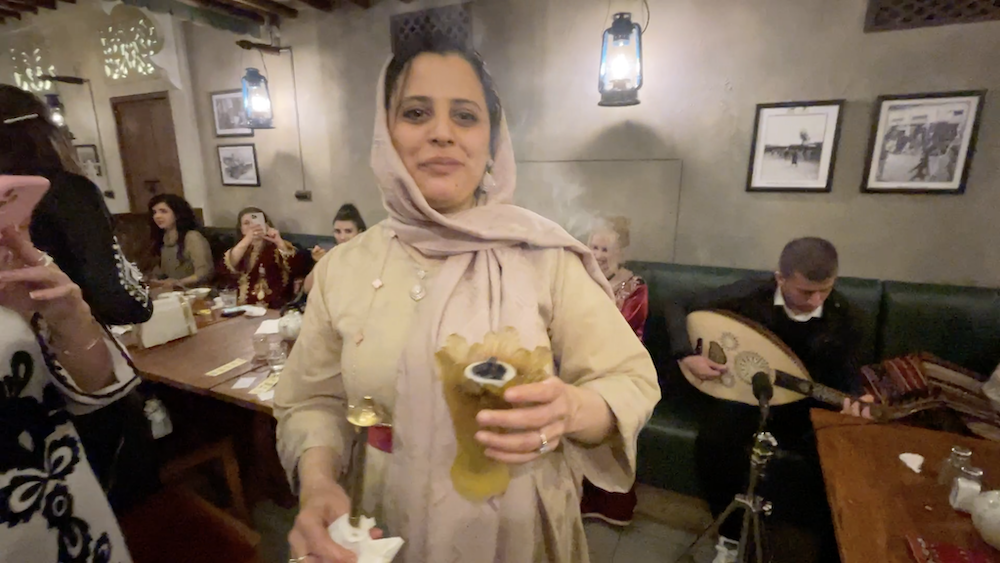
Shaikha Almazrouei, co-founder of the Prestigious Ladies London Club, perfumed the ladies with traditional Emirati bakhoor (Arabian oud). (AN Photo)
Raihan Jumah, a Saudi Ph.D. student at Henley Business School, said it was wonderful to share her culture with so many women, including “a lot of leaders from different nationalities, all of whom are passionate about their work and skills.”
Jumah, who also launched the Riyadea Academy, a UK-Saudi volunteering website, has been studying in the UK for 10 years on a scholarship program from the Saudi government, focusing on women’s empowerment.
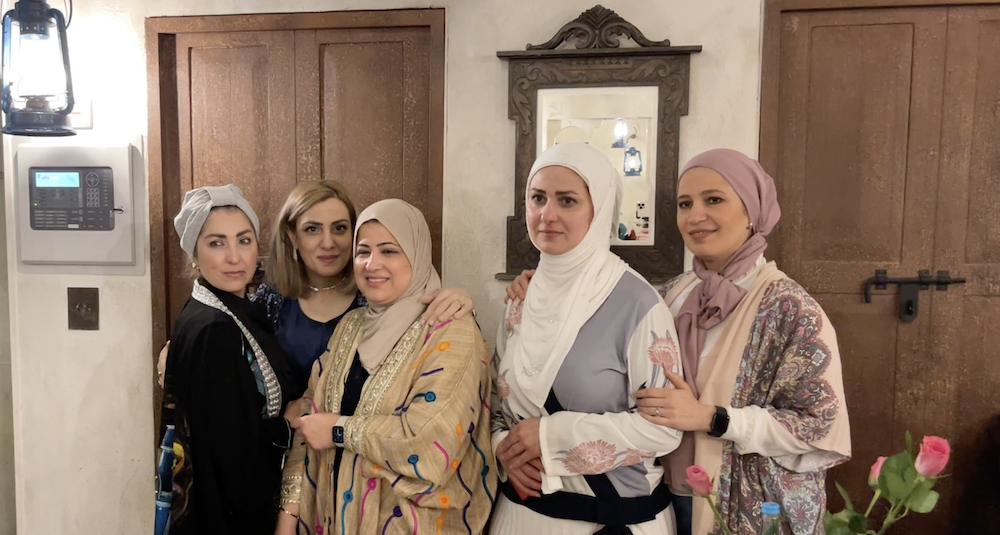
The Ramadan iftar event was held at an Emirati restaurant, Al-Fanar, which has traditional surroundings dating back about 100 years. (AN Photo)


