


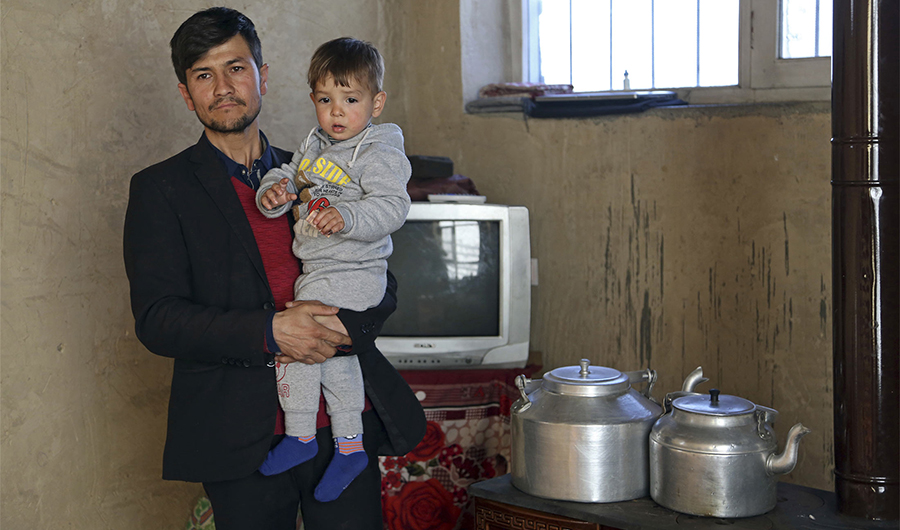
KARACHI: An Afghan man, who named his newborn after former American president Donald Trump in September 2016, said his family narrowly escaped death while trying to flee Afghanistan with the help of human traffickers to find refuge somewhere abroad.
Sayed Asadullah Poya is among thousands of Afghans who started rendering services to international forces and non-governmental organizations in Kabul after the collapse of the Taliban regime in 2001.
Many of these individuals were later abandoned by the United States and other countries while evacuating Afghanistan in August last year, though rights organizations believed their lives would be at risk after the Taliban came back to power.
Poya, who was inspired by Trump after reading his books, said a large number of people who worked with the US government and foreign organizations were still trapped in Afghanistan.
“The Taliban almost caught us as we left our home just before a search operation,” he told Arab News earlier this week over the phone from Turkey where he recently arrived after making a brief stopover in Iran.
Poya informed that his family had illegally crossed the Nimroz border while looking for a peaceful sanctuary.
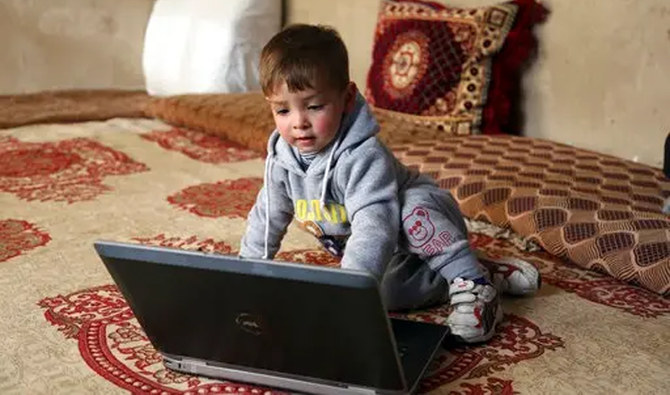
Eighteen-month-old Donald Trump, plays with a computer at his house, in Kabul, Afghanistan, Thursday, March 15, 2018. (AP/FILE)
He recalled how fear and panic gripped those who had previously worked with NATO forces after the Taliban arrived in Kabul, though he added the situation was worse for his family since his son had a non-Muslim name which greatly increased threat level for them.
“I was very scared because they had sent a threatening letter [to me] saying that I was an infidel and that my killing was permissible,” he said. “But fortunately, they could not find me during their first search.”
Poya said he continuously remained on the move with his family until he managed to enter Iran with his wife and son.
Bilal Karimi, a Taliban deputy spokesperson, dismissed Poya’s claims, however, while pointing out that the new government in Kabul had urged people who previously worked with international forces to stay in their country and play a constructive role for its development.
“There is no threat to anyone,” he told Arab News on Monday. “If anyone claims so, that’s completely untrue and baseless.”
Poya maintained the threat to the lives of his family persisted since his decision to name his son after the former US president was never well received. Even before the Taliban returned to power, his decision had been criticized by his own father and siblings. In fact, the situation had become so difficult for him that he had decided to seek asylum in Pakistan in 2019.
“People wrote an agreement letter that my family and I would not be allowed to live in our village,” he said. “Many publicly accused me of disloyal to my religion, forcing me to leave for Pakistan. But I was threatened there as well and sometimes encountered indifferent attitude. I knew that my life was more in danger there, so I decided to return to Afghanistan.”
After the Taliban takeover of Kabul last year, the threat to his family grew further. Poya said he tried to reach out to his former international employer for help, but he did not receive any response. He said that he was beginning to suffer from mental health issues like depression.
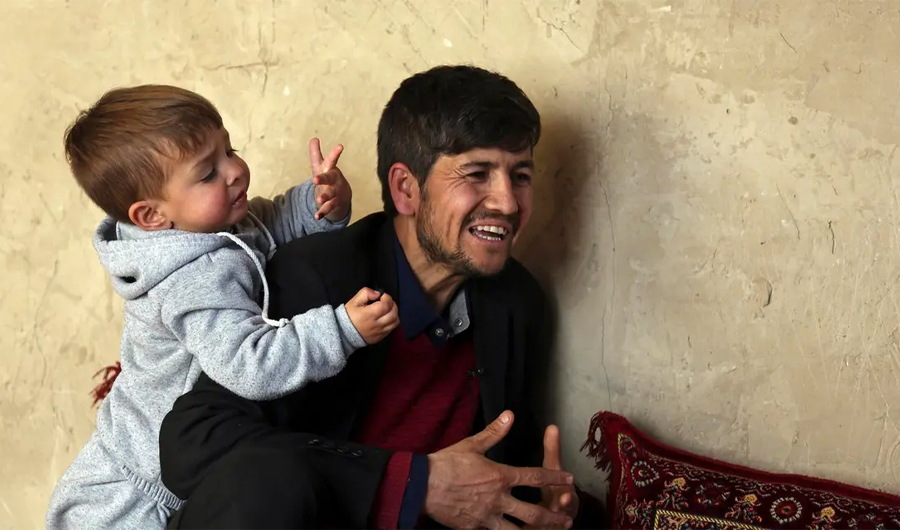
Eighteen-month-old Donald Trump at his house, in Kabul, Afghanistan, Thursday, March 15, 2018. (AP/FILE)
“I thought if the situation persisted, I or maybe some of my family member would commit suicide,” he said while explaining why he decided to take the dangerous route about two months ago to enter Iran.
However, his miseries continued even after he left Afghanistan.
“My decision to move to Iran with a group of human traffickers turned out to be one of the worst experiences of my life,” he said. “I endured humiliation, hunger, thirst and went on for days without food.”
Poya said he had finally applied for registration with Turkey’s refugee authority.
He maintained that he felt relatively safe in his new environment, though there were not too many employment opportunities for people like him who could not speak the local language.
Meanwhile, his family is stuck in Iran. Whenever Poya speaks to his wife over the phone, she cries due to the miseries of her family and its uncertain future.
The father of 6-year-old Trump says he fears being deported by the Turkish authorities.
“I don’t have enough documents to live here,” he said. “I am afraid that Turkey will send me back to Afghanistan.”


