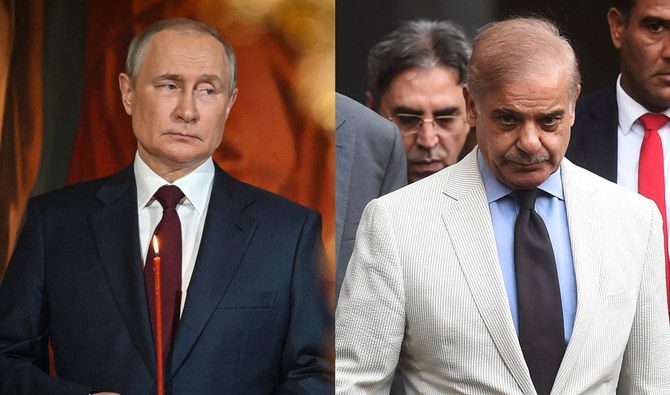
ISLAMABAD: Russian President Vladimir Putin and Prime Minister Shehbaz Sharif have discreetly exchanged letters, reported a local media outlet on Sunday, adding the two leaders agreed to strengthen bilateral relations between their countries.
Pakistan's former prime minister Imran Khan repeatedly blamed the downfall of his administration on his decision to visit Moscow to meet the Russian president, saying the no-trust vote against him was part of a grand international scheme which was instigated by the development.
Quoting an unnamed foreign ministry official, The Express Tribune said the letters were exchanged after Sharif's election to the top political office of the country, though the correspondence was kept away from the media glare to avoid public attention.
"The official, who requested not to be named because of the sensitivity of the issue, said Putin expressed the desire to deepen cooperation between the two countries," the newspaper reported. "PM Shehbaz wrote back to Putin thanking him for his felicitation message and expressed similar sentiments on bilateral ties between the two countries as well as cooperation on Afghanistan."
The report added the messages between the two leaders indicated that the relationship building process between Pakistan and Russia was continuing under the present political administration.
"Foreign office officials said resetting ties with Russia was a decision taken by the state a long time back keeping in view the changing regional and international alignments," wrote The Express Tribune. "That process, officials said, would continue but without much fanfare for some time given the Russia-Ukraine crisis."
The Russian embassy in Islamabad had also congratulated Sharif on becoming Pakistan's new prime minister earlier this month while hoping for further strengthening of bilateral relationship.


![]()

Local media reports discreet exchange of letters between Russian president, Pakistani PM
Short Url
https://arab.news/ryyzb
Local media reports discreet exchange of letters between Russian president, Pakistani PM
- Foreign ministry sources say the two leaders expressed hope for stronger bilateral ties
- Pakistani officials call it their state policy to nurture wide-ranging relations with Moscow
Latest updates


Recommended


© 2026 SAUDI RESEARCH & PUBLISHING COMPANY, All Rights Reserved And subject to Terms of Use Agreement.