

KSrelief, UNICEF in $7m program to support Yemeni children

1 / 2
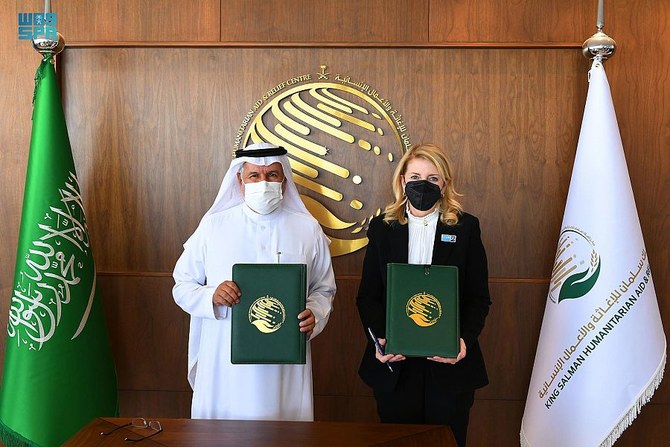
KSrelief on Tuesday signed a $7 million joint cooperation agreement with UNICEF to support Yemeni children’s access to quality education. (SPA)
2 / 2
KSrelief on Tuesday signed a $7 million joint cooperation agreement with UNICEF to support Yemeni children’s access to quality education. (SPA)
Short Url
Updated 29 March 2022
Follow

KSrelief, UNICEF in $7m program to support Yemeni children

  • Almost 600,000 children and 7,000 teachers, as well as 54,000 Yemeni people, will benefit from services provided under the agreement
  • Children will receive support for their psychological and physical well-being

RIYADH: Saudi Arabia’s King Salman Humanitarian Aid and Relief Center on Tuesday signed a $7 million joint cooperation agreement with the UN aid organization UNICEF to support Yemeni children’s access to quality education.

Almost 600,000 children and 7,000 teachers, as well as 54,000 Yemeni people, will benefit from services provided under the agreement.

KSrelief so far has implemented 26 educational projects worth almost $122 million in Yemen, in addition to implementing several joint projects with the UN and international organizations to support the country’s educational sector.

Under the agreement, an educational strategy is expected to be developed for displaced children in the conflict-racked country to ensure they receive quality education in safe environments.

Children will receive support for their psychological and physical well-being, while training programs will help teachers deal with those affected by the war.

The two sides were represented in the agreement by Abdullah Al-Rabeeah, KSrelief supervisor general, and Catherine Russell, UNICEF executive director.

As part of the agreement, a campaign will seek to raise parents’ awareness of the importance of returning their children to school to build their future through education.

Al-Rabeeah said that the agreement is an extension of the Kingdom’s humanitarian efforts to support the educational sector in Yemen, and to promote “this important and vital sector as it is a main engine for the prosperity of societies and a main artery toward the progress of nations.”

He added that the center, in partnership with UNICEF, continues to support and provide care for Yemeni children.

KSrelief and the UN organization have helped millions of children in Yemen and other countries where the two sides work closely together, he said.


What makes the Taif Rose such a precious fragrance product?

Perfume artisan involvement aligns with Jazan Festival’s initiative repositioning traditional crafts as dynamic. (SPA)
Updated 6 sec ago
Follow

What makes the Taif Rose such a precious fragrance product?

  • These farms produce nearly 550 million roses annually, all harvested during a brief season of no more than 45 days, from early March to the end of April

TAIF: Taif roses, renowned for their exceptional aroma and the meticulous care required in cultivation, harvesting, and processing, are among the Kingdom’s most valuable natural perfume products and stand out as prominent agricultural and cultural symbols deeply connected to the region’s heritage and tourism.

Taif rose farms, numbering over 910 and spread across Al-Hada, Al-Shafa, Wadi Muharram, Al-Wahat, Al-Wahit, and Wadi Liya, are home to approximately 1,144,000 rose bushes covering about 270 hectares of agricultural land. 

FASTFACT

Taif rose farms, numbering over 910 and spread across Al-Hada, Al-Shafa, Wadi Muharram, Al-Wahat, Al-Wahit, and Wadi Liya, are home to approximately 1,144,000 rose bushes covering about 270 hectares of agricultural land.

These farms produce nearly 550 million roses annually, all harvested during a brief season of no more than 45 days, from early March to the end of April.

This harvest yields around 20,000 tolas of Taif rose oil. Producing a single tola requires approximately 12,000 roses, which are picked manually at dawn and distilled within 24 hours to preserve the purity and quality of the scent before reaching the market.