ThePlace: Sharaan Nature Reserve, a rich biodiversity hotspot of AlUla

1 / 3
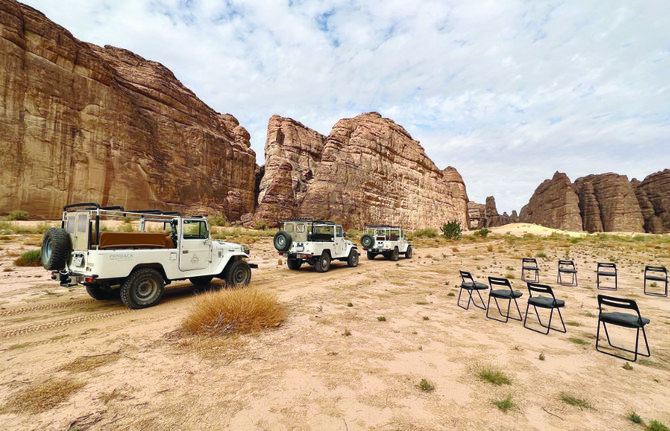
Sitting on 3,000 years of history, the Sharaan Nature Reserve covers an area of 1,500 sq km and falls under the “Vision of AlUla,” launched by the city’s royal commission (AN Photo/Zaid Khashogji)
2 / 3
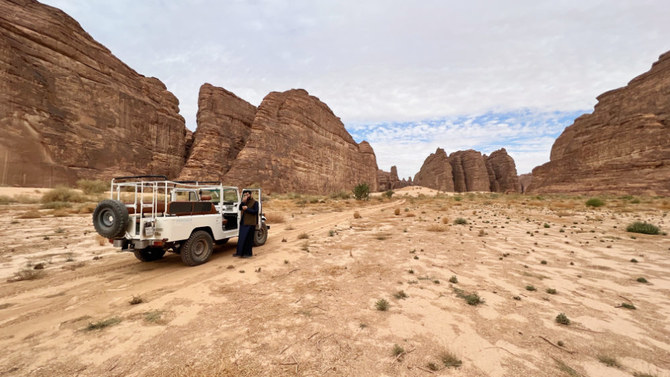
(AN Photo/Zaid Khashogji)
3 / 3
(AN Photo/Zaid Khashogji)
Short Url
Updated 28 February 2022
Follow

ThePlace: Sharaan Nature Reserve, a rich biodiversity hotspot of AlUla

  • Among its mountains, visitors can see historical engravings from ancient civilizations
  • Protecting and conserving the sensitive biodiversity native to AlUla is at the top of the commission’s priorities to restore the area

RIYADH: Sharaan Nature Reserve For nature lovers, explorers and adventurers, AlUla offers a unique safari inside its nature reserve surrounded by a red, rocky landscape, filled with indigenous flora and fauna, that promises an extraordinary experience.

Sitting on 3,000 years of history, the Sharaan Nature Reserve covers an area of 1,500 sq km and falls under the “Vision of AlUla,” launched by the city’s royal commission, which seeks to transform the region responsibly in order to preserve and protect its natural and cultural heritage.

Among these is expanding an animal breeding program; roaming within the reserve are a myriad of species, including Nubian ibexes, red-necked ostriches, Idmi gazelles, endangered Arabian wolves and large-eared red foxes, and most notably, the Arabian leopard.

However, the introduction of domestic livestock to the region has decimated the native vegetation. Overgrazing has led to desertification and habitat degradation in some areas.

Protecting and conserving the sensitive biodiversity native to AlUla is at the top of the commission’s priorities to restore the area. Acacia trees, indigenous to the land, are being planted as part of the project to develop vegetation and rehabilitate AlUla’s natural ecosystem — the trees in time will also provide shade for animals within the habitat.

Among its mountains, visitors can see historical engravings from ancient civilizations of hunters holding spears on horses and camels — which bore religious significance — as well as petroglyphs of old Arabic writings, such as Nabataean.

As part of ongoing efforts to preserve its wildlife, “The Global Fund for the Arabian Leopard” was established by the Royal Commission for AlUla to ensure that Sharaan can safely and adequately host the endangered leopard and protect it from extinction. Its aim is to sustain the leopard population and its prey and protect its natural habitat.

The reserve will also have a resort, expected to be completed by 2023.


Rainfed agriculture booms 1,100% under Saudi rural development initiative

Updated 28 December 2025
Follow

Rainfed agriculture booms 1,100% under Saudi rural development initiative

  • It is one of eight agricultural segments receiving program support

RIYADH: The Sustainable Agricultural Rural Development Program, known as Saudi Reef, has announced exceptional growth in its rainfed crops sector, one of eight agricultural segments receiving program support, the Saudi Press Agency reported. 

The sector has registered extraordinary expansion, surpassing 1,100 percent, with participant numbers climbing to over 13,300 beneficiaries nationwide.

Program spokesman Majed Al-Buraikan identified rainfed agriculture as a cornerstone of Saudi Reef’s achievements, highlighting its role in boosting production efficiency, bolstering food security and self-reliance, enabling sustainable farming in water-scarce regions, and raising income levels and quality of life for smallholder farmers — all consistent with Vision 2030 priorities.

Al-Buraikan outlined the program’s principal aims, including broadening the agricultural production foundation, securing food independence across multiple crop categories, enhancing smallholder farmer prosperity and employment prospects to foster social cohesion, and safeguarding environmental and natural resources throughout rural Saudi Arabia.

Saudi Reef extends support and technical assistance across eight distinct sectors: honey production, fruit cultivation, coffee production, rose farming, rainfed crops, livestock raising, artisanal fishing, and value-added agricultural products.