

BBC complains to UN about Iran’s harassment of journalists

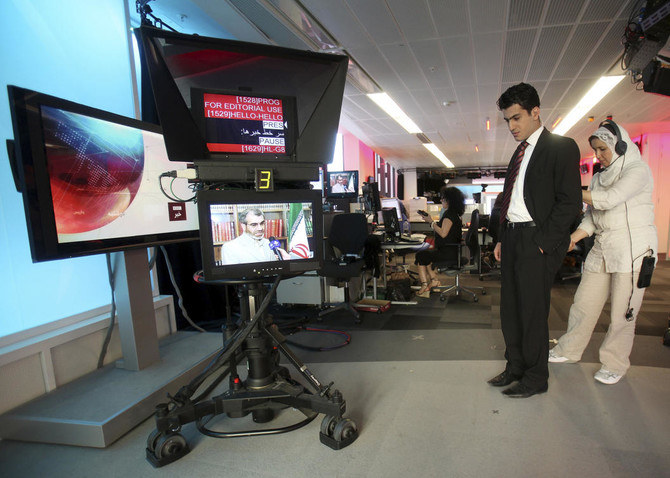
BBC Persian service presenter Fardad Farahzad gets ready to present the news, at the corporation's London headquarters. (AP/File Photo)
Short Url
Updated 10 February 2022
Follow

BBC complains to UN about Iran’s harassment of journalists

  • ‘There have been escalating actions and threats … It must stop’
  • This is the third such complaint in 5 years

LONDON: The BBC has filed an urgent complaint to the UN against Iran’s government over “escalating actions and threats” toward its journalists at its Persian service and their families.

The broadcaster said Tehran has been targeting UK-based BBC News Persian journalists and their families in Iran for more than a decade, but there has been a “concerning increase in harassment and security risk” over the past year.

“There have been escalating actions and threats, including an asset freeze which penalises the journalists and their families, online harassment, gendered attacks on women journalists and death threats. It must stop,” said Liliane Landor, senior controller of BBC International News and director of the World Service.

She urged the UN “to continue to condemn Iran for their unacceptable treatment of our BBC News Persian colleagues.”

BBC News Persian journalists say in the past year, they have faced increased security concerns for themselves while their families in Iran have been harassed more often.

Despite being banned in Iran, BBC News Persian reaches a weekly global audience of almost 22 million people, including around 13 million in the country. 

This is the third complaint in five years filed by the BBC to the UN against Iran’s government. The first was in October 2017, and the second in December 2019.

Iran ranked 174 out of 180 countries in the 2021 World Press Freedom Index.


DCO and Arab News partner to combat digital misinformation, explore AI’s impact on media

Updated 06 February 2026
Follow

DCO and Arab News partner to combat digital misinformation, explore AI’s impact on media

KUWAIT CITY: The Digital Cooperation Organization (DCO) and the international Saudi newspaper Arab News have signed a Letter of Engagement aimed at strengthening knowledge and expertise exchange on the impact of artificial intelligence in the media sector, as well as leveraging expert insights to develop best practices to combat online misinformation amid accelerating technological advancements.

DCO said this step aligned with its efforts to strengthen collaboration with international media institutions to support responsible dialogue around digital transformation and contribute to building a more reliable, inclusive, and sustainable digital media environment.

Commenting on the agreement, Deemah AlYahya, Secretary-General of the Digital Cooperation Organization, said: “At a moment when AI is reshaping how truth is produced, distributed, and trusted, partnership with credible media institutions is essential.”

She added that “working with Arab News allows us to bridge technology and journalism in a way that protects integrity, strengthens public trust, and elevates responsible innovation. This collaboration is about equipping media ecosystems with the tools, insight, and ethical grounding needed to navigate AI’s impact, while ensuring digital transformation serves people and their prosperity.”

Faisal J. Abbas, Editor-in-Chief of Arab News, emphasized that the partnership enhances media institutions’ ability to keep pace with technological shifts, noting that engagement with representatives of DCO Member States enables deeper understanding of emerging technologies and regulatory developments in the digital space.

He added: “DCO’s commitment to initiatives addressing online content integrity reflects a clear dedication to supporting a responsible digital environment that serves societies and strengthens trust in the digital ecosystem.”

The Letter of agreement was signed on the sidelines of the Fifth DCO General Assembly held in Kuwait City under the theme “Inclusive Prosperity in the Age of AI”, alongside the second edition of the International Digital Cooperation Forum, held from 4–5 February, which brought together ministers, policymakers, business leaders, entrepreneurs, and civil society representatives from more than 60 countries to strengthen international cooperation toward a human-centric, inclusive, and sustainable digital economy.