
JACOBABAD, SINDH: Every year, Mujeeb Rehman Kharani leaves his home in Jacobabad in the southern Sindh province when the summer season begins, joining tens of thousands of others who run away from a city that is widely believed to be one of the hottest places on earth.
Between the months of May and August, the mercury rises to 50 degrees celsius and nearly half the city’s 200,000 people leave, local administrations officials said. A 2020 study by Loughborough University said Jacobabad had “crossed the deadly threshold of heat that the human body can withstand.” In July 2021, temperatures surpassed this limit, with the thermometer reading over 52 degrees Celsius with humidity, a milestone reached far sooner than scientists and climate models had predicted, with experts warning that if this temperature persisted for more than a few hours, it could result in organ failure or even death.
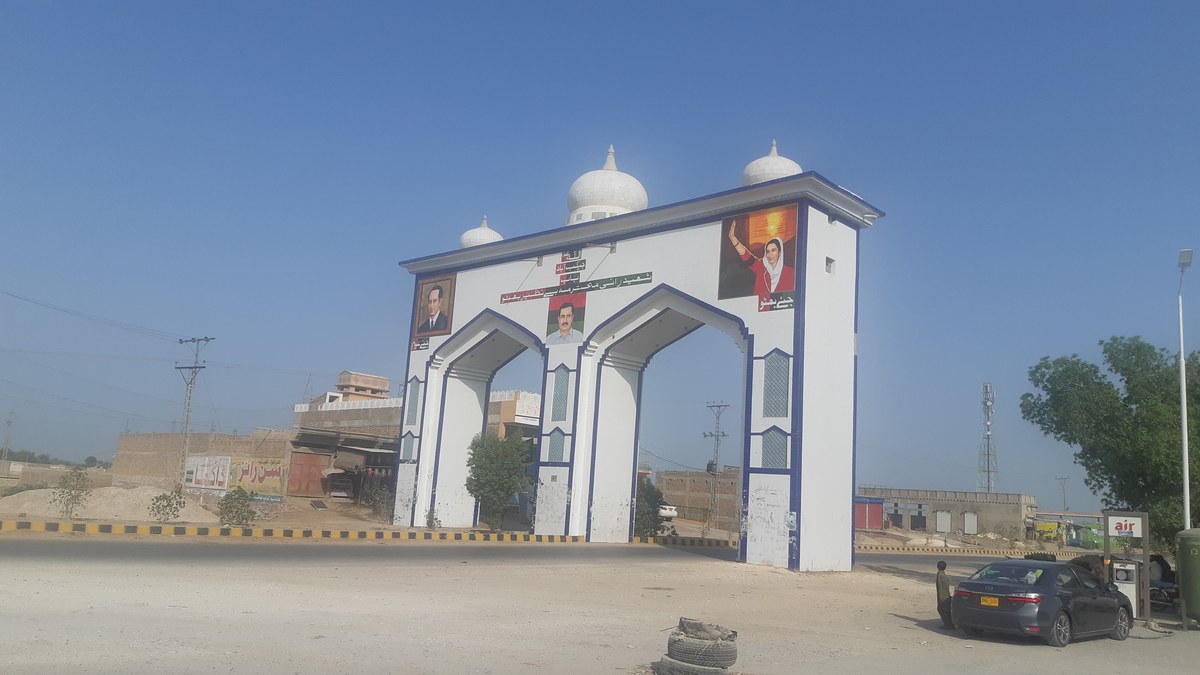
A view of the external gate of Jacobabad town on the Jacobabad-Sukkur highway in Jacobabad, Pakistan, on August 20, 2021. (AN photo by Zulfiqar Kunbhar)
These temperatures also threaten the continuation of daily life activities, as well as labour and productivity.
“During summers, laboring opportunities shrink, which compels me and many others to migrate,” Kharani, 26, told Arab News, saying he mostly traveled to Quetta, the provincial capital of Balochistan, where temperatures were significantly lower and it was possible to work, even during the hot season.
To earn as little as $3 a day working at construction sites, Kharani is separated for months from his wife and three children: "It is next to impossible to bear the expense of keeping my family with me.”
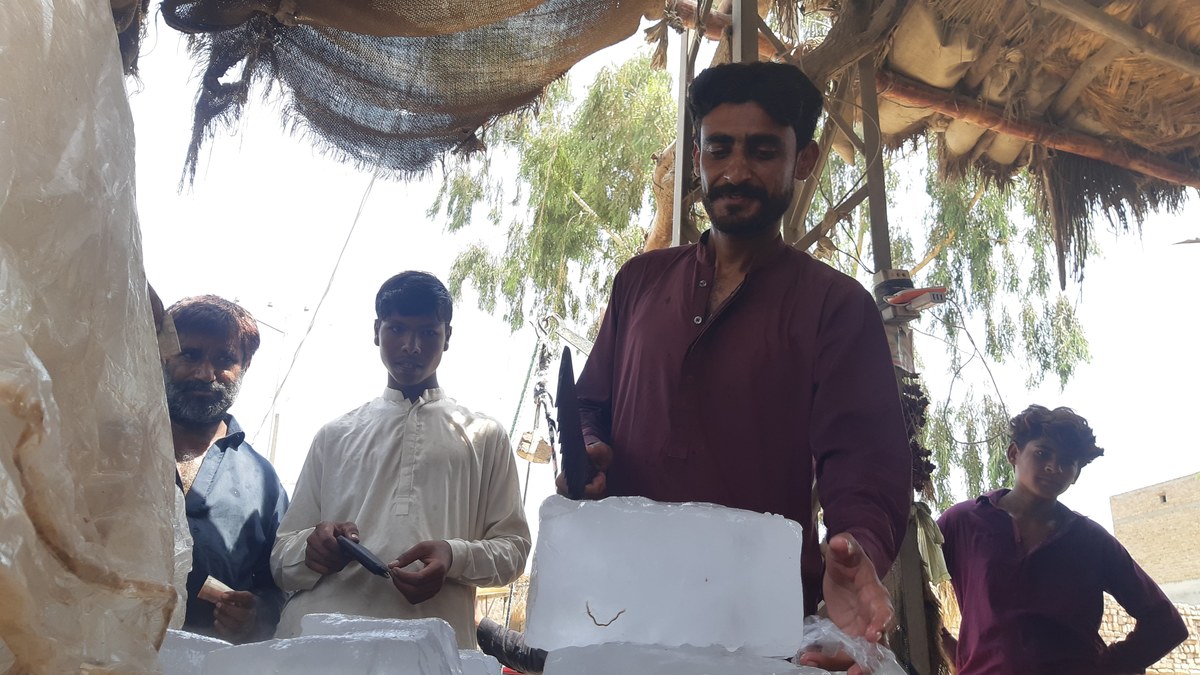
A vendor sells ice in Jacobabad, Pakistan, on August 19, 2021. (AN photo by Zulfiqar Kunbhar)
Allah Noor, 54, also leaves his home behind for the same reason.
“In Jacobabad, I work at brick kilns," he said. "But in the sizzling summers, it is almost impossible to work."
Liza Khan, a 23-year-old content writer, said she was unable to earn during the four months because of the unbearable heat coupled with electricity blackouts.
"From my content writing, I earn up to Rs80,000 ($450) a month. However, during the extremely hot months of May, June, July and August, I cannot work," she told Arab News. "How can you work when you face power outages up to 10 hours a day?"

Online content writer Liza Khan poses for a photo in Jacobabad, Pakista, on August 20, 2021. (AN photo by Zulfiqar Kunbhar)
Jacobabad's inability to cope with the extreme weather has pushed it into a vicious circle, as increased use of energy during the summer results in deforestation which only exacerbates the effects of rising heat.
“In the presence of power load shedding and no gas coverage, leftover forest and vegetation are being cut by locals,” Jacobabad district administration official Ghulam Abbas Sadhayo told Arab News. "The intensity of heat has increased here in recent years," he said, attributing the problem to climate change, as "Pakistan is among the top world nations facing the consequences of global warming."
Other than heat-related labor losses, the case of Jacobabad also highlights how mass summer migrations are affecting the region's education.
A 2018 study by Shifa Welfare Association (SWA), a local NGO, showed that not only laborers, but teachers too were leaving the city, its executive director Gul Buledi told Arab News.
“The report suggested that 70 percent of the schools, mostly for girls were closed in the Jacobabad district,” Buledi said. “Government authorities turn a blind eye to the situation.”