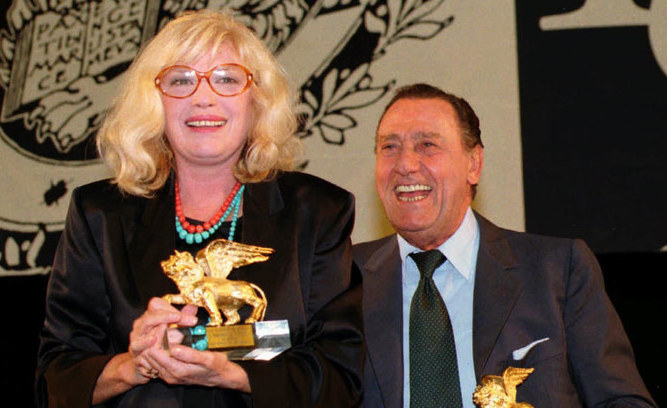
ROME: Monica Vitti, one of Italy’s most beloved actresses, celebrated for both her wit and beauty and famed as the muse of Michelangelo Antonioni, has died aged 90.
“Goodbye Monica Vitti, goodbye queen of Italian cinema. Today is a truly sad day, we have lost a great artist and a great Italian,” Culture Minister Dario Franceschini said Wednesday.
Vitti shot to international fame with the 1960 drama “L’Avventura” (“The Adventure“) in which she plays a tormented woman who dallies with the lover of her missing friend.
Born in Rome on November 3, 1931, Vitti — real name Maria Luisa Ceciarelli — discovered her passion for the theater during World War Two, when she entertained her family with puppets to relieve boredom.
“As the bombs fell, when we had to take refuge in the shelters, my little brother and I would improvise little plays to entertain those around us,” she later recounted.
After graduating from Rome’s National Academy of Dramatic Arts in 1953, she began her career in the theater, revealing a natural comic talent.
Vitti — who stood out from her Italian contemporaries such as Sophia Loren and Gina Lollobrigida for her raspy voice, freckles and mane of blond hair — was eventually spotted by Antonioni, with whom she quickly developed an artistic and sentimental relationship.
“I was lucky enough to start my career with a man of great talent,” but who was also “spiritual, full of life and enthusiasm,” Vitti said in an interview on Italian television in 1982.
Loren said Vitti’s death was “a great loss, not just for cinema but for all of us.”
Vitti made a name for herself in comedy, playing alongside Italian household names Alberto Sordi, Ugo Tognazzi, Vittorio Gassman and Nino Manfredi.
Among her best-loved roles was Assunta, a Sicilian who pursues the man who has dishonored her all the way to Scotland in Mario Monicelli’s 1968 “The Girl with the Pistol.”
Working in dozens of films throughout the 60s and 70s, Vitti’s output slowed the following decade, although she collaborated again with Antonioni in 1980 for “The Mystery of Oberwald.”
The pair were romantically involved for a decade or so, through four masterpieces: from “L’Avventura,” to “La Notte,” “L’Eclisse” and “Red Desert.”
They built a domed hideaway love nest on the wild coast of Sardinia, designed by Italian architect Dante Bini, but the affair was over by 1972.
Decades later, Vitti married director and photographer Roberto Russo, with whom she had been in a long relationship.
Russo asked Italy’s former culture minister, Walter Veltroni, to break the news of her death, which he did Wednesday with a tweet expressing his “pain, affection and regret.”
The actress, who had been suffering from a degenerative disease, had withdrawn from public life in recent years.
Vitti’s death drew accolades across the spectrum of Italian society, with Prime Minister Mario Draghi saying Vitti “made Italian cinema shine around the world.”
“An actress of great wit and extraordinary talent, she conquered generations of Italians with her spirit, her bravura, her beauty,” Draghi said in a statement.


![]()

Italian film icon Monica Vitti dies aged 90
Short Url
https://arab.news/p5vue
Italian film icon Monica Vitti dies aged 90
- "Goodbye Monica Vitti, goodbye queen of Italian cinema," Culture Minister Dario Franceschini said Wednesday
- Vitti discovered her passion for the theatre during World War Two, when she entertained her family with puppets to relieve boredom


Latest updates


Recommended


© 2026 SAUDI RESEARCH & PUBLISHING COMPANY, All Rights Reserved And subject to Terms of Use Agreement.