

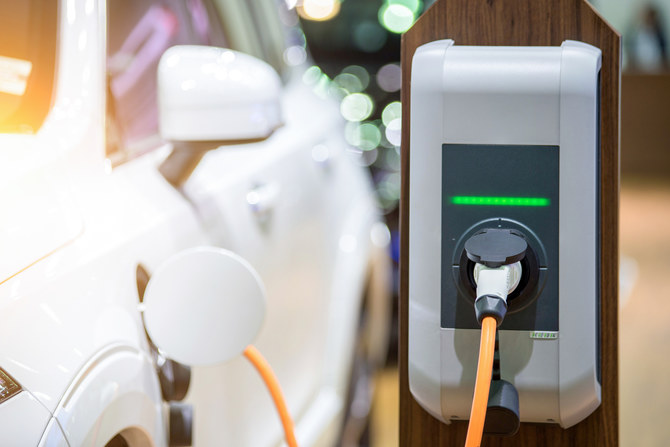
European EV sales outnumber combustion engines; Green hydrogen to hit $36bn in 30 years: NRG matters

(Getty)
Short Url
Updated 17 January 2022
Follow

European EV sales outnumber combustion engines; Green hydrogen to hit $36bn in 30 years: NRG matters

RIYADH: While milestones in the electric vehicle sector continue to be achieved in places including Europe and India, some countries like South Africa expect a rocky road ahead.

Looking at the bigger picture:

  • Electric vehicle sales in Europe surpass those of combustion engines for the first time during the month of December, the Financial Times reported. This record is mainly attributed to government subsidies in several European countries as well as the rigid regulations forcing EU manufacturers to sell more low emission vehicles as of 2021.
  • The Australian government forecasted that green hydrogen will reach a valuation as much as $36 billion in 30 years time, Reuters reported.

Through a micro lens:

  • South Africa based holding firm, Eskom Holdings SOC, is to shut down two of the continent’s most prominent generating units — with a capacity of 920 megawatts each — for maintenance purposes during 2022, Bloomberg reported. This move could potentially worsen the energy supply in the country and increase the risk of power outages which hit record levels in 2021.
  • Backed by Japan’s Softbank Group and India’s Reliance industries, Indian electric two-wheeler manufacturer Ola Electric — together with multinational conglomerate corporation Mahindra and Mahindra — have put forward bids under the country’s $2.4 billion battery plan, Reuters reported. The plan aims to encourage investments in domestic businesses in an attempt to build storage for green energy and lay the foundation for a local supply chain for clean transport.

Saudi Arabia leads outcome-based education to prepare future-ready generations: Harvard Business Review

A Harvard sign is seen at the Harvard University campus in Boston, Massachusetts, on May 27, 2025. (AFP)
Updated 10 February 2026
Follow

Saudi Arabia leads outcome-based education to prepare future-ready generations: Harvard Business Review

  • The Riyadh-based school group developed a strategy that links every classroom activity to measurable student competencies, aiming to graduate learners equipped for the digital economy and real-world contexts

RIYADH: Saudi Arabia’s education system is undergoing a sweeping transformation aligned with Vision 2030, shifting from traditional, input-focused methods to outcome-based education designed to equip students with future-ready skills, Harvard Business Review Arabic reported.

The transformation is being adopted and spearheaded by institutions such as Al-Nobala Private Schools, which introduced the Kingdom’s first national “learning outcomes framework,” aimed at preparing a generation of leaders and innovators for an AI-driven future, the report said.

Al-Nobala has leveraged international expertise to localize advanced learning methodologies.

The Riyadh-based school group developed a strategy that links every classroom activity to measurable student competencies, aiming to graduate learners equipped for the digital economy and real-world contexts. The school’s group approach combines traditional values with 21st-century skills such as critical thinking, communication, innovation and digital fluency.

According to the report, the shift addresses the growing gap between outdated models built for low-tech, resource-constrained environments and today’s dynamic world, where learners must navigate real-time information, virtual platforms, and smart technologies.

“This is not just about teaching content, it’s about creating impact,” the report noted, citing how Al-Nobala’s model prepares students to thrive in an AI-driven world while aligning with national priorities.

The report noted that Saudi Arabia’s Ministry of Education has paved the way for this shift by transitioning from a centralized controller to a strategic enabler, allowing schools such as Al-Nobala to tailor their curriculum to meet evolving market and societal needs. This is part of the long-term goal to place the Kingdom among the top 20 global education systems.

Al-Nobala’s work, the report stated, has succeeded in serving the broader national effort to link education outcomes directly to labor market demands, helping to fulfill the Vision 2030 pillar of building a vibrant society with a thriving economy driven by knowledge and innovation.

Last February, Yousef bin Abdullah Al-Benyan, Saudi Arabia’s minister of education, said that the Kingdom was making “an unprecedented investment in education,” with spending aligned to the needs of growth and development. He said that in 2025, education received the second-largest share of the state budget, totaling $53.5 billion.