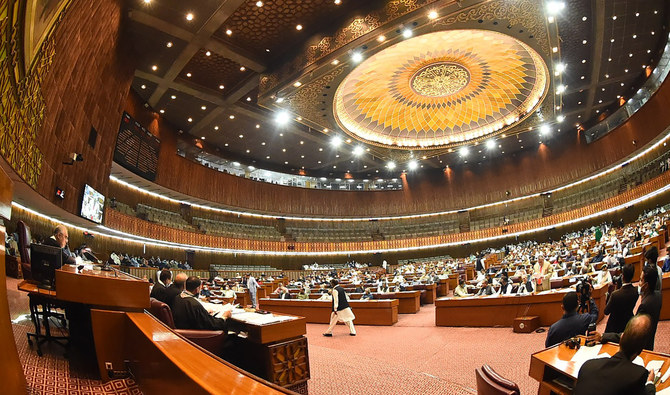
ISLAMABAD: Pakistan's National Assembly on Thursday passed a supplementary finance bill and a legislation on the autonomy of the central bank with majority vote amid protest by opposition parties, meeting the International Monetary Fund's prerequisites for the revival of a $6 billion loan package.
The government tabled the bills in the lower house of parliament last month to impose a uniform 17 percent general sales tax, withdraw tax exemptions on a number of items, and grant autonomy to the State Bank of Pakistan.
The passage of the two bills was to ensure that Pakistan's sixth review for the IMF's Extended Fund Facility would get clearance from the international financial institution's executive board.
The IMF was originally scheduled to review Pakistan's progress on January 12 in its board meeting to release a $1 billion tranche. However, it postponed the process until the end of the month after a delay in the passage of the bills.
Pakistan's finance chief Shaukat Tarin said during his speech on the floor of the house on Thursday it was "painful" for the government to undertake economic reforms amid the COVID-19 pandemic, soaring international commodity prices and crisis in neighboring Afghanistan while urging the opposition to endorse the bills.
“We were forced to go to the IMF,” he said. “There was no escape from the IMF.”
Listing the government's economic achievements, he said the revenues were registering a 35 percent growth while foreign remittances and exports would each reach $31 billion by the end of the current fiscal year.
"We'll have to fix the structural problems of the taxation system," he continued, adding the IMF was pushing Pakistan to levy a uniform rate of general sales tax across the country.
Tarin noted the legislation would help document the economy and increase the government's revenue.
"Everyone wants to escape the documentation [of the economy] since their incomes will be taxed after that," he said, as he dismissed the opposition's claim that the legislation would bring an "inflationary storm" in the country.
The minister said Rs280 billion out of a total of Rs350 billion of new taxes were refundable and the government would only be collecting Rs70 billion by imposing additional taxes.
The finance chief informed the house that only Rs3.5 trillion out of Rs20 trillion of retail sales were documented, adding there was always an outcry when the government tried to document that money.
He said that taxes on milk, laptops, food and bakery items were withdrawn to facilitate the public.
About the central bank's autonomy, Tarin dismissed the opposition's concerns that the legislation would undermine the government's control over the bank.
The minister said the government would appoint the bank's board of directors and have "full power" over it.
Earlier, the opposition parties tried to introduce amendments in the bills, though they were all rejected by the government.
Members of the opposition parties chanted slogans against the proposed legislations and displayed anti-government placards.
"The friends of IMF are traitors," they said while chanting slogans.


![]()

Pakistan passes IMF-backed supplementary finance bill amid opposition protest
Short Url
https://arab.news/6bgud
Pakistan passes IMF-backed supplementary finance bill amid opposition protest
- The passage of mid-year budget along with a bill on State Bank autonomy will help revive a $6 billion IMF loan program
- Pakistan's finance chief says the government was forced to go to the international lender for loan since it had no alternative
Latest updates


© 2026 SAUDI RESEARCH & PUBLISHING COMPANY, All Rights Reserved And subject to Terms of Use Agreement.