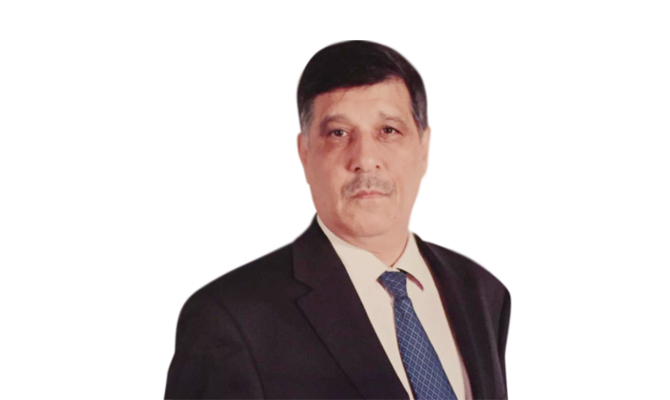
Who’s Who: Dr. Mohammed Al-Baqai, researcher at King Salman Center for Historical Studies

Dr. Mohammed Al-Baqai
Short Url
Updated 17 December 2021
Follow

Who’s Who: Dr. Mohammed Al-Baqai, researcher at King Salman Center for Historical Studies

  • Al-Baqai was awarded the King Abdullah International Prize for Translation in 2018

Dr. Mohammed Al-Baqai, a researcher, scholar and translator, was recently granted Saudi citizenship. The move came after the government decided to bestow the honor on a number of foreign nationals with specialist skills.

Al-Baqai currently works at the King Salman Center for Historical Studies of the Arabian Peninsula, where he is furthering a long legacy of investigating publications related to the history of the Arabian Peninsula and Saudi Arabia. In 2018, he was awarded the King Abdullah International Prize for Translation.

Al-Baqai was a teaching assistant at Homs University in Syria from 1982 to 1983, and a lecturer at Marseille Academy in France between 1998 and 2000. He was a part-time lecturer in pedagogy and research methodology at the French Stendhal University, in Grenoble for one year from 1990, a lecturer in literary criticism and linguistics at Homs University between 1992 and 1995, a lecturer in verbal and artistic translation and problems of translation at Jinan University, in Tripoli, Lebanon, and has been a professor of literary studies and criticism at King Saud University in Riyadh since 1996.

From 1995 to 1996, he was the vice dean for academic affairs at Homs University’s faculty of arts.

He was also a publication consultant for the Al-Faisal Journal of the King Faisal Center for Research and Islamic Studies, in Riyadh, and is chairman of the literature and criticism committee, and a member of the higher studies committee in the department of Arabic language, at King Saud University. He was an academic committee rapporteur in King Saud University’s Arabic language department and supervised a number of master’s degree and Ph.D. theses.

Al-Baqai gained a bachelor’s degree in Arabic language from Damascus University (1976-1980), a higher studies diploma in linguistics from the same institution in 1981, and an in-depth studies diploma (master’s degree), and Ph.D. in linguistics with honors, both from the University of Lyon II (1983-1992).


Saudi deputy foreign minister calls for Sudanese unity during meeting in Cairo

Updated 14 January 2026
Follow

Saudi deputy foreign minister calls for Sudanese unity during meeting in Cairo

  • Waleed Al-Khuraiji says a political solution to the civil war in Sudan must be based on respect for its sovereignty
  • He rejects quasi-government formed by one of the warring factions in July, denounces external intervention in form of weapons supplies and foreign fighters

LONDON: Saudi Arabia’s deputy foreign minister, Waleed Al-Khuraiji, on Wednesday stressed the important need to maintain the territorial integrity of Sudan.

Speaking at the fifth Sudan peace coordination meeting in Cairo, he said a political solution to the civil war that began in April 2023 must be based on respect for Sudanese sovereignty and unity.

He highlighted the efforts the Kingdom is making in an attempt to ensure stability in Sudan, help reach a ceasefire agreement that ends the conflict, prevent the collapse of state institutions, and maintain the unity, territorial integrity and capabilities of the country, the Saudi Press Agency reported.

Al-Khuraiji also said that Saudi efforts to address the worsening humanitarian crisis caused by the war are continuing, in an attempt to alleviate the suffering of the Sudanese people.

It is important that the conflicting factions return to political dialogue, he added, as stated in the Jeddah Declaration of May 2023 and the short-term ceasefire deal that was agreed that same month.

The war in Sudan, between rival military factions the Sudan Armed Forces and the paramilitary Rapid Support Forces, poses a threat to regional stability, Al-Khuraiji warned.

He rejected the quasi-government formed by the Rapid Support Forces in July last year as an obstruction to ongoing efforts to resolve the crisis, a threat to the unity and sovereignty of Sudan, and a risk to regional security and the safety of the Red Sea.

“The announcement of parallel entities outside the framework of legitimate institutions is worrying and disrupts efforts through the political track to solve the crisis,” he said.

The prevention of external intervention in the conflict, including illegal support in the form of weapon supplies and foreign fighters, is crucial for efforts to achieve a ceasefire and facilitate humanitarian operations, Al-Khuraiji added.

He also called for the establishment of safe corridors so that deliveries of aid can reach those in need, similar to a mechanism established in August last year at the Adre crossing on Sudan’s border with Chad.