

Pakistan central bank governor appointed as chair of global Islamic finance body

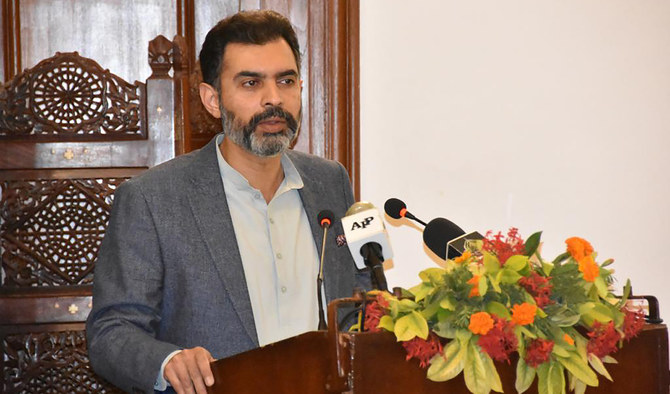
State Bank of Pakistan Governor Raza Baqir speaks at the inaugural ceremony of the mobile application "Boltay Huroof" in Karachi, Pakistan, on November 14, 2021. (Photo courtesy: State Bank of Pakistan/File)
Short Url
Updated 10 December 2021
Follow

Pakistan central bank governor appointed as chair of global Islamic finance body

  • The Islamic Financial Services Board is one of the main standard-setting bodies for Islamic finance around the world
  • Governor Reza Baqir says he wants to provide 'high-quality intellectual guidance' to the Islamic financial industry with the help of other council members

ISLAMABAD: Pakistan central bank governor Dr. Reza Baqir was appointed chairman of the Council of Islamic Financial Services Board (IFSB), Malaysia, for the year 2022 in a ceremony held in Abu Dhabi on Thursday.

According to an official handout issued by the State Bank of Pakistan (SBP) on Friday, Baqir took over the position from his counterpart in the United Arab Emirates and thanked him for leading the council "in an excellent manner."

The 188-member IFSB is counted among the main standard-setting bodies for Islamic finance around the world.

Established in 2003 in Kuala Lumpur, Malaysia, it has so far issued 24 standards, seven guidance notes and three technical notes for the Islamic financial services industry.

"Speaking on the occasion, Governor SBP said that he felt deeply honored to assume the Chairmanship of the Council of IFSB," said the official statement. "He thanked his fellow Council members for placing their trust in him. He also expressed his sincere gratitude to Mr. Khaled Mohamed Balama Al Tameemi – Governor Central Bank of UAE for leading the Council for the year 2021 in an excellent manner."
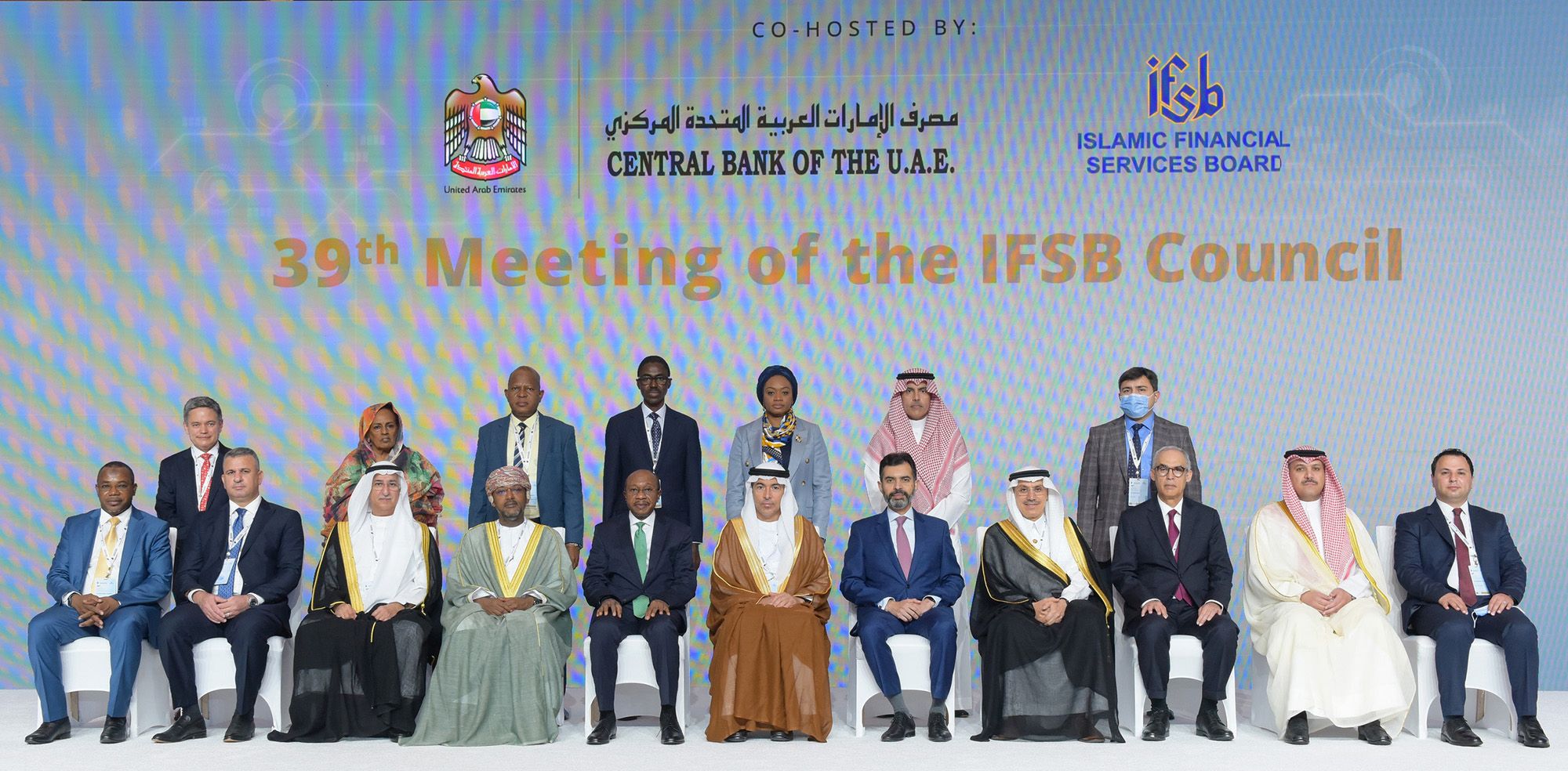


Pakistan central bank governor Dr. Reza Baqir is addressing a ceremony in Karachi, Pakistan, on November 14, 2021. (Photo courtesy: State Bank of Pakistan/File)

According to the IFSB's global Islamic financial services stability report, 2021, the total worth of the Islamic Financial Services Industry (Islamic Banking, Islamic Capital Markets and Takaful) was estimated at $2.70 trillion in 2020.

The S&P Global Ratings said in May the international Islamic finance industry was expected to grow 10 to 12 percent over 2021-2022 due to the issuance of Islamic bonds.

It added the industry continued to expand during the COVID-19 pandemic, though at a slower pace.

Information provided by the SBP said there were currently five full-fledged Islamic banks in Pakistan while 17 conventional banks were operating standalone Islamic banking branches to offer a wide range of Shariah-compliant financial solutions.

It added the market share of the Islamic banking industry assets and deposits in the overall banking sector of the country stood at 17 percent and 18.7 percent, respectively.

Pakistan's central bank governor told the ceremony in Abu Dhabi he wanted to provide "high-quality intellectual guidance to global Islamic finance industry" with the support of fellow council members.

"He also pledged to transform the IFSB as one of the most progressive and robust standard setting body globally," the handout said.


Pakistan urges Hajj pilgrims to complete Saudi biometrics till Sunday

Updated 5 sec ago
Follow

Pakistan urges Hajj pilgrims to complete Saudi biometrics till Sunday

  • Saudi Arabia has allocated Pakistan a quota of 179,210 pilgrims for this year’s Hajj
  • Saudi biometric verification is mandatory for issuance of Hajj visas, ministry says

ISLAMABAD: The Pakistani religious affairs ministry has urged aspiring Hajj pilgrims to complete mandatory Saudi biometric verification for Hajj visas by Sunday, Pakistani state media reported, with preparations for the 2026 pilgrimage gathering pace following stricter oversight of the Hajj process.

Saudi Arabia has allocated Pakistan a quota of 179,210 pilgrims for Hajj 2026, with the majority of seats reserved under the government scheme and the remainder allocated to private tour operators.

Regulations for private Hajj operators have been tightened and their quota reduced following widespread complaints last year, when tens of thousands of pilgrims were unable to travel under the private Hajj scheme.

The Pakistani religious affairs ministry said last month that Saudi biometric verification is mandatory for the issuance of Hajj visas and pilgrims should complete it at home using the ‘Saudi Visa Bio’ app.

“Hajj visas will not be issued without biometrics, however pilgrims over 80 years of age are exempted from biometrics,” the Radio Pakistan broadcaster reported, citing the religious affairs ministry.

Pakistan has been steadily implementing digital and procedural requirements for pilgrims ahead of Hajj 2026, including mandatory training sessions, biometric checks and greater use of mobile applications, as part of efforts to reduce mismanagement.

Pilgrims who were unable to complete biometric verification through the mobile application should visit designated Saudi Tasheer centers before Feb. 8, according to the religious affairs ministry.

Details of the centers are available on Pakistan’s official Hajj mobile application. Tasheer centers will remain open from 9am to 5pm today and on Sunday to facilitate Hajj pilgrims, it added.
