


The hottest tickets at the Red Sea International Film Festival

With “Ghodwa,” his directorial debut, Dhafer L’Abidine has turned his attention back to Tunisia with a stark and serious look at the political challenges in modern Tunis. (Supplied)
Short Url
Updated 06 December 2021
Follow

The hottest tickets at the Red Sea International Film Festival

  • Must-see movies at the long-awaited inaugural edition of Saudi Arabia’s first major film festival, which starts December 6

‘Huda’s Salon’

Hany Abu-Assad has long been one of Palestine’s most lauded filmmakers, receiving an Oscar nomination for his now-classic 2005 film “Paradise Now,” and another for 2013’s “Omar.” Both movies chronicled men struggling under occupation, uncertain of how to best live their lives for themselves, their families, or their country. With “Huda’s Salon,” Abu-Assad returns to Palestine for the first time since 2015’s “The Idol” for another true story. This one focuses on the plight of Palestinian women, however, and has been labelled a ‘feminist thriller.’ Abu-Assad’s long-time collaborator Ali Suliman brings his trademark naturalism to the role of Hasan, but it is Maisa Abd Elhadi as Reem and Manal Awad as Huda who shine most brightly, as two women caught in a suspenseful game that pushes past the trappings of the male perspective with intention.

‘Feathers’
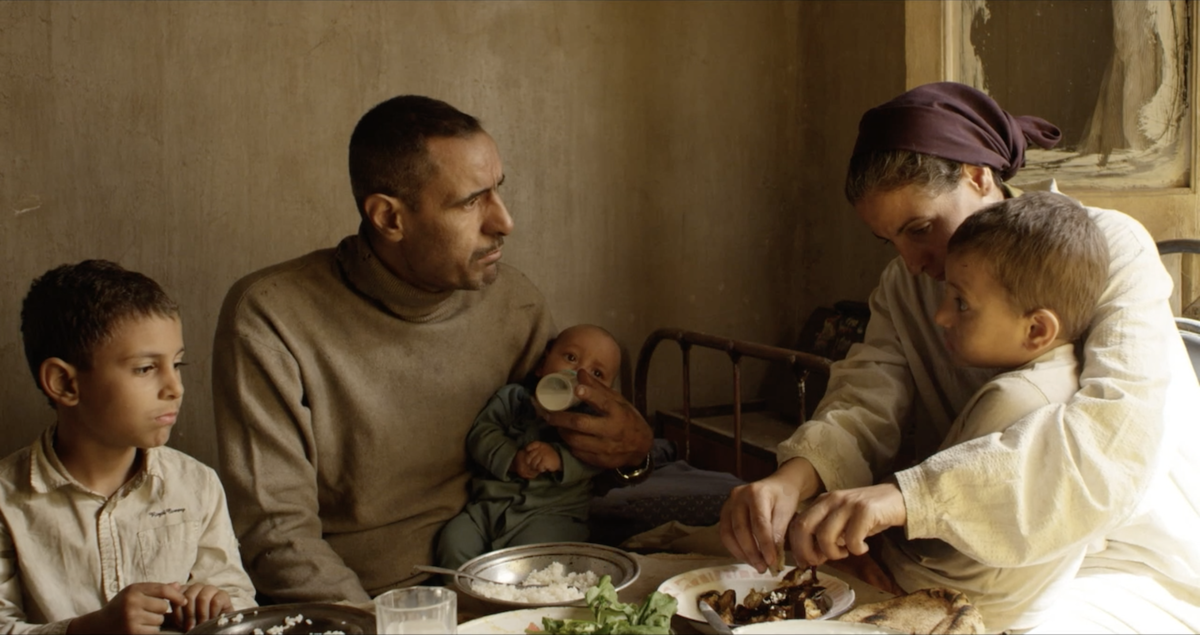
It is unlikely that any other Arab film this year will be as hotly debated as the feature debut of Omar El-Zohairy, the latest genuine visionary to emerge from the rich world of Egyptian cinema. With this absurdist satirical drama El-Zohairy has crafted a story in which the circumstances may not resemble our own — in “Feathers,” a woman is forced to support her family after her husband is turned into a chicken — but the struggles certainly do, as the magical realist concept gives way to an unflinching look at modern society, and the very real suffering of women in rural Egypt. Already a big winner at this year’s Cannes Film Festival, the film has caused uproar in El-Zohairy’s home country, which may have denied it a potential Oscar-nomination. But doesn’t make it any less of a must-see on the Red Sea.

‘Casablanca Beats’

Morocco’s official submission for Best International Feature Film at the Academy Awards 2022, “Casablanca Beats” is a lively, often-joyous look into the country’s music culture, following a former rapper named Anas (Anas Basbousi) who takes a job at the Positive School of Hip Hop, a real-life cultural center in Casablanca. Anas’ non-traditional teaching techniques inspire his young students in ways they never thought possible, with each finding their own voice through rap, showing the intense spirit that can follow a dream ignited, as well as the pain of the societal realities that may get in the way.

‘Ghodwa’

Tunisia’s Dhafer L’Abidine has had a career full of twists and turns. Once a professional footballer in his homeland, he moved to London and found success in British film and television before becoming a massive star in Egypt. With “Ghodwa,” his directorial debut, L’Abidine has turned his attention back to Tunisia with a stark and serious look at the political challenges in modern Tunis. The story follows a father (played by L’Abidine) and son for whom Tunisia’s political past and present collide in ways neither is prepared for.

‘The Choice’

Ask any Egyptian director who inspired them to become a filmmaker and there’s one name that you will hear again and again: Youssef Chahine. Thirteen years on from his death, Chahine’s reputation as a chronicler of Egyptian life both big and small who showed generation after generation through his layered melodramas the many facets of what film could accomplish has only grown. If “The Choice” is your first venture into classic Egyptian cinema, you’ve picked a good place to start; this beautifully shot, thrilling adaptation of Nobel Prize-winner Naguib Mahfouz’s novel is Chahine at his best.

‘The Lost Daughter’

Given their ubiquity, we may feel that we know the Gyllenhaal family all too well at this point, but “The Lost Daughter,” the directorial debut of Maggie Gyllenhaal, shows there is plenty left to discover and that the hugely talented actor may also be one of her generation’s best filmmakers. Her adaptation of Elena Ferrante’s novel of the same name features another powerhouse performance from Oscar-winner Olivia Colman (“The Favorite”) and also gets the best out of Dakota Johnson, in this story of a woman who becomes obsessed with another woman while on holiday. It’s a film that becomes just as unsettling as you may expect from that premise.

‘Becoming’
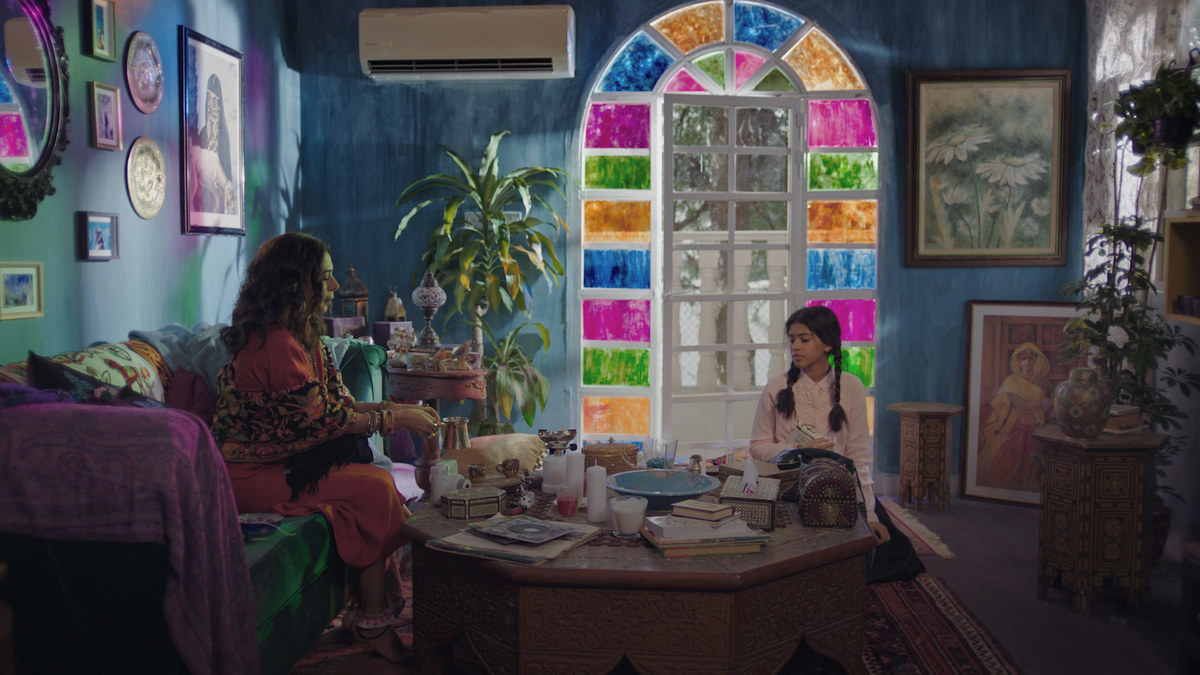
This anthology weaves together stories from five different Saudi filmmakers — Sara Mesfer, Jawaher Alamri, Noor Alameer, Hind Alfahhad and Fatima Al-Banawi — to show different sides of a changing Kingdom. For example, an 11-year-old girl arrives at her aunt’s house one day just before Friday prayers only to find that she can suddenly express everything she had been keeping secret from her conservative parents; a bride disappears on her wedding night; and a divorced mother grapples with an anxiety disorder. The stories are bold and uncompromising, showcasing women who are destined to shape the future of Saudi cinema in front of and behind the camera.

‘The Gravedigger’s Wife’
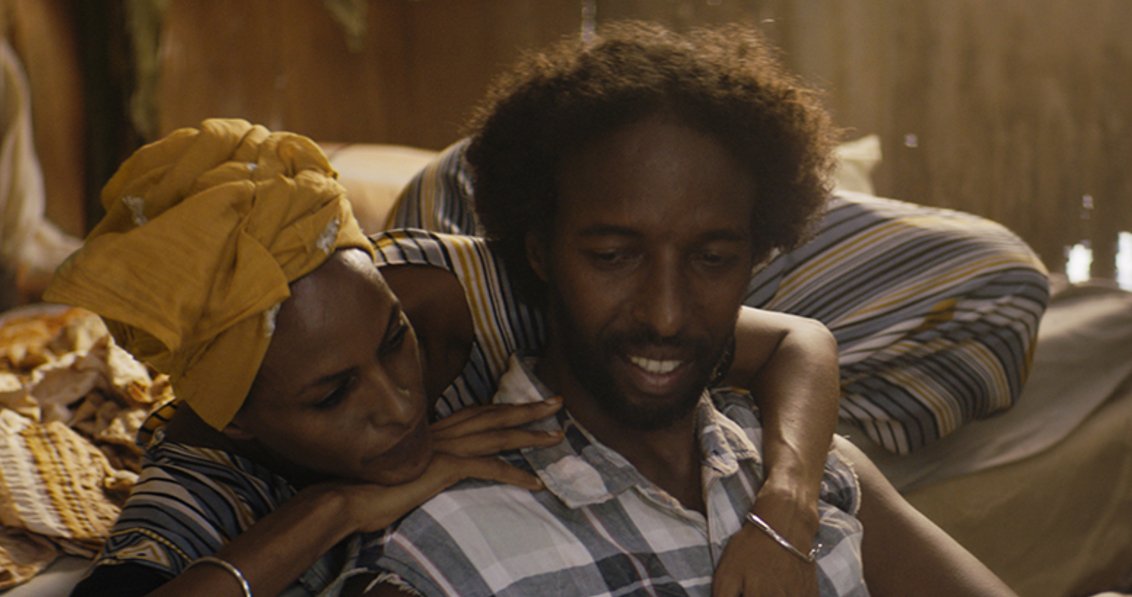
An audience hit at Cannes, this debut from the Finnish-Somali filmmaker Khadar Ayderus Ahmed follows a man in Djibouti who discovers his beloved, vivacious wife will die unless he can come up with $5,000 for emergency surgery — a sum he has little hope of accumulating. While this intimate film is small in scale, its heart is huge, and the film’s cultural specificity and assured direction make it stand out. It’s an inviting look into an unfamiliar world that is wholly relatable, with characters you won’t soon forget and just enough social satire to leave you with plenty to discuss.

‘Ennio’

Few composers have as outsized a reputation as the late Italian maestro Ennio Morricone, and with good reason — across the 500 films he helped bring to life through his music, many have become cultural milestones, including “The Good, The Bad and the Ugly,” “The Thing,” and “Cinema Paradiso.” When Morricone passed away in 2020, the latter’s director, his old friend and collaborator Giuseppe Tornatore (head of the Red Sea Film Festival’s jury) gathered some of his most famous collaborators, including Quentin Tarantino and Clint Eastwood, for a look back at the life and work of a true genius, with all the joy and emotion that Tornatore and Morricone famously brought to the tear-stained finale of “Cinema Paradiso.”


 Recipes for Success: Chef Aniket Chatterjee offers advice and a mutton curry recipe 

Updated 29 January 2026
Follow

 Recipes for Success: Chef Aniket Chatterjee offers advice and a mutton curry recipe 

DUBAI: Aniket Chatterjee — currently chef de cuisine at Atrangi by Ritu Dalmia in Dubai — says his cooking is shaped as much by memory and personal history as it is by technique.  

Working closely with celebrity chef and restaurateur Dalmia, Chatterjee has developed a style that looks at Indian food not through trends, he says, but through stories — from home kitchens and street food to lesser-known regional traditions. 

Chatterjee has developed a style that looks at Indian food not through trends, he says, but through stories. (Supplied)

Many of his dishes at Atrangi are contemporary adaptations of familiar Indian flavors and everyday recipes. His approach reflects how Indian cuisine in Dubai, and beyond, is shifting, with more diners interested in regional cooking, comfort food and the stories behind where dishes come from, he tells Arab News.  

When you started out, what was the most common mistake you made?  

I put a lot of stress and pressure on myself, which was leading to my passion getting depleted.  

What’s your top tip for amateur chefs? 

Always cook with intuition and intent. Cooking depends a lot on your mindset. Once you start cooking not because someone wants to eat, but because you want to feed them, that’s a game changer.  

   What one ingredient can instantly improve any dish? 

Simple: salt. Seasoning is key. Someone once said: “The difference between good food and great food is a pinch of salt,” and I strongly believe that. And love, of course. 

When you go out to eat, do you find yourself critiquing the food?  

Obviously it’s a mechanism, after working for so many years, that I try to analyze anything that I eat. But it’s just for understanding or inspiration purposes. I do believe in giving feedback because I genuinely want the restaurant or the cook to be better.  

What’s the most common issue that you find in other restaurants? 

The thing that ticks me off is anything which starts with “viral.” I’m out. I don’t like it when restaurants follow trends and don’t do what they are actually capable of doing or love to do.  

What’s your favorite cuisine or dish? 

I love Japanese food. It’s simple yet complex. But my favorite dish changes weekly. It is like that one song that you listen to on a loop and then you get sick of it. I do the same with food. Last week it was mandi with haneeth ribs — the fat, the freshness from the tomato, rice and laban is so beautifully balanced. This week, it’s mostly ramen.  

What’s your go-to dish if you have to cook something quickly at home? 

I love to make a nice bowl of pasta. Usually, back home, in my pantry, we always have the ingredients, because even my mom loves it. It’s usually a nice simple tomato and basil spaghetti with some fresh mozzarella or a ragu or an aglio e olio.  

What customer behavior most annoys you? 

When they tell us they are allergic to something but later turns out they just don’t like the particular thing. That has happened multiple times.  

What’s your favorite dish to cook and why? 

A nice spicy curry — chicken or lamb. It’s therapeutic. Making curry, for me, is the most beautiful thing in the world. It’s very complex and layered, and it’s completely based on understanding, not a recipe. 

What’s the most difficult dish for you to get right?  

It’s not a dish, it’s two ingredients: doodhi (bottle gourd) and karela (bitter gourd). I absolutely despised both those vegetables with all my heart, until I took on a challenge to work around it. It worked out and I have had a lot of my fellow haters end up liking both. 

As a head chef, what are you like? Are you a disciplinarian? Or are you more laid back? 

I don’t like shouting; I feel that’s a very weak approach to leading a team. You have to be calm and composed. I’m a firm believer in energies and that it transpires into the food, so I don’t want a stressful work environment and having fun in the kitchen is mandatory. Of course, there are some non-negotiables, and that’s where the discipline kicks in. 

Chef Aniket’s lazy Sunday mutton curry  

Chef Aniket’s lazy Sunday mutton curry . (Supplied)

(serves 4)  

Ingredients 

Marination: 

 Mutton or lamb curry cut – 600g 
Mutton or lamb fat (preferably in cubes) – 100g 
Full fat yoghurt – 50g 
Red onion (sliced) – 450g 
Ginger and garlic paste – 80g 
Coriander stems (whole) – 15g 
Mustard oil – 30ml 
Kashmiri red chilli powder – 16g 
Turmeric powder – 8g 
Coriander powder – 14g 
Roasted cumin powder – 14g 
Black salt – to taste 

Garam masala:  

 Cumin – 8g 
Cinnamon – 4g 
Cloves – 2g 
Green cardamom – 6g 
Black cardamom – 2g 
Bay leaf – 2 pcs 
Whole dried red chilli – 1 pc 
Black pepper – 3g 
Fennel seeds – 6g 

For the tempering: 
Mustard oil – 80ml 
Whole dried red chilli – 2 to 3 pcs 
Bay leaf – 2 to 3 pcs 
Black pepper (whole) – 6g 
Cinnamon sticks – 2 to 3 pcs 

Instructions:  

Take a bowl and combine all the ingredients listed under marination. Let it sit for at least three hours, preferably overnight in the fridge. 

For the spice mix, combine all the ingredients listed under garam masala in a cold non-stick pan and slowly bring to heat. Toss the spices as they warm so they roast evenly without burning. Once cooled, blend into a coarse powder. 

Take a pressure cooker and add the mustard oil from the tempering. Once hot, add the dry spices and saute for a minute. 

Add the marinated mutton or lamb directly into the oil. The marinade will have released some water, so separate it and add only the meat, onions and fat first. This helps the meat and onions sear and caramelize properly. 

Once browned, add the remaining marinade liquid and cook for another 10 to 15 minutes. Cover and cook for two whistles plus 30 minutes for mutton, or two  whistles plus 15 minutes for lamb. Let it rest for 15 to 20 minutes until the steam releases naturally. 

Once the meat is tender, adjust the consistency and seasoning to taste. 

Turn off the heat and add one tablespoon of the garam masala. At this point, add one tablespoon clarified butter or ghee, julienned ginger (5 g), lemon juice to taste and a pinch of sugar.  

Finish with plenty of fresh chopped coriander and serve hot with rice or parathas.