Pakistan drops clause on chemical castration for rapists

Human right activists take part in a protest against an alleged gang rape of a woman, in Islamabad, Pakistan, on September 12, 2020. (AFP)
Short Url
Updated 20 November 2021
Follow

Pakistan drops clause on chemical castration for rapists

  • Sexual crimes against women and children are common in Pakistan
  • Victims rarely come forward in such cases because of the stigma

ISLAMABAD: The Pakistani government dropped a controversial clause allowing for chemical castration of convicted rapists from a proposed bill, after a council of clerics said such a punishment was against Islam, a lawmaker from the ruling party said Friday. 
Maleeka Bukhari from the ruling Pakistan Tehreek-e-Insaf party said the state-run clerical council, which advises the government on religious issues, had at the last minute advised that the clause be deleted. 
The clause was dropped before the draft bill was sent to parliament for voting, she added. 
Earlier on Wednesday, the government had backed dozens of bills in a hurry, and some local media incorrectly reported that the castration clause was approved. Rights group Amnesty International promptly denounced the bill in a statement, saying it was a “cruel and retrograde step.” 
Bukhari said such punishment would also violate the constitution and added that the law minister, Farogh Naseem, had also suggested the clause be excluded. She did not explain why the government waited for two days to clarify that the draft clause was dropped, especially in light of widely published but incorrect media reports that it had passed. 
“As per the new law, identity of a victim [in rape cases] has been protected as trial in the cases will be held in-camera,” Bukhari said, adding that special courts would be established to provide speedy justice in such cases. 
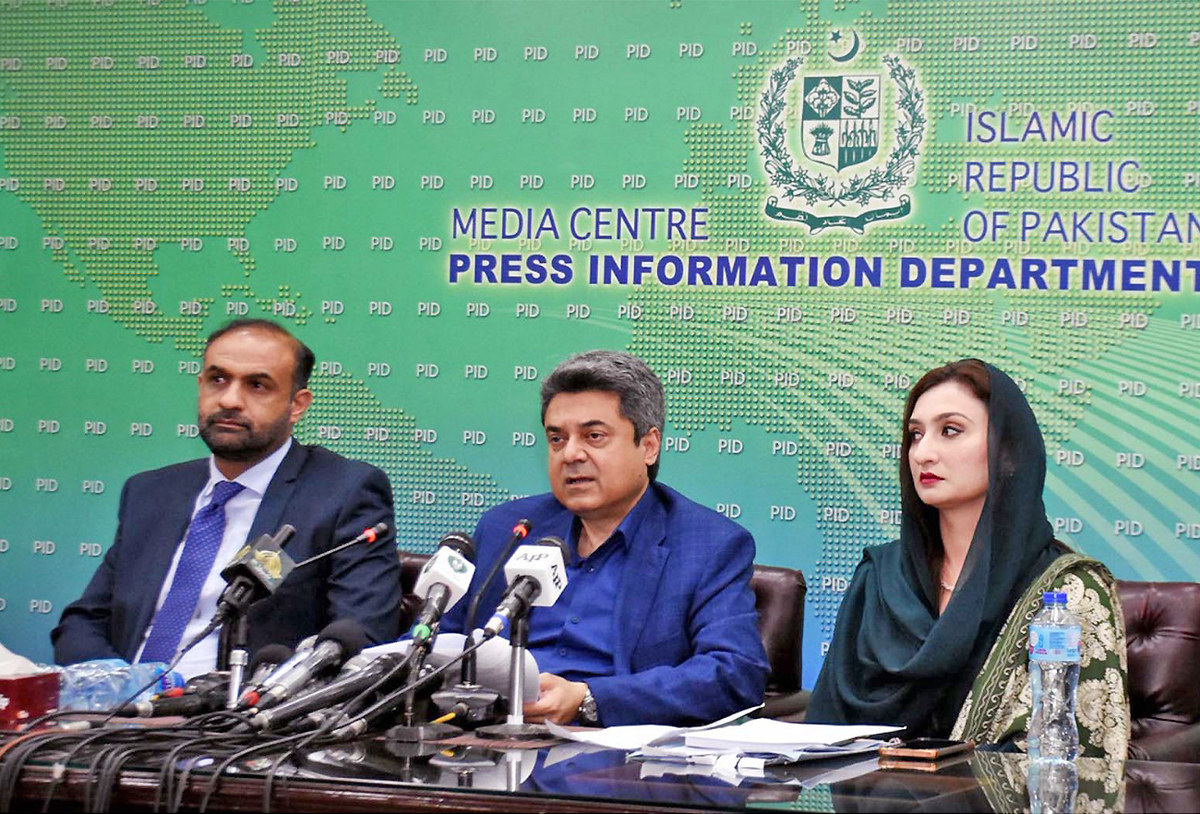


Pakistan's law minister Barrister Farogh Naseem (center) and parliamentary secretary law, Maleeka Bukhari (right), address a press conference in Islamabad, Pakistan, on November 20, 2021. (PID)

Prime Minister Imran Khan’s government had pushed a flurry of dozens of draft bills to lawmakers for a vote Wednesday seeking to prevent opposition lawmakers from staging a prolonged and detailed debate on each of the bills. 
The castration clause was quietly removed from the documents before the bill was put before lawmakers. 
Sexual crimes against women and children are common in Pakistan, where many of the victims never come forward because of the stigma attached to the assault. Many children are also sexually abused and such cases have surfaced in large numbers in recent years. 
Last year, the gang rape of a woman who was driving alone on a highway at night with her children when her car broke down near the city of Lahore had shocked many in Pakistan and prompted nationwide protests. The prime minister suggested at the time public hanging and chemical castration as punishment for rapists. 
Chemical castration for sexual offenders is the use of drugs to lower the level of male hormones in men. 
The gang raped woman’s attackers were later sentenced to death, but have appealed the sentences. Such trials and appeals typically take years in Pakistan and many of the sentences are eventually overturned because of flaws in assault laws. Khan’s government is now seeking to speed up the proceedings from years to months. 


Pakistan opposition rallies in Khyber Pakhtunkhwa to demand release of Imran Khan

Updated 07 December 2025
Follow

Pakistan opposition rallies in Khyber Pakhtunkhwa to demand release of Imran Khan

  • PTI-led gathering calls the former PM a national hero and demands the release of all political prisoners
  • Government says the opposition failed to draw a large crowd and accuses PTI of damaging its own politics

ISLAMABAD: Pakistan’s opposition led by the Pakistan Tehreek-e-Insaf (PTI) party demanded the release of jailed former prime minister Imran Khan at a rally in the northwestern Khyber Pakhtunkhwa province on Sunday, describing him as a national hero who continues to command public support.

The gathering came days after a rare and strongly worded briefing by the military’s media chief, Lt. Gen. Ahmed Sharif Chaudhry, who dismissed Khan as “narcissistic” and “mentally ill” on Friday while responding to the former premier’s allegations that Pakistan’s chief of defense forces was responsible for undermining the constitution and rule of law.

He said that Khan was promoting an anti-state narrative which had become a national security threat.

The participants of the rally called for “civilian supremacy” and said elected representatives should be treated with respect.

“We, the people of Pakistan, regard Imran Khan as a national hero and the country’s genuinely elected prime minister, chosen by the public in the February 8, 2024 vote,” said a resolution presented at the rally in Peshawar. “We categorically reject and strongly condemn the notion that he or his colleagues pose any kind of threat to national security.”

“We demand immediate justice for Imran Khan, Bushra Bibi and all political prisoners, and call for their prompt release,” it added, referring to Khan’s wife who is also in prison. “No restrictions should be placed on Imran Khan’s meetings with his family, lawyers or political associates.”

Addressing the gathering, Sohail Afridi, the chief minister of Khyber Pakhtunkhwa, denied his administration was not serious about security issues amid increased militant activity. However, he maintained the people of his province had endured the worst of Pakistan’s conflict with militancy and urged a rethinking of long-running security policies.

The resolution asked the federal government to restore bilateral trade and diplomatic channels with Afghanistan, saying improved cross-border ties were essential for the economic stability of the region.

The trade between the two neighbors has suffered as Pakistan accuses the Taliban administration in Kabul of sheltering and facilitating armed groups that it says launch cross-border attacks to target its civilians and security forces. Afghan officials deny the claim.

The two countries have also had deadly border clashes in recent months that have killed dozens of people on both sides.

Some participants of the rally emphasized the restoration of democratic freedoms, judicial independence and space for political reconciliation, calling them necessary to stabilize the country after years of political confrontation.

Reacting to the opposition rally, Information Minister Attaullah Tarrar said the PTI and its allies could not gather enough people.

“In trying to build an anti-army narrative, they have ruined their own politics,” he said, adding that the rally’s reaction to the military’s media chief’s statement reflected “how deeply it had stung.”

“There was neither any argument nor any real response,” he added, referring to what was said by the participants of the rally.