

India is not responsible for toning down COP26 statement, says Minister

(Shutterstock)
Short Url
Updated 19 November 2021
Follow

India is not responsible for toning down COP26 statement, says Minister

RIYADH: India is not responsible for changing the wording of the COP26 statement about coal usage from “phasing out” to “gradual easing, the country's minister of Petroleum and Natural Gas told Al Arabiya.

Hardeep Singh Puri hit back at suggestions his country — along with China — demanded a last minute change to the text after two weeks of talks in Glasgow, Scotland.

Puri claimed that some “tried to manipulate” the outcome to paint India out as a key agitator for the alteration. 

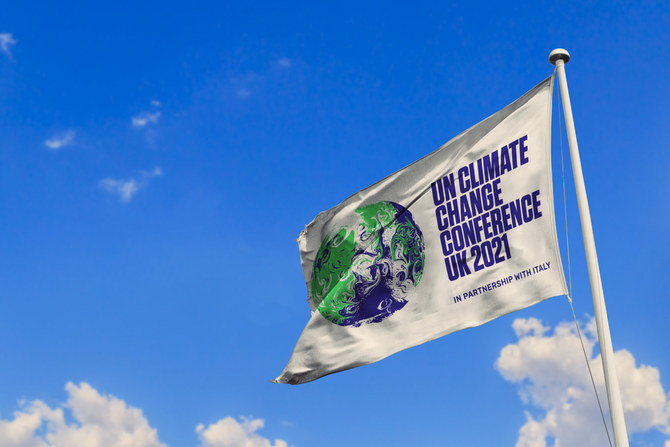
The UN's COP26 was held from Nov. 1 to Nov. 12, and saw negotiators from nearly 200 countries reach an agreement seeking to preserve the goal of the Paris climate agreement, with plans to deal with coal publicly mentioned for the first time.

“Politics intervenes in these matters to throw ashes in the eyes or to divert attention from one issue to another," he said, adding: "It is very appropriate for some to blame India and say that it is behind the softening of the tone of the Glasgow Final statement on coal from ‘phasing out’ and changing it to ‘easing it gradually’, but this is not true at all, and I think that some news was leaked later from sources that participated in the drafting of the statement, stated that."

On India's goals to achieve net zero emissions by 2070, Puri said there is not specific sequence of solutions to pursue, "all of them will be started at the same time."

Targets set by the Prime Minister are ambitious, but our performance history bears witness to us, the Indian Minister said. "We have moved strongly on the climate front since Paris. In Glasgow we raised our targets," he said.

Indian Prime Minister Narendra Modi revealed that his country aims to achieve net zero carbon emissions in 2070, noting that his country is responsible for only 5 percent of global emissions.

Modi revealed that India will increase the share of renewable sources in its energy mix from about 38 percent last year to 50 percent by 2030.


Saudi Arabia’s cultural sector is a new economic engine between Riyadh and Paris, says ambassador

Updated 25 January 2026
Follow

Saudi Arabia’s cultural sector is a new economic engine between Riyadh and Paris, says ambassador

RIYADH: Culture has become a fundamental pillar in bilateral relations between France and Saudi Arabia, according to the French Ambassador to the Kingdom, Patrick Maisonnave.

Maisonnave noted its connection to the entertainment and tourism sectors, which makes it a new engine for economic cooperation between Riyadh and Paris.

He told Al-Eqtisadiah during the opening ceremony of La Fabrique in the Jax district of Diriyah that cultural cooperation with Saudi Arabia is an important element for its attractiveness in the coming decades.

La Fabrique is a space dedicated to artistic creativity and cultural exchange, launched as part of a partnership between the Riyadh Art program and the French Institute in Riyadh. 

Running from Jan. 22 until Feb 14, the initiative will provide an open workspace that allows artists to develop and work on their ideas within a collaborative framework.

Launching La Fabrique as a space dedicated to artistic creativity

The ambassador highlighted that the transformation journey in the Kingdom under Vision 2030 has contributed to the emergence of a new generation of young artists and creators, alongside a growing desire in Saudi society to connect with culture and to embrace what is happening globally. 

He affirmed that the relationship between the two countries is “profound, even cultural par excellence,” with interest from the Saudi side in French culture, matched by increasing interest from the French public and cultural institutions unfolding in the Kingdom.

Latest estimates indicate that the culture-based economy represents about 2.3 percent of France’s gross domestic product, equivalent to more than 90 billion euros ($106.4 billion) in annual revenues, according to government data. The sector directly employs more than 600,000 people, making it one of the largest job-creating sectors in the fields of creativity, publishing, cinema, and visual arts.

Saudi Arabia benefiting from French experience in the cultural field

Maisonnave explained that France possesses established cultural institutions, while Saudi Arabia is building a strong cultural sector, which opens the door for cooperation opportunities.

This comes as an extension of the signing of 10 major cultural agreements a year ago between French and Saudi institutions, aiming to enhance cooperation and transfer French expertise and knowledge to contribute to the development of the cultural system in the Kingdom.

He added that experiences like La Fabrique provide an opportunity to meet the new generation of Saudi creators, who have expressed interest in connecting with French institutions and artists in Paris and France.

La Fabrique encompasses a space for multiple contemporary artistic practices, including performance arts, digital and interactive arts, photography, music, and cinema, while providing the public with an opportunity to witness the stages of producing artistic works and interact with the creative process.