

‘Saudi diplomacy helped save COP26 talks,’ says Kingdom's energy minister

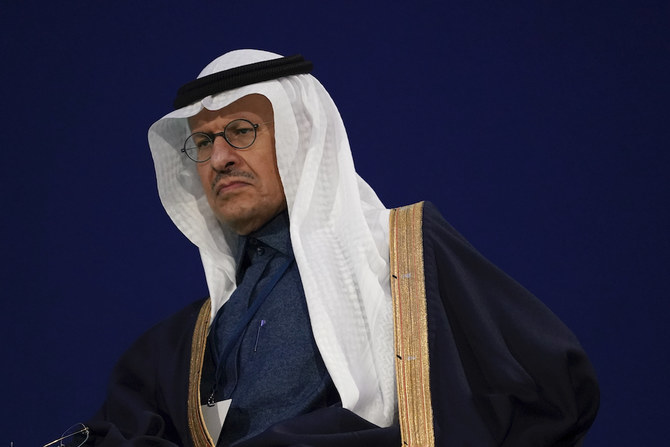
Energy Minister Prince Abdulaziz bin Salman
Short Url
Updated 18 November 2021
Follow

‘Saudi diplomacy helped save COP26 talks,’ says Kingdom's energy minister

  • A Saudi proposal on wording originally agreed at the Rome G20 conference last month had helped save the day in Glasgow, says the Energy Minister

ABU DHABI: Saudi Arabia helped break the logjam to reach a deal at last week’s crucial climate change talks at COP26, the Kingdom’s Energy Minister Prince Abdulaziz bin Salman told a conference in the UAE capital Abu Dhabi.

Prince Abdulaziz said that contrary to allegations from environmental groups, a Saudi proposal on wording originally agreed at the Rome G20 conference last month had helped save the day in Glasgow.

The final declaration at COP26 saw compromise reached on the key issue of coal usage, with some phrases changed in order to allow a deal encompassing the biggest coal consumers, India and China.

“That language was introduced by us,” the energy minister said at the ADIPEC 2021 energy forum, indicating that the wording had been used by Saudi negotiators and accepted at the G20 leaders’ summit.

He was responding to a question from moderator John Defterios about allegations that Saudi Arabia’s stance on climate change amounted to “greenwashing” and skepticism whether the Kingdom's ambitious climate change strategy could be effectively implemented.

“Because we are a major producer of oil and gas, I can understand the skepticism, but I would refer those skeptics to what we agreed just two days ago. The new agreement talks about committing countries to coming out every year and reporting on what they actually have accomplished and what they have done,” said the minister.

He pointed out that the Saudi and the Middle East green initiatives are going to be annual events, where the Kingdom’s efforts toward mitigating global warming would be judged alongside regional peers.

“This region will become a role model for what we mean by sustainable development,” he added.

Saudi Arabia’s strategy for energy transition centers on three pillars, he said: Energy security, sustainable economic development and measures to combat climate change.

To applause from the audience in the opening session of the forum, he highlighted the achievements of the OPEC+ in countering the effects of the COVID-19 pandemic last year.

“The 23 responsible countries delivered, more remarkable than any other group on planet Earth, including the central bankers. They delivered sustainability, predictability and transparency, in a long term plan looking 1.5 years ahead. They have delivered a stable, less volatile oil market,” he said.

Prince Abdulaziz added that climate change policy should look at “emissions, not fuel sources,” and should seek to mitigate all forms of greenhouse gas, not just CO2. He also said that climate change policies should take into account the differing national and economic circumstances of all countries in the world, especially less developed countries.

ADIPEC 2021 began on Monday Nov. 15  and will run to Nov. 18, with the participation of ministers, leaders and experts in the energy sector from around the world.


Saudi minister at Davos urges collaboration on minerals

Global collaboration on minerals essential to ease geopolitical tensions and secure supply, WEF hears. (Supplied)
Updated 20 January 2026
Follow

Saudi minister at Davos urges collaboration on minerals

  • The reason of the tension of geopolitics is actually the criticality of the minerals

LONDON: Countries need to collaborate on mining and resources to help avoid geopolitical tensions, Saudi Arabia’s minister of industry and mineral resources told the World Economic Forum on Tuesday.

“The reason of the tension of geopolitics is actually the criticality of the minerals, the concentration in different areas of the world,” Bandar Alkhorayef told a panel discussion on the geopolitics of materials.

“The rational thing to do is to collaborate, and that’s what we are doing,” he added. “We are creating a platform of collaboration in Saudi Arabia.”

Bandar Alkhorayef, Saudi Minister of Industry and Mineral Resources 

The Kingdom last week hosted the Future Minerals Forum in Riyadh. Alkhorayef said the platform was launched by the government in 2022 as a contribution to the global community. “It’s very important to have a global movement, and that’s why we launched the Future Minerals Forum,” he said. “It is the most important platform of global mining leaders.”

The Kingdom has made mining one of the key pillars of its economy, rapidly expanding the sector under the Vision 2030 reform program with an eye on diversification. Saudi Arabia has an estimated $2.5 trillion in mineral wealth and the ramping up of extraction comes at a time of intense global competition for resources to drive technological development in areas like AI and renewables.

“We realized that unlocking the value that we have in our natural resources, of the different minerals that we have, will definitely help our economy to grow to diversify,” Alkhorayef said. The Kingdom has worked to reduce the timelines required to set up mines while also protecting local communities, he added. Obtaining mining permits in Saudi Arabia has been reduced to just 30 to 90 days compared to the many years required in other countries, Alkhorayef said.

“We learned very, very early that permitting is a bottleneck in the system,” he added. “We all know, and we have to be very, very frank about this, that mining doesn’t have a good reputation globally.

“We are trying to change this and cutting down the licensing process doesn’t only solve it. You need also to show the communities the impact of the mining on their lives.”

Saudi Arabia’s new mining investment laws have placed great emphasis on the development of society and local communities, along with protecting the environment and incorporating new technologies, Alkhorayef said. “We want to build the future mines; we don’t want to build old mines.”