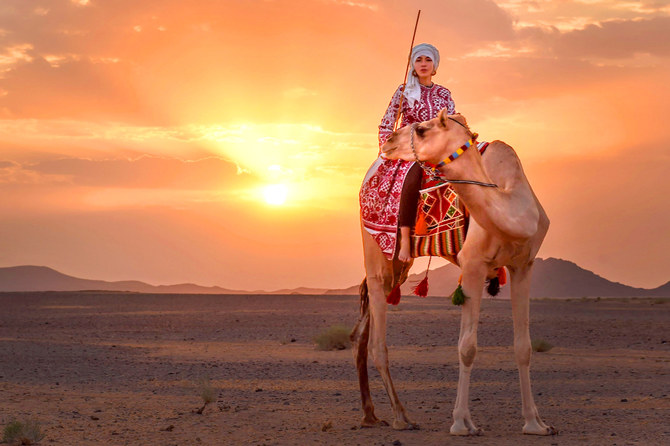
Photographer Anna Aiko captures beauty of Arabian Peninsula on camelback

Anna Aiko was invited to the celebration of the 91st National Day of Saudi Arabia. She was chosen to experience 91 km of the ancient trail of Darb Zubaydah on camelback. (Supplied by Abdullatif Al-Obaida)
Short Url
Updated 18 November 2021
Follow

Photographer Anna Aiko captures beauty of Arabian Peninsula on camelback

  • ‘I love to travel by camel while capturing the authentic life along the ancient caravan trails’

RIYADH: Crossing the Empty Quarter in Saudi Arabia is a feat in and of itself but crossing it by camelback in the 21st century is extraordinary, and photographer Anna Aiko is in for the whole experience as she travels across the Kingdom, the UAE, Yemen, and the Silk Road this way.

“My dream was to explore the region on camelback, but the question was how?” Aiko said.

When asked how she would describe herself, Aiko told Arab News: “An iPhone photographer with a passion for traveling on camelback.” 
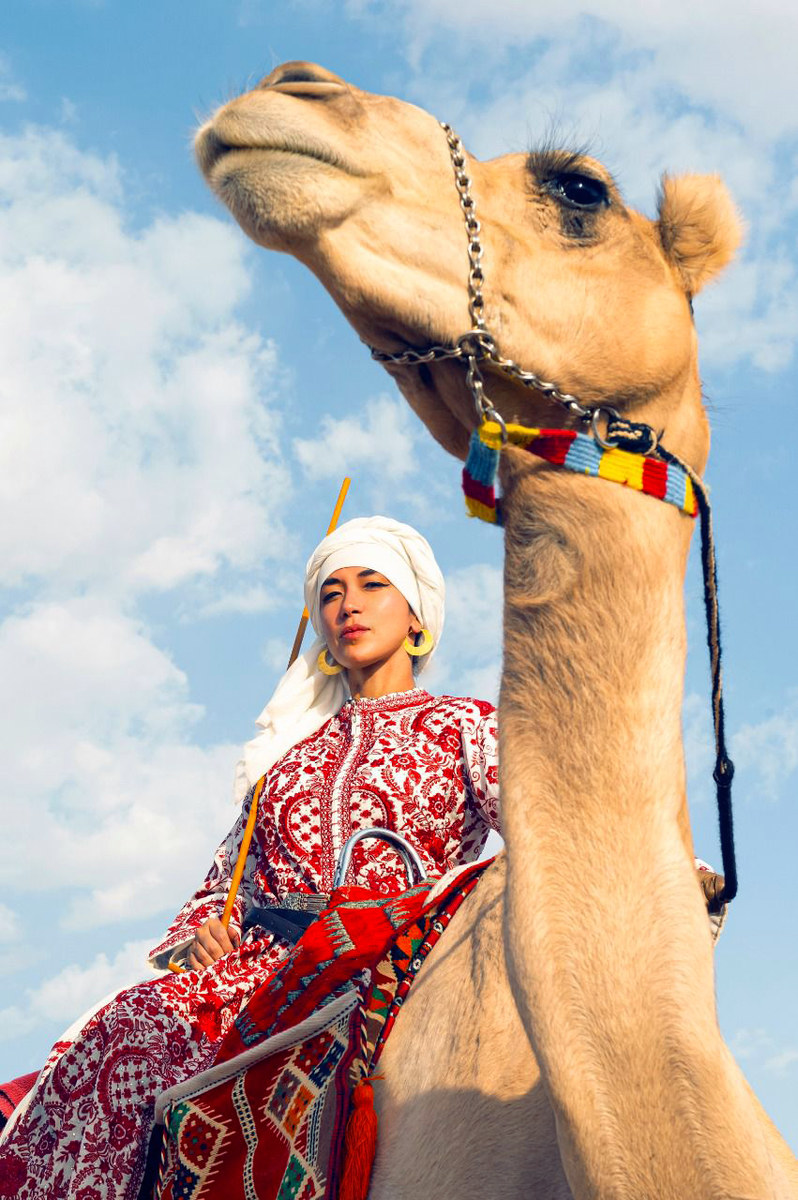


In the mid-1970s, Aiko’s parents lived in Saudi Arabia. Throughout her childhood, she listened to their stories about the region and came to love it. (Supplied by Abdullatif Al-Obaida)

Aiko was born and raised between two cultures.

“I was born in Tokyo and raised between Japan and France. I later moved to Paris for 20 years as an art director in the fashion and luxury industries.”

In the mid-1970s, Aiko’s parents lived in Saudi Arabia. Throughout her childhood, she listened to their stories about the region and came to love it.

“The Arab world became like a fairy tale,” she said. “With this mix of cultures, I could see the world with a vision.” 
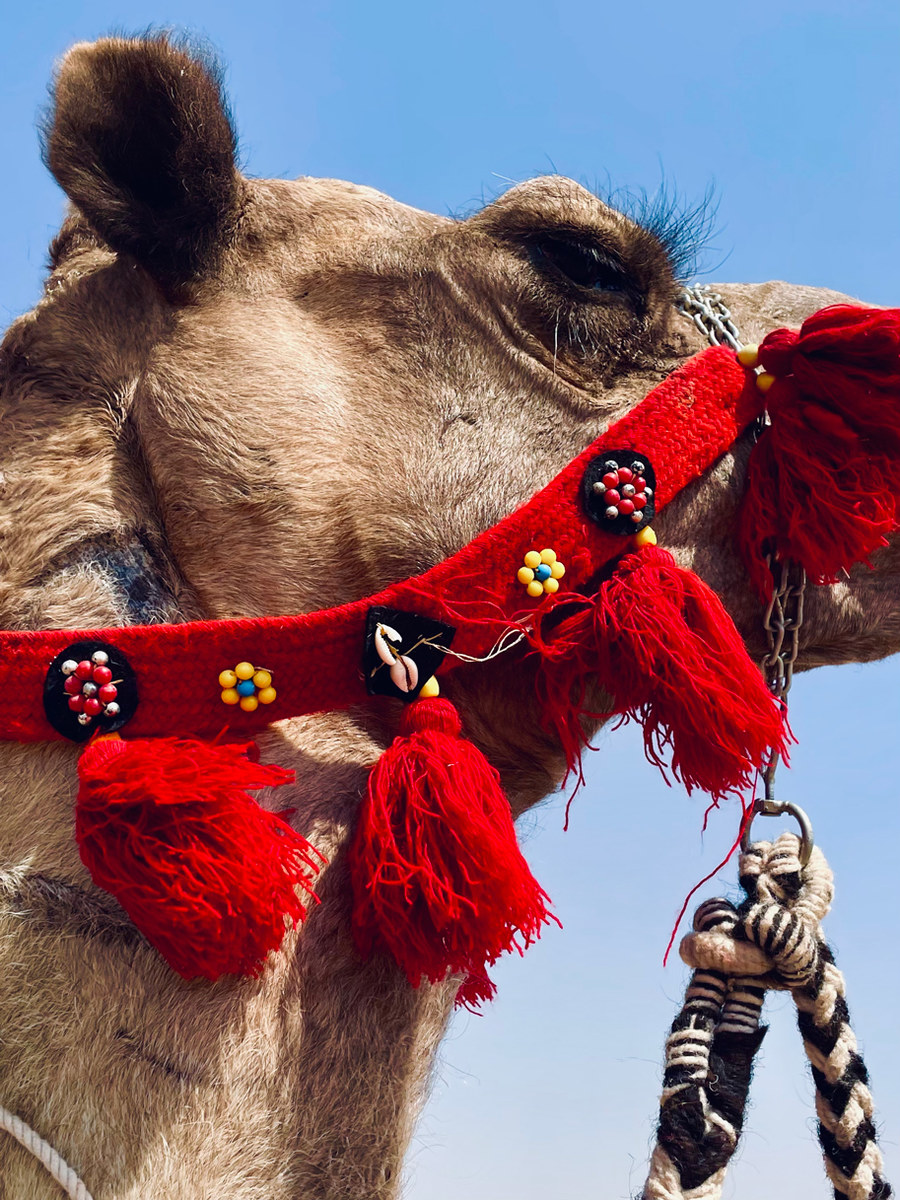
Aiko has had a lifelong passion for traveling, and one of the major trips she took saw her follow the ancient path of the Silk Road in 2015. During the trip, she captured photos with her iPhone, which led her to win, among other awards, the iPhone Photography Awards.

The year 2019, when she crossed the Empty Quarter, known as Rub Al-Khali in Arabic, was a turning point in her life.

“A friend told me that he was looking for a man who wanted to cross the Empty Quarter on camelback,” she said. “Although I didn’t know how to ride a camel, I told him that I wanted to be the one to do it, and 72 hours later, I was flying to Saudi Arabia to join the Rakayib Camel Caravan to cross the vast desert.”

Even though her trip started with a sandstorm, she was thrilled, and it was in that moment that her love story with the Arabian Peninsula began.

“I cried tears of joy because something impossible was becoming a reality. I was living my dream.” 
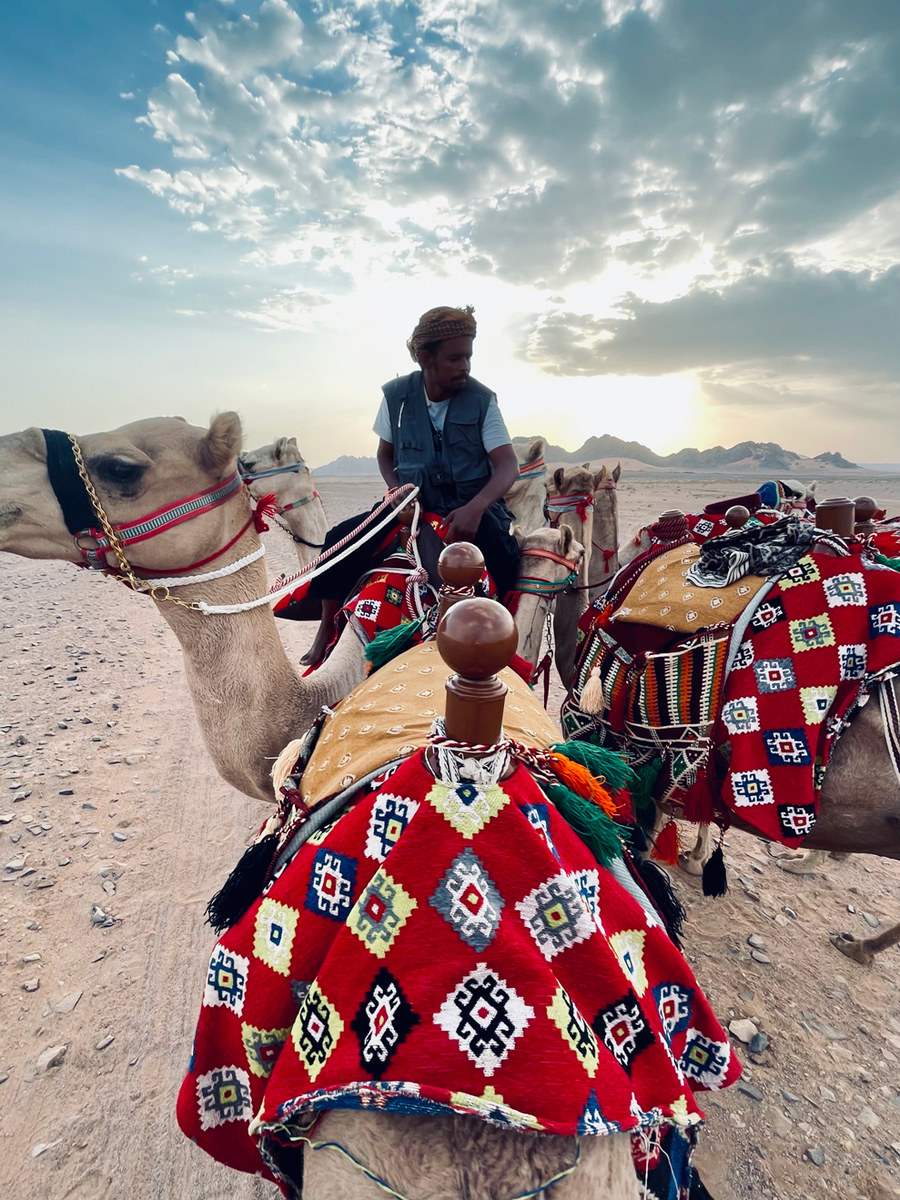
Her passion for traveling on camelback only grew, and today Aiko owns two beautiful camels.

“Exploring the beauty of the Arabian Peninsula this way never ceases to amaze me,” she said.

The trip covered a total of 2,400 km. In the UAE, she traveled with the Hamdan bin Mohammed Heritage Center, while to the island of Socotra, in Yemen, she traveled with the support of the Khalifa bin Zayed Al-Nahyan Foundation. 

Recently, Aiko was invited to the celebration of the 91st National Day of Saudi Arabia. She was chosen to experience 91 km of the ancient trail of Darb Zubaydah on camelback.

Darb Zubaydah, or the Zubaydah Trail, is one of the Islamic civilization’s most significant humanitarian and social projects. It stretches from Kufa in Iraq to Makkah, covering 420 km inside the Kingdom alone, and was once known as a route for pilgrims and traders.

The trail was named after Zubaydah bin Jafar, wife of Caliph Harun Al-Rashid, who contributed to its construction and revival for convoys and passersby.

“The region of Hail, since ancient times, was the heart of travelers, and the generosity of its people was renowned. Discovering this new part of Saudi, I had tears in my eyes. The area’s landscapes, sand dunes, desert, mountains, and rock art are remarkable.” 
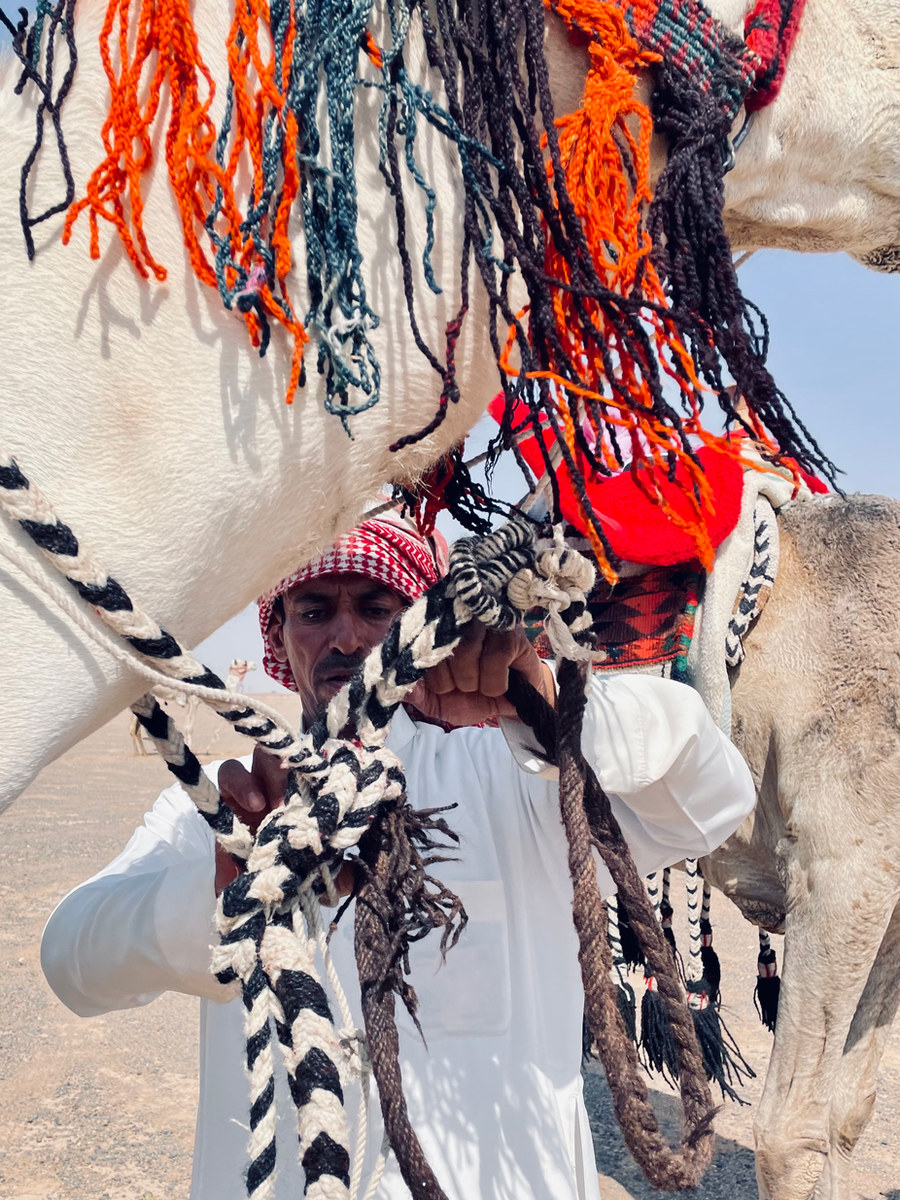
She mentioned that she is planning for a few trips in the future. “I’m trusting how life will guide me to the next step, to create a new link between its histories, like a puzzle.”

One of Aiko’s goals is to transmit the beauty of the Arabian Peninsula through her trips.

“I’ve been passionate about the beauty of the Arab world for as long as I can remember. I love to travel by camel while capturing the authentic life along the ancient caravan trails.”

She remarked how surprised she was by the “hidden beauty” of the countries within the region.

“As a woman traveling by camel, I’ve always been welcomed like a family member. That allowed me to participate in the culture, which deserves to be better known. I hope that my experience as an art director will allow me to translate the stories through my photography and to preserve the region’s beauty as the 21st century continues to unfold.”


Threat to Kingdom’s security is ‘red line’ that will be ‘addressed and neutralized,’ Saudi envoy says

Updated 14 January 2026
Follow

Threat to Kingdom’s security is ‘red line’ that will be ‘addressed and neutralized,’ Saudi envoy says

  • Abdulaziz Alwasil tells UN Security Council the situation in southern Yemen is ‘a just cause with social and historic dimensions’ that can only be resolved through dialogue
  • Recent military activity in the south was unilateral, resulting in an escalation that harms the interests of Yemeni people and undermines efforts to address issues in the south, he said

NEW YORK CITY: Any attempt to threaten Saudi Arabia’s national security is a “red line” and will be met with decisive action, the Kingdom’s ambassador to the UN told the Security Council on Wednesday.

Speaking during a meeting of the council to discuss Yemen, Abdulaziz Alwasil said the situation in the south of the country is “a just cause with social and historic dimensions” that can only be resolved through dialogue.

“We stress that any attempt to threaten our national security is a red line, and we will not hesitate to take the necessary actions and steps to address it and neutralize it,” he added.

Alwasil reaffirmed Saudi Arabia’s support for Yemeni President Rashad Al-Alimi, the Presidential Leadership Council, and the Yemeni government in their efforts to achieve security, stability, development and peace while preserving national unity.

He said military activity by Southern Transitional Council forces in Hadramout and Al-Mahra on Dec. 2, 2025, was unilateral, did not have the approval of the Presidential Leadership Council, and was not carried out in coordination with the Coalition to Restore Legitimacy in Yemen.

It had resulted in an unjustified escalation that harmed the interests of the Yemeni people, undermined efforts to address the issues in the south, and ran counter to the coalition’s objectives, Alwasil added.

The Kingdom, working with its coalition partners, the Presidential Leadership Council and the Yemeni government, had moved to contain the situation by dispatching a military force to coordinate arrangements with the Southern Transitional Council in Aden, he said.

The aim was to ensure the return of the southern council’s forces to their previous positions outside of Hadramout and Al-Mahra, and the handover of camps to legitimate government forces and local authorities in line with agreed procedures, Alwasil added.

He expressed regret over the military operations that took place in Hadramout and Al-Mahra, close to Saudi Arabia’s southern border, which he said posed a direct threat to the Kingdom’s national security, as well as the security of Yemen and regional stability. Such steps were extremely dangerous, he added, and contradicted the principles on which the Coalition to Restore Legitimacy in Yemen had been founded.

Alwasil welcomed a prisoner and detainee exchange agreement signed in Muscat on Dec. 23, which he described as an important humanitarian measure to alleviate suffering and build confidence.

He praised Oman for hosting and sponsoring the consultations and supporting negotiations, and commended the efforts of UN’s special envoy for Yemen, Hans Grundberg, the International Committee of the Red Cross and all others that has played a part.

Regarding the political efforts to resolve the crisis, Alwasil said Saudi Arabia welcomed President Al-Alimi’s call for an inclusive conference in Riyadh to bring together all stakeholders to discuss just solutions to the situation in southern Yemen.

Preparations for the conference have begun, he added, in cooperation with the Yemeni government and southern representatives, reflecting the close ties between the two countries and their shared interests in stabilizing Yemen.

He urged all southern stakeholders to participate actively and constructively in the talks, to help find comprehensive and just solutions that meet the legitimate aspirations of the people of southern Yemen.

Alwasil called on all Yemeni forces and stakeholders to cooperate and intensify their efforts to reach a lasting political settlement that would ensure security and stability.

He described the southern issue as “a just cause with social and historic dimensions,” adding that “the only way to address it is through dialogue that leads to a comprehensive political solution” based on nationally and internationally agreed terms of reference.