Three detained pro-Palestinian activists end hunger strike

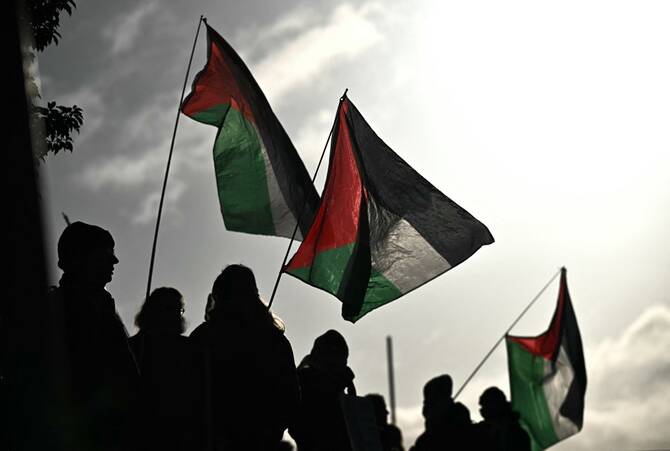
Protesters wave Palestinian flags outside Woolwich Crown Court in south east London, where Palestine Action activists stood trial. Nov. 17, 2025. (AFP)
Short Url
Updated 15 January 2026
Follow

Three detained pro-Palestinian activists end hunger strike

  • Thousands have since July been arrested ‌for holding signs in support of Palestine Action

LONDON: Three pro-Palestinian activists detained in Britain ended their hunger strike ​on Wednesday, with some of them facing imminent death from the effects of their protest, campaign group Prisoners for Palestine said in a statement.
All ‌of the ‌hunger strikers ‌have ⁠been ​charged ‌with offenses allegedly carried out on behalf of Palestine Action, before the group was banned and designated a terrorist organization.
Two are in ⁠custody over alleged involvement in ‌a break-in at an ‍Israeli-linked ‍defense firm last year. ‍The other was one of several accused of breaching a military air base in ​central England and damaging two aircraft in protest against ⁠Britain’s support for Israel.
Palestine Action was banned in July, making it a crime to be a member. Thousands have since been arrested ‌for holding signs in support of the group.


Venezuela advances amnesty bill that could lead to mass release of political prisoners

Updated 4 sec ago
Follow

Venezuela advances amnesty bill that could lead to mass release of political prisoners

  • Such an amnesty is a central demand of the country’s opposition and human rights organizations with backing from the United States

CARACAS: Venezuela’s legislature on Thursday advanced an amnesty bill proposed by acting President Delcy Rodríguez that could lead to the release of hundreds of opposition leaders, journalists and human rights activists detained for political reasons.
Such an amnesty is a central demand of the country’s opposition and human rights organizations with backing from the United States. But the contents of the bill have not been released publicly, and rights groups have so far reacted with cautious optimism — and with demands for more information.
The bill, introduced just weeks after the US military captured then-President Nicolás Maduro, still requires a second debate that has yet to be scheduled. Once approved, it must be signed by Rodríguez before it can go into effect.
In announcing the bill late last month, Rodríguez told a gathering of justices, magistrates, ministers, military brass and other government leaders that the ruling party-controlled National Assembly would take up the legislation with urgency.
“May this law serve to heal the wounds left by the political confrontation fueled by violence and extremism,” she said in a pre-taped televised event. “May it serve to redirect justice in our country, and may it serve to redirect coexistence among Venezuelans.”
Rights groups, fearing some political detainees will be excluded, want more details about the requirements for amnesty before any final vote.
The Venezuelan Program for Education-Action in Human Rights, or PROVEA, issued a statement emphasizing that the bill must be made public urgently due to its potential impact on victims’ rights and broader Venezuelan society.
Based on what is known so far about the legislation, the amnesty would cover a broad timeline, spanning the administration of the late Hugo Chávez from 1999 to 2013 and that of his political heir, Maduro, until this year. It would exclude people convicted of murder, drug trafficking, and serious human rights violations, reports indicate.