

US freezes immigrant visa processing for 75 countries, including Pakistan

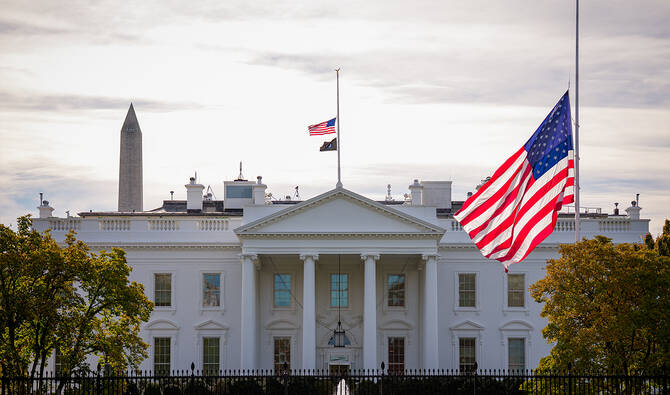
The American flag is flown at half-staff at the White House on November 4, 2025 in Washington, DC. (AFP/ file)
Short Url
Updated 15 January 2026
Follow

US freezes immigrant visa processing for 75 countries, including Pakistan

  • Immigrant visas to be suspended from Jan 21, tourist visas unaffected
  • Move targets “public charge” concerns as Trump revives hard-line immigration rules

ISLAMABA: The United States will pause immigrant visa issuances for nationals of 75 countries, including Pakistan, from January 21, the State Department said on Thursday, as President Donald Trump presses ahead with a hard-line immigration agenda centered on financial self-sufficiency.

In an update published on its website, the State Department said it was conducting a comprehensive review of immigration policies to ensure that migrants from what it described as “high-risk” countries do not rely on public welfare in the United States or become a “public charge.”

“The State Department will pause immigrant visa processing from 75 countries whose migrants take welfare from the American people at unacceptable rates. The freeze will remain active until the US can ensure that new immigrants will not extract wealth from the American people,” the department said.

The pause applies specifically to immigrant visas, which are issued to people seeking permanent residence in the United States. The department said applicants from affected countries may still submit applications and attend interviews, but no immigrant visas will be issued during the suspension.

According to the State Department, the affected countries include Pakistan, Afghanistan, Bangladesh, Iran, Iraq, Egypt, Nigeria, Russia, Somalia, Brazil, Thailand and dozens of others across Asia, Africa, the Middle East, Europe and Latin America.

The department said tourist and other non-immigrant visas are not affected, and that no previously issued immigrant visas have been revoked. Dual nationals applying with a valid passport from a country not on the list are exempt from the pause.

The State Department did not indicate how long the visa pause would remain in effect, saying it would continue until its review of screening and vetting procedures is completed.

The announcement underscores the breadth of the Trump administration’s renewed immigration crackdown. Since returning to office last year, Trump has revived and expanded enforcement of the “public charge” provision of US immigration law, which allows authorities to deny entry to applicants deemed likely to rely on public benefits.

During his previous term, Trump imposed sweeping travel restrictions on several Muslim-majority countries, a policy widely referred to as a “Muslim ban,” which was challenged in courts before a revised version was upheld by the Supreme Court and later rescinded under former president Joe Biden.

The visa freeze also comes amid an intensifying domestic enforcement push. US Immigration and Customs Enforcement (ICE) has expanded operations nationwide, drawing scrutiny over its tactics. Last week, an ICE agent shot and killed Renee Good, a US citizen, during a federal operation in Minneapolis, sparking protests and renewed debate over immigration enforcement under the Trump administration.


Pakistan, Saudi Arabia explore joint investment push in high-growth regions

Updated 29 min 10 sec ago
Follow

Pakistan, Saudi Arabia explore joint investment push in high-growth regions

  • Both sides discuss combining Pakistan’s production capacity with Saudi capital and regional market access
  • Government says Saudi side expressed interest in corporate farming in Pakistan, particularly in rice sector

KARACHI: Pakistan and Saudi Arabia are looking to jointly tap high-growth regional markets and align production and capital strengths, according to an official statement on Wednesday, following talks between Commerce Minister Jam Kamal Khan and Saudi Investment Assistant Minister Ibrahim Al-Mubarak in the Kingdom.

The two countries have long maintained close bilateral ties that have evolved into a multidimensional strategic partnership.

In October last year, the two countries launched an Economic Cooperation Framework aimed at shifting relations beyond aid toward sustainable trade, investment and development links. The framework followed the signing of a joint security agreement a month earlier, under which aggression against one would be treated as an attack on both.

“A key focus of the discussion was the joint exploration of regional markets, particularly Central Asia, Africa, and ASEAN, identified as high-growth regions offering significant opportunities for collaboration,” according to a statement circulated by Pakistan’s commerce ministry after the meeting.

“The two sides agreed that Pakistan and Saudi Arabia, by leveraging their respective strengths, can position themselves as complementary partners — combining Pakistan’s production capabilities with Saudi Arabia’s capital strength, market access, and regional connectivity,” it added.

The Saudi side expressed interest in corporate farming in Pakistan, particularly in the rice sector, with discussions covering mechanization, storage and logistics to enable consistent, long-term exports under structured arrangements.

Talks also covered broader cooperation in agriculture and food security, including rice, fodder, meat and other agri-products, with the potential involvement of Saudi financing institutions in supporting export-linked agricultural and infrastructure projects.

Corporate farming and mechanization were discussed as long-term solutions to productivity challenges in crops such as cotton, where declining yields and high manual input costs have hurt competitiveness, the statement said.

Human resource development emerged as another area of focus, with both sides noting shortages in mid-tier skills such as nurses, caregivers, technicians and hospitality staff.

The Saudi side expressed openness to replicating vocational “train-to-deploy” models in Pakistan that link training programs directly with overseas employment opportunities.

The meeting also examined opportunities in building materials, pharmaceuticals, sports goods, footwear and light manufacturing, with both sides agreeing to pursue sector-specific workshops and business-to-business engagements to translate policy alignment into tangible trade and investment flows.