ISLAMABAD: A detailed inquiry report prepared by a senior official of Pakistan’s election regulatory authority has established massive irregularities in a National Assembly by-poll in Punjab earlier this year, calling it a collective failure of its own staff along with police and local administration officials.
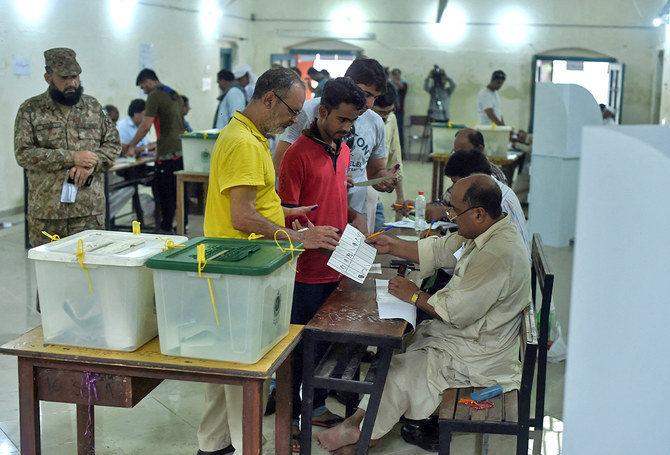
The Election Commission of Pakistan (ECP) declared the controversial by-election in Daska’s NA-75 constituency in February as null and void due to violent incidents, compromised voting process and disappearance of 20 presiding officers for several hours.
The ECP suspected the results in at least 20 polling stations had been falsified, as opposition parties blamed the ruling administration for trying to manipulate the election results.
“The election officials and other government functionaries did not play their designated role in the requisite manner but they were found [to be] puppets in the hands of their unlawful masters,” the ECP inquiry report, a copy of which is available with Arab News, said.
The document maintained the presiding officers seemed to be working under external influence “as if a constant observatory force drove or goaded them.”
Submitted by the joint election commissioner of Punjab to the ECP secretary, the report was compiled after taking statements of 20 presiding officers who were “forcefully taken to some unknown places.”
It called the election manipulation process a “preplanned scam,” noting that ECP’s district returning officer along with the returning officer did not properly fulfil their duties.
The report also blamed the police playing a passive role in election manipulation.
“Instead of taking care of [the] polling staff and arranging their safe transport to [the] office of the RO [returning officer] in time, they kept their eyes closed and became part of illegal transportation of POs [presiding officers] to some suspicious place [in] Sialkot [city] or elsewhere,” it continued, adding: “The element of giving monitory benefits at different stages cannot be overruled altogether.”
The document also maintained that officials of local education department had held a meeting with presiding officers who were instructed to “favor the government in the said by-election … and not bother about the law and order situation if [it] turned untoward.”
It added such meetings were also attended Firdous Ashiq Awan, a former aide to the Punjab chief minister.
The report recommended not to post the returning and district returning officers on any administrative post, adding they should be kept away from future election activities.
It said the returning officers should maintain a log of vehicles used for transporting presiding officers, as well as details of the number of people traveling in each vehicle along with their departure and arrival times.
And “a tracking chip in the form of a disposable bracelet bearing a unique number may be provided to PO [presiding officer], so as to know about his/her location and to avoid such incidents in future,” the report added.
Speaking to Arab News, former election commission secretary Kanwar Dilshad said the report was likely to have far reaching implications for future elections.
“It is for the first time that the ECP has presented such a neutral report in which it has also accused its own returning and district returning officers along with other departments of the Punjab government,” he said.
Dilshad maintained the ECP could register cases against the officials involved in the court of district and sessions judges under Sections 167 and 174 of the Election Act of 2017.
“In light of this report, the ECP should be given power to directly act against the government officials involved in election malpractices,” he added.


![]()

Pakistan’s election regulatory authority finds massive irregularities in Daska by-poll
Short Url
https://arab.news/c34h2
Pakistan’s election regulatory authority finds massive irregularities in Daska by-poll
- The Election Commission of Pakistan held a by-election in a National Assembly constituency in Punjab in February which was later declared null and void
- The ECP calls the election manipulation process a ‘preplanned scam,’ saying it was a collective failure of its own staff, local administration officials
Latest updates


Recommended


© 2026 SAUDI RESEARCH & PUBLISHING COMPANY, All Rights Reserved And subject to Terms of Use Agreement.