

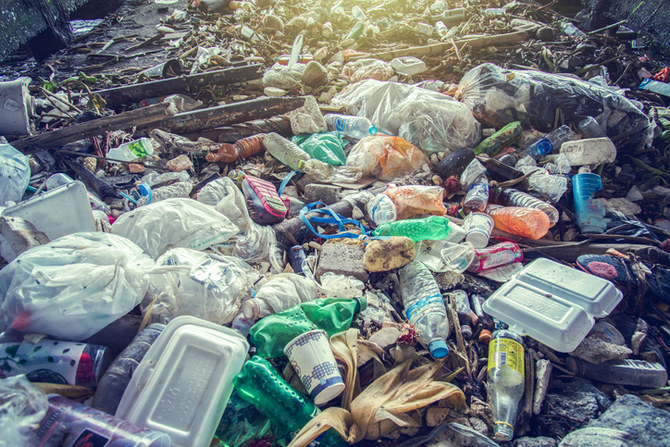

A long summer of floods, forest fires, and extreme heatwaves across the globe has led to the stark realization the wastefulness and pollution of mankind is having a calamitous impact upon both the climate and the environment. A consensus is growing amongst politicians and decision-makers that an entire new way of life must be found — not only for the sake of the planet but for the very survival of the human race.
This is the dire context of the forthcoming Saudi Green Initiative (SGI) Forum, to be held in Riyadh in the last week of November. Under the patronage of HRH Mohammed Bin Salman, the forum “will unveil the SGI’s roadmap for delivery...spotlight the Kingdom’s green efforts…[and] drive action and spark innovative solutions to help tackle climate change.”
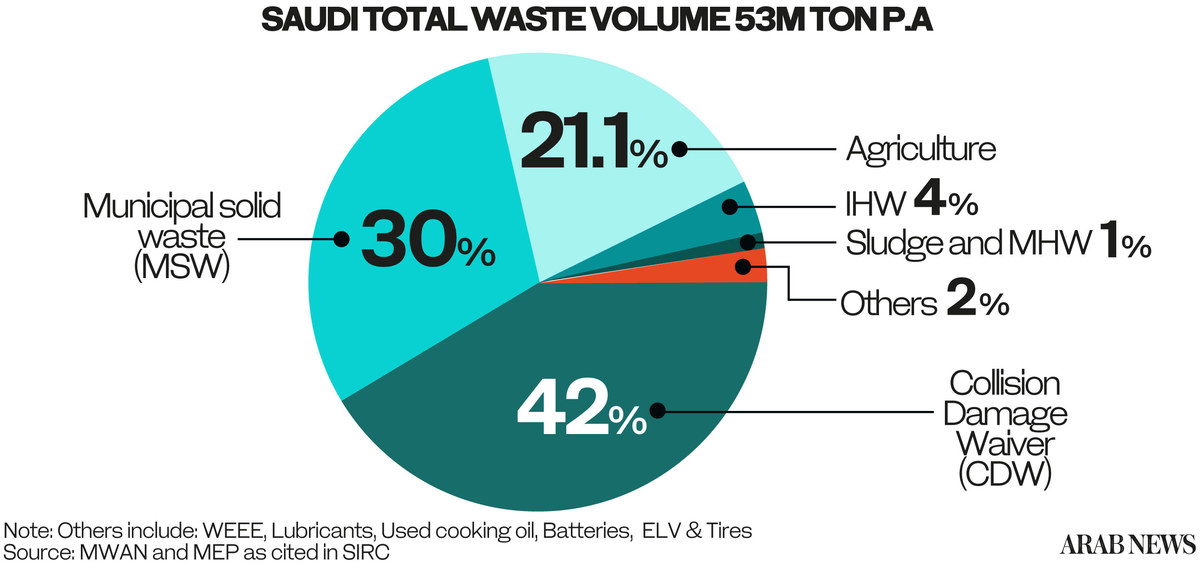
The KSA produces no less than 50 million tons of waste per year – and 95 percent of that ends up in landfills, poisoning the earth and releasing greenhouse gases into the atmosphere for decades to come. What is not buried is evident on the streets, in the form of discarded plastic bags, fast-food containers and empty soda cans.
#WATCH: Ziyad Al Shiha talks about how #SIRC will act as the executive arm of the circular economy investments. #SaudiGreenInitiative pic.twitter.com/AZcC3y82yl
— Arab News Business (@ArabNewsBiz) October 19, 2021
The government of Saudi Arabia is now determined to reverse this negative scenario, in favor of a ‘circular economy’ based on zero waste — the driving concept being that every form of debris is the raw material for a fresh product or energy source.
The leading agent of change in this respect is the Saudi Investment Recycling Company (SIRC), which was established by Royal Decree in 2017, as a wholly owned subsidiary of the Public Investment Fund.
#WATCH: Ziyad Al Shiha, #SIRC CEO: We aim to achieve 94% landfill diversion for the entire Kingdom by 2035. #SaudiGreenInitiative pic.twitter.com/FaUfc4ysoK
— Arab News Business (@ArabNewsBiz) October 19, 2021
“We are the executive arm behind the circular economy”, SIRC CEO Ziyad Al Shiha told Arab News. “We work with the local and global private sector, improving local technology, introducing best practices and creating jobs. This is part of the green initiative in Saudi Arabia, the green initiative of the Middle East and indeed the green initiative of the entire world.”
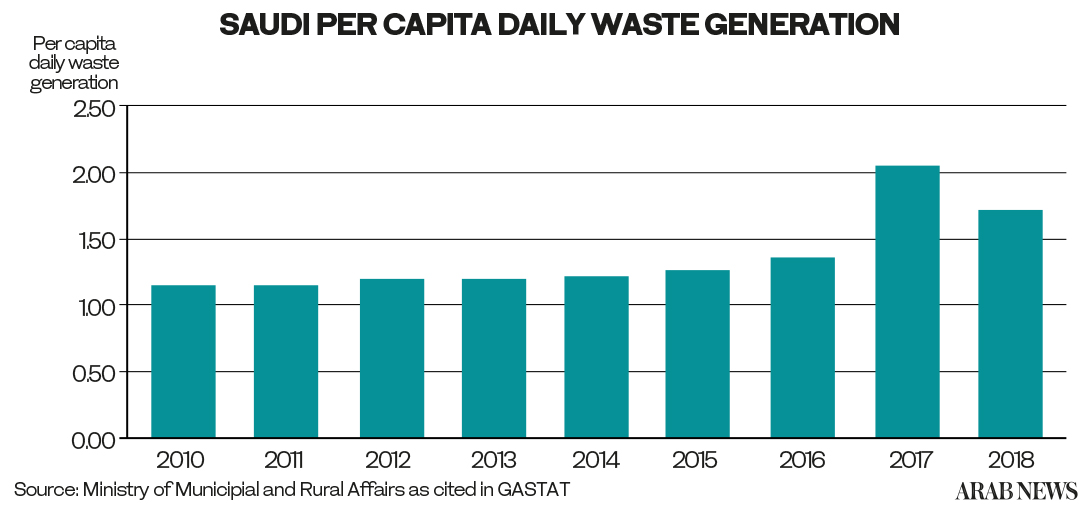
The stated aim of SIRC is to reduce waste landfill from 100 percent today to effectively zero percent by 2035. “This will be an integrated approach”, says Al Shiha, “unlike the fragmented approach of the past.”
SIRC’s overall recycling strategy is targeted at twelve separate elements of waste, including raw sewage, construction/demolition debris, solid municipal waste (i.e. garbage) and agricultural sludge. The remainder is a toxic cocktail of industrial effluent, end-of-life vehicles and batteries, old tires, automotive lubricants, disused electronic equipment and cooking oil.
The only waste not covered by SIRC’s remit is that from the military and from nuclear energy, both of which are handled by more specialized bodies.
The circular economy offers vast opportunities in terms of products, energy creation and services — all of which will no doubt make a major contribution to the diversification of the Saudi economy away from oil and its derivatives, in line with Vision 2030.
One form of value-add is ‘waste-to-energy’, whereby garbage, raw sewage or industrial sludge can be dried and incinerated, for example to power steam turbines. SIRC recently signed a Memorandum of Understanding with the National Water Company to process raw sewage for just this purpose. The model here is the world's largest sludge treatment and energy recovery program, built by Veolia in Hong Kong.
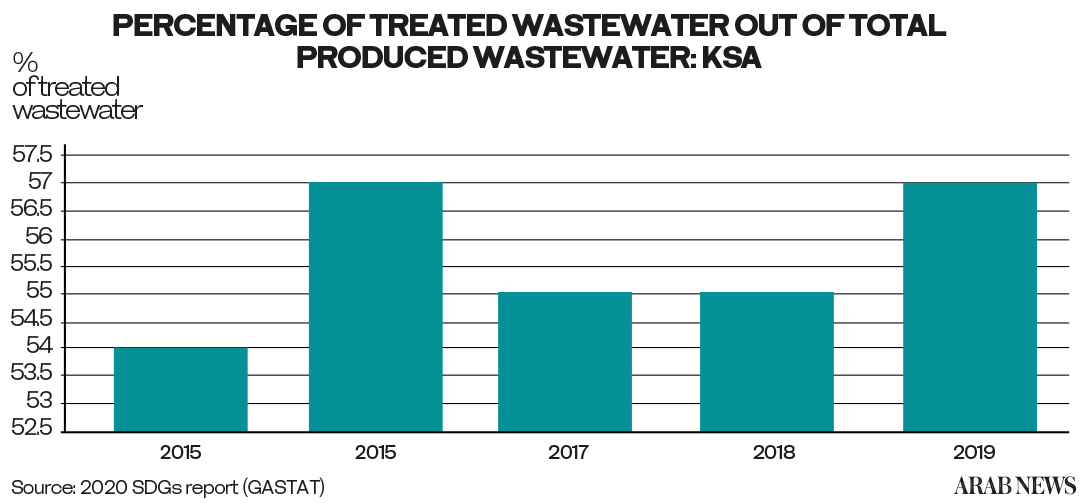
The burning of waste does release CO2, but surprisingly, leaving waste to decompose in a landfill will ultimately create 20-40 times more greenhouse gas emissions in the form of methane, over a period of many years.
Business opportunities also exist in the conversion of building debris into attractive new products. SIRC has built a massive construction waste processing facility in the north of Riyadh, where rubble is segregated and recycled into ballast for backfilling and landscaping, aggregate bricks for new constructions and raw steel that can be smelted into new beams and pipes. The facility is already up and running, with a potential processing capacity of 12,000 tons (400 truckloads) per day.
These are both SIRC-led projects, but the circular economy will not happen without the active involvement of entrepreneurs and corporations. “We have a regulatory framework that allows us to move with the private sector in a very profitable way”, says Al Shiha. “The SIRC will buy and invest in companies, and establish joint ventures. We invite local, regional and global companies to come and talk to us to explore all options to move the circular economy forward.”
SIRC offers an equity participation of 20-30 percent with a debt structure of 70-80 percent to both Saudi and non-Saudi companies with an interest in recycling and waste management; and according to Al Shiha, SAR120 billion will be invested in Saudi Arabia’s circular economy between now and 2035.
Projects such as waste-to-energy are on a vast macro scale, involving billions of Riyals. But there is also plenty of room for SMEs providing more niche services such as dismantling and sorting of disused electrical equipment, or offering the broad range of consultancy services required for ‘smart’ waste management.
The road to a fully circular economy is long and challenging. Saudi Arabia aims to surpass in 15 years what took most G20 economies 30 to 40 years to achieve. Even today, highly developed nations such as Japan, Germany and the UK are still far from being fully circular economies, even if they have all significantly stepped-up recycling and reduced their landfills over the past decades.
A lot needs to be done in the Kingdom. There is currently no sorting of ‘waste at source’ – that is, the separation of rubbish from homes, supermarkets and factories. Currently one large bin can be seen outside houses and buildings. Before long there will be three bins: one for organic material (to be turned into compost or dried and burned for energy); one for dry recyclable material (metal, cans, plastic, glass and paper); and the third for ‘dirty wet’ material – for example baby diapers – which can also be incinerated to produce power.
Another pertinent issue is illegal practices, such as the black market in recycled plastic and paper and the careless dumping of construction debris. New regulations have been introduced in the last two months, to incriminate and penalize those who pollute the environment.
The good news is that Saudi Arabia can learn from the experience and knowledge of other countries. “We can start from where others have reached”, says Al Shiha. “We have to invest in the infrastructure, but equally we have to provide education and create outreach programs.
“Once we achieve 25-35 percent recycling, we can say to the public: ‘Look, this is your effort. And this is the result that we're bringing back to you.’” That, it is hoped, will make recycling a way of life.
The goals of SIRC are hugely ambitious and will involve all sectors of Saudi society: every ministry, every municipality, every school and college and ultimately, every individual.
But Al Shiha remains optimistic. “The youth of today is very progressive,” he says. “They love the environment, and they want to improve the quality of life. We're at a turning point now. The first step is to recognize and admit that you have a problem – and then implement all the systems and regulations, and invite people to participate. We as human beings need to play a very positive role, to be passionate and to contribute to the circular economy.”


