Saudi Energy Ministry launches tender for dry gas network in Dammam

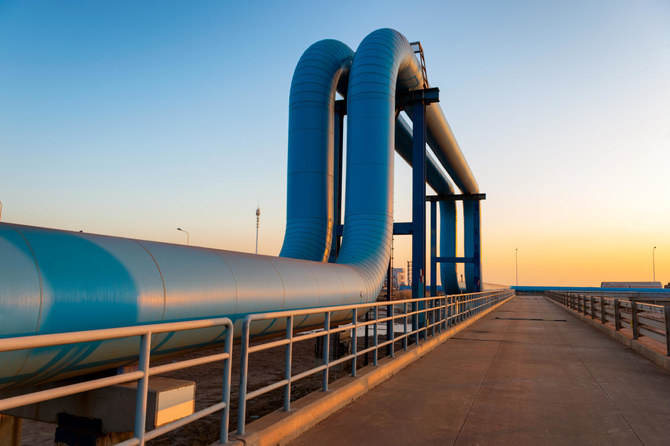
The license holder must meet 75 percent of requests in the industrial city within nine months os it being granted. (Getty Images)
Short Url
Updated 15 October 2021
Follow

Saudi Energy Ministry launches tender for dry gas network in Dammam

  • Tender is for a pipeline network from the connection point with Aramco, which provides the gas, to all factories that need fuel in the city

RIYADH: The Saudi Ministry of Energy announced a public tender for a license to establish, own and operate a dry gas network in the Third Industrial City in Dammam in the Eastern Province.

The project includes a pipeline network from the connection point with Aramco, which provides dry gas, to all factories that need fuel within the region, the ministry said in a statement.

The license requires the design, construction, operation and maintenance of the dry gas local network in Dammam 3 at the expense of the license applicant for a period of 35 years in return for a service tariff approved by the ministry.

The license holder must meet 75 percent of requests in the industrial city within nine months from the date of granting the license, the ministry said.

Through the installation of the gas networks, the ministry is aiming to make Saudi Arabia’s industrial cities a more attractive environment for investors, to raise the efficiency and competitiveness of factories, and to reduce carbon emissions and the number of trucks that transport liquid fuels, it said.

Saudi Arabia is increasing its use of natural gas and renewables in power generation with a goal of a achieving a 50/50 split between the two by 2030.

Saudi Aramco is preparing to restart development of the giant Jafurah gas field in the eastern region of the country with plans to invest about $110 billion in the project, CNBC Arabiya reported in September.

The largest natural gas field in the Kingdom, stretching 170 km by 100 km, is estimated at 200 trillion cubic feet of rich raw gas.

Aramco has resubmitted several tenders for field development, including for the construction of the field’s dedicated power plant early next December, unnamed sources in the oil and gas industry told CNBC.

The Jafurah field will place Saudi Arabia third in the world in natural gas production by 2030, the Ministry of Energy has said.

Aramco expects the production from the Jafurah field to commence in early 2024 and reach about 2.2 billion cubic feet of gas per day by 2036. The field will also be able to produce about 425 million cubic feet of ethane per day, and about 550 thousand barrels per day of gas liquids and condensates.


Saudi Arabia’s foreign reserves rise to a 6-year high of $475bn

Updated 22 February 2026
Follow

Saudi Arabia’s foreign reserves rise to a 6-year high of $475bn

RIYADH: Saudi Arabia’s foreign reserves climbed 3 percent month on month in January to SR1.78 trillion, up SR58.7 billion ($15.6 billion) from December and marking a six-year high.

On an annual basis, the Saudi Central Bank’s net foreign assets rose by 10 percent, equivalent to SR155.8 billion, according to data from the Saudi Central Bank, Argaam reported.

The reserve assets, a crucial indicator of economic stability and external financial strength, comprise several key components.

According to the central bank, also known as SAMA, the Kingdom’s reserves include foreign securities, foreign currency, and bank deposits, as well as its reserve position at the International Monetary Fund, Special Drawing Rights, and monetary gold.

The rise in reserves underscores the strength and liquidity of the Kingdom’s financial position and aligns with Saudi Arabia’s goal of strengthening its financial safety net as it advances economic diversification under Vision 2030.

The value of foreign currency reserves, which represent approximately 95 percent of the total holdings, increased by about 10 percent during January 2026 compared to the same month in 2025, reaching SR1.68 trillion.

The value of the reserve at the IMF increased by 9 percent to reach SR13.1 billion.

Meanwhile, SDRs rose by 5 percent during the period to reach SR80.5 billion.

The Kingdom’s gold reserves remained stable at SR1.62 billion, the same level it has maintained since January 2008.

Saudi Arabia’s foreign reserve assets saw a monthly rise of 5 percent in November, climbing to SR1.74 trillion, according to the Kingdom’s central bank.

Overall, the continued advancement in reserve assets highlights the strength of Saudi Arabia’s fiscal and monetary buffers. These resources support the national currency, help maintain financial system stability, and enhance the country’s ability to navigate global economic volatility.

The sustained accumulation of foreign reserves is a critical pillar of the Kingdom’s economic stability. It directly reinforces investor confidence in the riyal’s peg to the US dollar, a foundational monetary policy, by providing SAMA with ample resources to defend the currency if needed.

Furthermore, this financial buffer enhances the nation’s sovereign credit profile, lowers national borrowing costs, and provides essential fiscal space to navigate global economic volatility while continuing to fund its ambitious Vision 2030 transformation agenda.