UAE National Pavilion wins Golden Lion Award at Venice Architecture Biennale

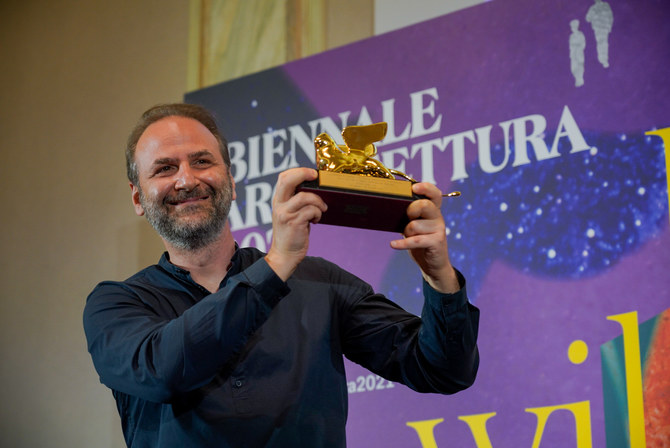
Wael Al-Awar is the curator of Wetland. (Supplied)
Short Url
Updated 31 August 2021
Follow

UAE National Pavilion wins Golden Lion Award at Venice Architecture Biennale

DUBAI: The National Pavilion UAE has been awarded the Golden Lion Award this week for best national participation at Venice’s 2021 La Biennale Architettura.

“Wetland,” which is the pavilion’s 10th participation at the event curated by Wael Al-Awar and Kenichi Teramoto, presents a prototype of an environmentally friendly salt-based cement alternative from recycled industrial waste brine. It could reduce the impact the construction industry has on the environment.

It was selected by the jury for being “a bold experiment that encourages us to think about the relationship between waste and production on a local and global scale, and opens us to new construction possibilities between craft and high-technology,” said festival President Kazuyo Sejima at the ceremony.

The exhibition will remain on display until Nov. 2021.
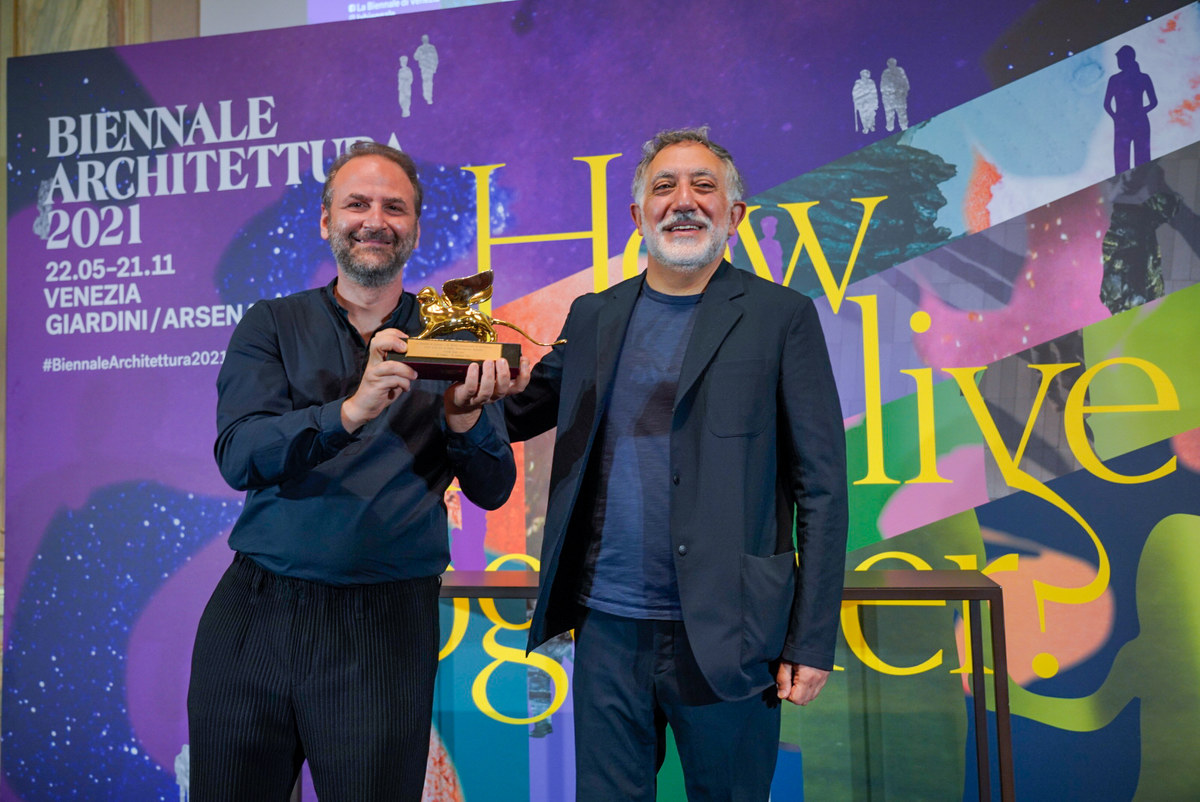


Al-Awar accepted the award on behalf of the pavilion. (Supplied)

According to a released statement, the coordinating director of the National Pavilion UAE Laila Binbrek said: “Following ten exceptionally thought-driven and creative exhibitions at the Venice Biennale, National Pavilion UAE is honored to be chosen for the Golden Lion Award for best National Participation out of 60 national pavilions.

“This is a testament to the work we have been doing to contribute to the UAE’s evolving art ecosystem, and a recognition of our continued efforts to tell the UAE’s untold stories in a globally relevant way,” added Binbrek. 

Al-Awar, who accepted the award on behalf of the pavilion at the ceremony said: “We are honored to accept this award. 

We are very proud and humbled as we continue to spotlight potential solutions to global issues and move towards the future.”

This is the second time a country in the region has won the Golden Lion Award. In 2010, Bahrain won the same award at the 12th International Architecture Exhibition.


Riyadh exhibition to trace the origins of Saudi modern art

Updated 07 January 2026
Follow

Riyadh exhibition to trace the origins of Saudi modern art

  • Features painting, sculpture and archival documents
  • Open from Jan. 27-April 11 at Saudi national museum

DUBAI: A new exhibition in Riyadh is focusing on the origins of Saudi Arabia’s modern art scene, examining how a generation of artists helped shape the Kingdom’s visual culture during a period of rapid change.

The “Bedayat: Beginnings of Saudi Art Movement” show reportedly traces the emergence of creative practices in Saudi Arabia from the 1960s to the 1980s, an era that laid the groundwork for today’s art ecosystem.

On view from Jan. 27 until April 11 at the National Museum of Saudi Arabia, it includes works and archival material that document the early years of modern and abstract art in the Kingdom, according to the organizers.

It will examine how artists responded to shifting social, cultural and economic realities, often working with limited infrastructure but a strong sense of purpose and experimentation.

The exhibition is the result of extensive research led by the Visual Arts Commission, which included dozens of site visits and interviews with artists and figures active during the period.

These firsthand accounts have helped to reconstruct a time when formal exhibition spaces were scarce, art education was still developing, and artists relied heavily on personal initiative to build communities and platforms for their work.

Curated by Qaswra Hafez, “Bedayat” will feature painting, sculpture, works on paper and archival documents, many of which will be shown publicly for the first time.

The works will reveal how Saudi artists engaged with international modernist movements while grounding their practice in local heritage, developing visual languages that spoke to both global influences and lived experience.

The exhibition will have three sections, beginning with the foundations of the modern art movement, and followed by a broader look at the artistic concerns of the time.

It will conclude with a focus on four key figures: Mohammed Al-Saleem, Safeya Binzagr, Mounirah Mosly and Abdulhalim Radwi.

A publication, documentary film and public program of talks and workshops will accompany the exhibition, offering further insight into a pivotal chapter of Saudi art history and the artists who helped define it.