

Pakistan crosses $2 billion inflows through digital banking initiative for overseas nationals 

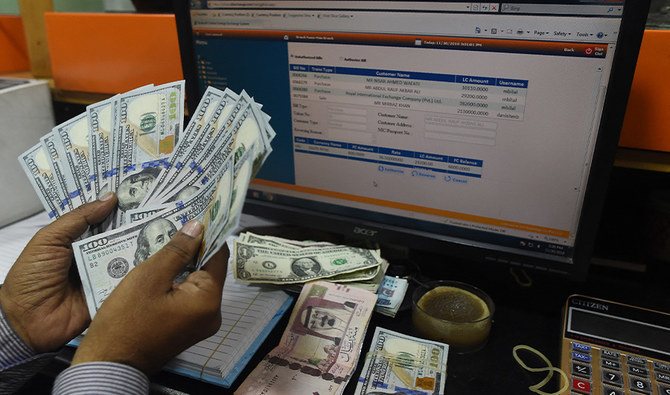
A Pakistani dealer counts US dollars at a currency exchange shop in Karachi on November 30, 2018. (AFP)
Short Url
Updated 16 August 2021
Follow

Pakistan crosses $2 billion inflows through digital banking initiative for overseas nationals 

  • PM Khan inaugurated Roshan Digital Accounts service last year as joint effort by central bank and eight commercial banks
  • RDA provides access to all conventional account services, including funds transfer, online bills, e-commerce and other payments

ISLAMABAD: Pakistani foreign excha­nge inflows through Roshan Digital Accounts (RDA), a banking initiative launched for overseas Pakistanis last year, has crossed $2 billion, the central bank said.
Prime Minister Imran Khan inaugurated the RDA service in September as part of a joint effort by the State Bank of Pakistan (SBP), the government, and eight commercial banks to “integrate overseas Pakistanis with the country’s banking system.”
“As Pakistanis all over the world celebrated country’s Independence Day, #RoshanDigitalAccount crosses the historical milestone of $2bn in deposits,” the central bank said on Twitter, thanking overseas Pakistanis for their overwhelming response to the Roshan Digital Accounts initiative.

The RDA provides access to all conventional account services, including funds transfers, online billing, e-commerce and other payments in Pakistan.
For the first time in Pakistan’s history, the RDA provided Non-Resident Pakistanis (NRPs) an opportunity to remotely open an account in Pakistan without visiting a bank. It also allows users to invest in the stock market and fixed deposit products offered by banks, with the added advantage of debit and virtual debit cards for domestic and overseas use.
“These accounts provide innovative banking solutions for millions of NRPs, including Non-Resident Pakistan Origin Card [POC] holders, seeking to undertake banking, payment and investment activities in Pakistan,” the SBP says on its website, quoting Governor Reza Baqir.


Karachi plaza fire death toll reaches 28 as search continues for missing

Updated 6 sec ago
Follow

Karachi plaza fire death toll reaches 28 as search continues for missing

  • Demolition of burned building on hold until all victims accounted for, official says
  • Authorities shut adjacent mall, order fire safety compliance across Karachi city

KARACHI: Pakistani authorities on Wednesday said 28 bodies had been recovered from a shopping plaza devastated by a massive fire in Karachi last weekend, with dozens of people still unaccounted for, as officials warned the structure could not be demolished until search operations were completed.

The blaze broke out late Saturday at Gul Plaza, a multi-story commercial building in Karachi’s congested Saddar district, and burned for more than 24 hours before being brought under control. The fire gutted over 1,200 shops, triggered partial structural collapse and forced rescuers to navigate extreme heat, debris and instability inside the building.

Speaking to reporters on Wednesday, Deputy Commissioner of Karachi South Javed Nabi Khoso said rescue teams were continuing phased search and debris-removal operations under strict safety protocols, adding that demolition would only be permitted once all missing persons were traced.

“Until even one missing person is accounted for, the building cannot be demolished,” Khoso said “So far, 28 bodies have been recovered, of which 11 have been identified, while 17 remain unidentified. DNA samples have been taken from families and the bodies, and the identification process is ongoing.”

Khoso said authorities had initially received reports of 85 missing persons, of whom 39 had since been located, leaving 28 people still unaccounted for as search operations continued. He said heavy machinery had been deployed to remove large installations such as chillers to reduce load on the structure and allow safer access to critical areas.

“We are focusing on the floors where bodies were found, and then moving toward controlled debris removal,” he said, adding that extreme internal temperatures and structural damage were limiting how long rescue teams could remain inside the building.

Medical officials said the condition of many victims’ remains had made immediate identification impossible.

Police Surgeon Dr. Summaiya Syed said forensic teams were working to confirm identities through DNA analysis.

“As of now, we can confirm 20 deaths, including six identified and 14 unidentified,” she said earlier, noting that samples from 48 families had been collected to assist with identification, while processing of additional remains was continuing.

Officials have cautioned that figures could change as recovery operations progress.

SAFETY RISKS SPREAD TO ADJACENT BUILDINGS

The scale of the fire has raised broader safety concerns across Karachi’s commercial districts. Authorities said Rimpa Plaza, an adjacent shopping complex, had been declared unsafe after being damaged by falling debris during the blaze and was partially closed pending structural assessments.

Separately, the Sindh Building Control Authority (SBCA) has issued notices to building owners and developers across the city, giving them three days to address fire safety deficiencies highlighted in recent audit reports or face legal action under provincial laws.

In a letter to the Association of Builders and Developers (ABAD), the SBCA said enforcement would be stepped up following the Gul Plaza disaster, citing long-standing failures in fire exits, alarms, wiring and emergency access in commercial buildings.

Deadly fires are a recurring problem in Karachi, a city of more than 20 million people, where overcrowding, illegal construction, narrow access points and weak enforcement of safety regulations have repeatedly resulted in mass casualties and economic losses.

In November 2023, a shopping mall fire killed 10 people, while one of Pakistan’s deadliest industrial disasters occurred in 2012, when a blaze at a garment factory claimed at least 260 lives.

Provincial officials say inspections and enforcement will be intensified in the coming days, but safety advocates warn that lasting change will depend on sustained oversight beyond emergency directives.