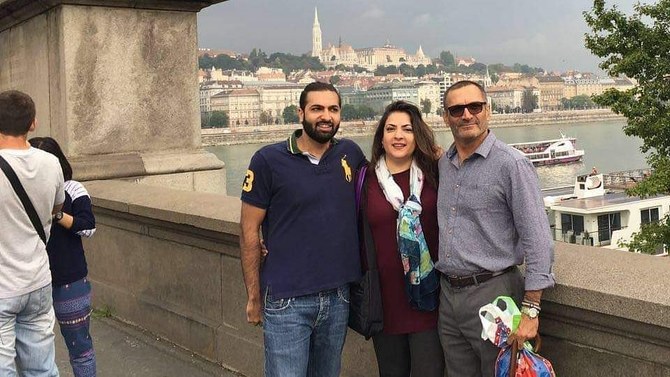

ISLAMABAD: Zahir Zakir Jaffer, the key suspect in the grisly July 20 murder of Noor Mukadam, was taken to the Pakistan Institute of Medical Sciences (PIMS) in Islamabad on Wednesday afternoon after he complained he had a headache, doctors at the hospital said, as social media erupted in outcry over special privileges for the wealthy US national.
Mukadam, the daughter of a former Pakistani diplomat, was found beheaded at a residence in Islamabad’s upscale F-7/4 sector on July 20 in a case that has sparked public outrage and grabbed media attention unlike any other recent case.
Waseem Khawaja, a doctor at PIMS, confirmed to Arab News that Jaffer was brought to the hospital on Wednesday but discharged after a brief checkup.
“Zahir Jaffer was brought to the PIMS emergency room today afternoon for a checkup,” Khawaja said. “He was checked for a headache and his blood pressure and temperature were also noted, which were found to be normal.”
The doctor added: “Nothing to be worried about, he was found to be in good health.”
Another doctor at the hospital, Deputy Executive Director Dr. Zulfiqar Ghauri, also confirmed the news.
Pakistan’s local media first reported on the incident quoting unnamed sources, unleashing widespread condemnation from social media users who said Jaffer was being given special treatment because he belonged to the privileged elite society of Pakistan and was a US national.
“Unless every single prisoner in the Pakistani penal system goes to PIMS when they have a headache, this is a sick abuse of power,” author Fatima Bhutto wrote on Twitter. “Zahir Jaffer getting all the privileges of his wealth and influence in jail after his heinous crime is outrageous.”
Unless every single prisoner in the Pakistani penal system goes to PIMS when they have a headache, this is a sick abuse of power. Zahir Jaffer getting all the privileges of his wealth and influence in jail after his heinous crime is outrageous. https://t.co/ZQsUcUB5Ik
— fatima bhutto (@fbhutto) August 4, 2021
“Is this facility available to the rest of the accused and prisoners as well or is it available only to rich accused?” digital and women’s rights activist Nighat Dad asked.
بےبی ملزم کی طبعیت ناساز ، باقی ملزموں اور قیدیوں کو بھی یہ سہولت میسر ہے یا صرف امیر ملزموں کے لیے یہ آپشن موجود ہے؟ #NoorMukadam https://t.co/azhQYYhHPt
— Nighat Dad (@nighatdad) August 4, 2021
Jaffer was arrested on the day he murdered Mukadam last month, on the eve of Eid Al-Aha, and remained in police custody on physical remand until this Monday, when he was sent on 14-day judicial remand to Adiala Jail in Islamabad’s twin city of Rawalpindi. He will next be presented before a judicial magistrate on August 16.
Jaffer’s parents — Zakir Jaffer and Asmat Adamjee — and two members of their household staff were also arrested by Islamabad police on July 24 for “hiding evidence and being complicit in the crime.”
The parents, sent to jail on judicial remand till August 9, had moved separate bail petitions against their detention. Both were rejected by an Islamabad district and sessions court on Thursday, local media reported.
A Twitter account run by the Mukadam family to share details of the case also confirmed the decision:
The additional district and sessions judge has denied Zahir’s parents’ bail applications. #justicefornoor
— Justice for Noor (@justicefornoor) August 5, 2021
“Additional District and Sessions Judge Muhammad Sohail announced the verdict and it took him hardly a few seconds to announce his decision,” Samaa TV reported. “On Wednesday, the detailed proceedings into the bail applications of the parents had taken place in court and the judge had reserved his judgment for Thursday.”
During Wednesday’s hearing today, the parents’ counsel, Raja Rizwan Abbasi, said Jaffer’s parents had “publicly condemned the murder.”
“We stand with the affected party, we don’t stand with our son,” local media quoted the counsel as telling the court.
Within two weeks since Monday, police are bound by law to file a charge sheet (challan) in the court asking for Jaffer’s trial to commence.
The gruesome murder has sent shockwaves across the country, stirring outrage over femicides and demands for justice. Many activists and social media users have repeatedly raised concerns that Jaffer might get a lenient sentence because of his wealthy background and US nationality.
In a July 27 Twitter post, the US Embassy in Islamabad clarified that US citizens in a foreign country were subject to local laws and while the embassy could check on their well-being and provide a list of lawyers if they were arrested abroad, it couldn’t provide legal advice, participate in court proceedings or effect their release.
On Sunday night, during a live Q&A session with the nation, Prime Minister Imran Khan assured the public: “If someone thinks he is a dual national and has US citizenship and will escape, let me tell you all that no one will be spared.”