





Amazon eyes partnerships with Saudi SMEs, tech startups

1 / 4
According to figures by research firm Statista, e-commerce revenue in Saudi Arabia is set to reach $7.051 billion this year and grow at an annual rate of 5.38%. (Supplied)
2 / 4
According to figures by research firm Statista, e-commerce revenue in Saudi Arabia is set to reach $7.051 billion this year and grow at an annual rate of 5.38%. (Supplied)
3 / 4
According to figures by research firm Statista, e-commerce revenue in Saudi Arabia is set to reach $7.051 billion this year and grow at an annual rate of 5.38%. (Supplied)
4 / 4
According to figures by research firm Statista, e-commerce revenue in Saudi Arabia is set to reach $7.051 billion this year and grow at an annual rate of 5.38%. (Supplied)
Short Url
Updated 26 July 2021
Follow

Amazon eyes partnerships with Saudi SMEs, tech startups

  • Retail conglomerate launched a dedicated Saudi platform in June last year, and has seen double-digit growth

DUBAI: Global conglomerate Amazon is looking to partner with more entrepreneurs and technology startups in Saudi Arabia, as it aims to boost the dedicated Saudi retail site it launched a year ago and interact more with the local ecosystem.

The Global Entrepreneurship Monitor (GEM) annual report released this year found that entrepreneurial activity in the Kingdom increased by 24 percent year-on-year in 2020, while a third of Saudis surveyed said they were keen on launching a business within the next three years.

At the same time, research platform Magnitt reported that the value of investment deals in the technology startup sector in Saudi Arabia last year soared by 55 percent year-on-year to $152 million.

Amazon is aiming to capitalize on this fast-growing entrepreneurial ecosystem. “We’re working with the local entrepreneurs and we see a lot of those in the Kingdom. I think the space has changed drastically,” Ronaldo Mouchawar, vice president of Amazon Middle East and North Africa, told Arab News.

“You see a lot more venture capital, family offices investing in tech. So, we want to work with these companies and content developers and content owners,” he added.

The Syrian entrepreneur co-founded online retail platform Souq.com in 2005, which was then sold to Amazon in 2017. While direct acquisitions on that scale may not be on the cards, Mouchawar said the global giant was interested in working more closely with Saudi partners.

“If not totally invest, definitely a lot of partnerships, working to make sure that whatever innovation that’s working locally is available for our customers in the Kingdom,” he said.

On June 17 last year, Amazon launched its dedicated Saudi website Amazon.sa, rebranding the old Souq.com website. 
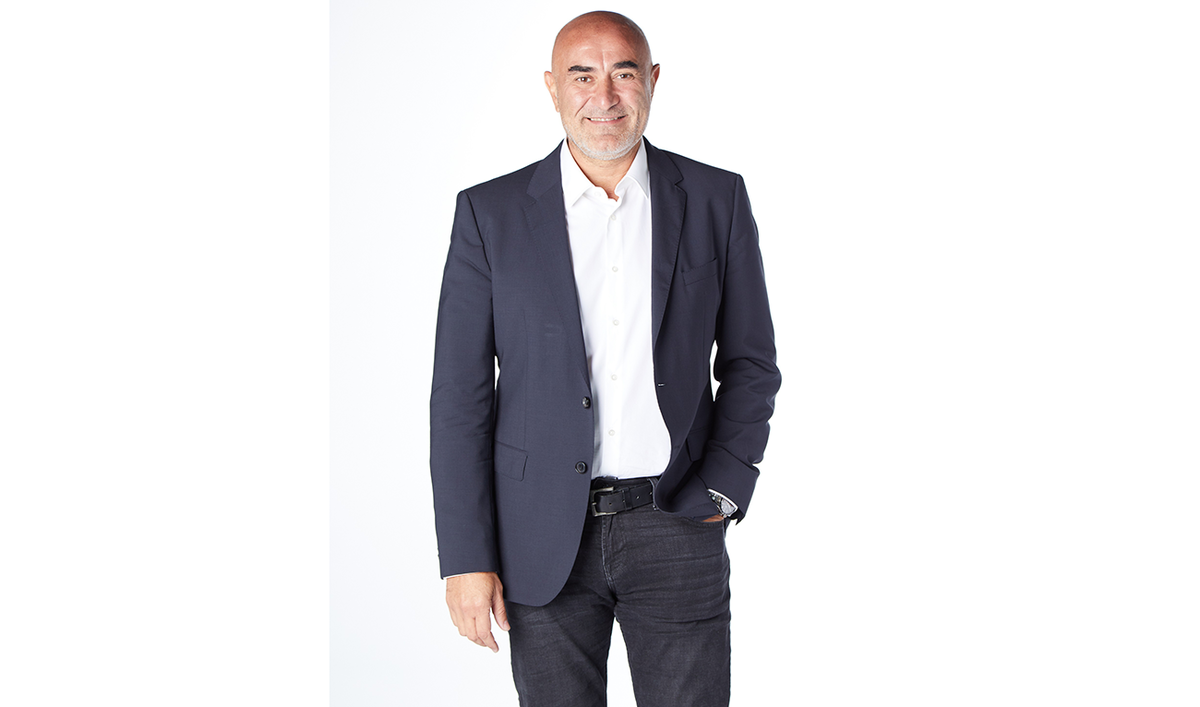


Ronaldo Mouchawar, Vice President of Amazon MENA. (Supplied)

“This was kind of the first Amazon Arabic site. We had to put the infrastructure in Saudi Arabia — 14, 15 stations. We had about 2,000 people and trained them on the systems,” Mouchawar said, adding that the site has performed well.

“We’re seeing high double-digit growth obviously in most of our locales. Very good growth. We don’t report growth by region, but overall the industry is growing and Amazon being newly launched is attracting a lot of customers.”

In its annual report for 2020, Amazon reported a 38 percent growth in net sales in North America and a 40 percent spike in sales internationally. While individual sales figures are not available for individual countries or regions, a review of Google search term trends shows that searches for the term Amazon in Saudi Arabia over the last five years peaked in mid-June last year and the volume of searches for the company has increased by 38 percent in the last 12 months.

A clear indication of the success of the site is the fact that Amazon announced plans in March to hire 1,500 new employees in Saudi Arabia and add 11 buildings to its network. The expansion will boost storage capacity in the Kingdom by 89 percent and its geographical delivery network by 58 percent.

FASTFACTS

• Amazon currently operates three warehouses — known as fulfillment centers — in Riyadh and Jeddah.

• It has 11 delivery stations and two sorting centers in the Kingdom.

• By the end of the year, Amazon will boost the numbers to six warehouses and 13 delivery stations.

• Eleven brand new buildings will be added to the network, while some older facilities will be closed or upgraded.

The global conglomerate currently operates three warehouses — known as fulfillment centers — in Riyadh and Jeddah, as well as 11 delivery stations and two sorting centers. By the end of the year, this will be increased to six warehouses and 13 delivery stations. Eleven brand new buildings will be added to the network, while some older facilities will be closed or upgraded.

By the end of 2021, Amazon’s fulfillment network will reach across a total floor area of over 867,000 square feet. The Seattle-based company is also partnering with Saudi Post and a network of 10 service partners.

According to figures by research firm Statista, e-commerce revenue in Saudi Arabia is set to reach $7.051 billion this year and grow at an annual rate of 5.38 percent to reach $8.697 billion by 2025. The largest segment for consumers is fashion and the average revenue per user is estimated at about $248.69.

Mouchawar said there are three main differences with the Saudi market, which they have adapted into their strategy in the Kingdom. “Obviously the language is one — we had to take care of the language to suit. It’s a very mobile-heavy user base: 80 percent of our customers are on mobile phones. So, as you market to these customers, we have to be aware of that.  “The Saudi customer is fairly younger in demographic,” he added. “We had to make sure also the selection — the product offering — is catering to a younger audience and larger families. Consumables and groceries, for example, are important to us because of the family sizes and the consumption nature,” he said.

A lot of retailers, such as Carrefour, have been setting up their own fulfillment centers in the Kingdom, to cater to the demand in online sales. While some have been adopting artificial intelligence and robotics into their warehouses and are looking at driverless vehicles and drones for transport, Mouchawar believed manpower will still be the core focus of the workforce for some time to come.

“I know there are technologies such as drones and robotics — some help in improving the service and the quality, but also some things are still far away, like a drone delivery in the region requires a lot of different changes to different things,” he said.

As a result, he believes the continued growth of the site will present employment opportunities for young Saudis. “I think there’s a huge opportunity to add people from the region to the team. We’ve been doing that consistently in Saudi Arabia, Jordan and Egypt. I’m very excited about the opportunities that we are able to provide to young people, especially in this sector of content and tech,” he said.


Lower funding costs driving credit growth in Saudi banks

Updated 13 sec ago
Follow

Lower funding costs driving credit growth in Saudi banks

The operating environment for Saudi banks has turned increasingly supportive of credit expansion, reflecting a broad-based decline in key interest-rate benchmarks, including the repurchase and reverse repurchase agreement rates and the Saudi Interbank Offered Rate. 

This easing cycle, evident by November 2025, has reshaped funding conditions across the banking system and reinforced the sector’s capacity to support economic activity.

Policy rate reductions by the Saudi Central Bank have lowered short-term funding costs and contributed to a marked softening in interbank rates. This trend is clearly illustrated by the movement in three-month SAIBOR, which declined to 4.97 percent in November 2025, down from 5.53 percent in the same month a year earlier. The decline signals not only improved liquidity conditions but also strengthening confidence within the interbank market.

In parallel, cuts to repurchase and reverse repurchase agreement rates have further enhanced system-wide liquidity, enabling banks to deploy capital more efficiently. Improved funding affordability has encouraged lenders to continue extending credit, particularly to the corporate sector, while the decline in SAIBOR has translated directly into lower pricing for floating-rate loans. Together, these factors have eased borrowing conditions and strengthened demand for bank financing.

Against this backdrop, the reduction in banks’ cost of funds is expected to incentivize clients—especially small and medium-sized enterprises—to expand their financing needs. 

For SMEs, lower borrowing costs can be pivotal in unlocking investment, supporting working capital requirements, and facilitating business expansion. For banks, stronger credit demand helps offset some of the pressure on net interest margins typically associated with a lower interest-rate environment.

More broadly, declining interest rates are supporting sustained growth in bank lending to the private sector. Saudi banks have demonstrated financial resilience in this environment, adapting effectively to the lower-rate backdrop while maintaining their central role in financing economic activity. Their ability to balance margin management with credit expansion underscores the sector’s operational flexibility.

Saudi banks have responded positively to the reduction in funding costs, as evidenced by the continued and steady expansion of private-sector lending. Total bank credit to the private sector rose by 10.6 percent year on year in November 2025, reaching SR3.1 trillion ($838 billion). This growth reflects both stronger demand and banks’ willingness to lend amid improved funding conditions.

The expansion in credit has been broad-based, with notable gains across segments that are particularly sensitive to interest-rate movements. Lending to SMEs has shown especially strong momentum. Total bank credit to SMEs reached SR427.7 billion in the third quarter of 2025, accounting for 11 percent of total private-sector lending, compared with SR311.8 billion in the same period of 2024, when SMEs represented 9.1 percent of the lending portfolio. This shift highlights the growing role of SMEs in the Kingdom’s economic landscape.

Mortgage lending has also maintained its upward trajectory, increasing by 10.8 percent to around SR938 billion in the third quarter of 2025. Lower financing costs, combined with ongoing housing initiatives, have continued to support demand for residential mortgages, reinforcing the banking sector’s contribution to higher homeownership rates.

Household credit demand strengthened further in the third quarter of 2025. Consumer loans totaled SR476.6 billion, while credit card lending reached SR33.4 billion. These segments recorded year-on-year growth of 3.1 percent and 10.3 percent, respectively, reflecting both improved consumer confidence and more favorable borrowing conditions.

Islamic banking has remained a key driver of sectoral growth, supported by rising demand for Shariah-compliant products. Total Islamic financing reached SR2.7 trillion in the third quarter of 2025, representing a year-on-year increase of 13.5 percent. This expansion underscores the depth and maturity of Islamic finance within the Saudi banking system.

Importantly, the growth in credit has been underpinned by the sector’s strong capital position, ample reserves, and solid profitability metrics, all of which reinforce financial soundness. In November 2025, capital and reserves accounted for 18.76 percent of total deposits, comfortably exceeding regulatory requirements.

Aggregate net income before zakat and taxes rose to SR93.7 billion, up 16.7 percent from SR80.3 billion a year earlier, highlighting banks’ ability to generate earnings despite a lower-rate environment.

In sum, the easing of monetary conditions has created a favorable operating environment for Saudi banks, supporting robust credit growth across corporate, SME, mortgage, household, and Islamic banking segments. This expansion, driven by a lower cost of funds, aligns closely with the objectives of Saudi Vision 2030, particularly in fostering private-sector development, expanding SME participation, increasing homeownership, and deepening the Islamic finance ecosystem.

While lending growth has outpaced deposit growth, Saudi banks have maintained prudent liquidity positions and financial resilience. Diversified funding sources, effective balance-sheet management, and improved funding affordability have enabled the sector to navigate this phase of the cycle.

Within the framework of the Kingdom’s countercyclical economic policy approach, sustained credit expansion alongside declining funding costs is expected to support non-oil economic activity, enhance financial intermediation, and help banks manage profitability pressures while contributing to overall macroeconomic stability.


Talat Zaki Hafiz is an economist and financial analyst.

X: @TalatHafiz