

Saudi SMEs see rise in loan guarantees

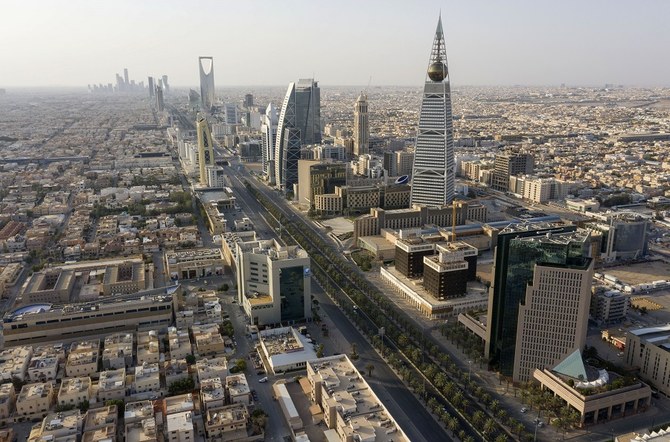
The Kingdom’s Vision 2030 reform plan has emphasized the importance of small and medium-sized enterprises (SMEs) to Saudi economic growth. (File/Shutterstock)
Short Url
Updated 16 March 2021
Follow

Saudi SMEs see rise in loan guarantees

  • The initiative issued $3.3 billion in loan guarantees, responding to 5,720 requests in 2020

RIYADH: The total number of loan guarantees processed by Saudi Arabia’s Kafalah program increased by 106 percent year-on-year in the fourth quarter of 2020, with total expenditure exceeding $900 million, according to official figures.

Kafalah — launched in 2006 by the Saudi Industrial Development Fund and Saudi banks — sped up its internal operations during the pandemic year, issuing approvals within one week in response to the high number of requests received.

The increase in processed loan guarantees coincided with the signing of 13 new cooperation agreements with financing companies licensed by the Saudi Central Bank, which contributed to the increase from the previous year.

The initiative issued $3.3 billion in loan guarantees, responding to 5,720 requests in 2020 — an increase of 156 percent.

The Kingdom’s Vision 2030 reform plan has emphasized the importance of small and medium-sized enterprises (SMEs) to Saudi economic growth.

Kafalah seeks to achieve this goal with all its initiatives and products, in cooperation with the General Authority for SMEs (Monsha’at) and the National Development Fund (NDF).

Kafalah Chairman Dr. Fahad Ibrahim Alshathri said four initiatives have been launched, in the Hajj and Umrah, education and supply chain sectors — in cooperation with the NDF — to support the Saudization drive and counter the economic effects of the coronavirus pandemic.

The financial packages provided will help stimulate SMEs in sectors such as education, tourism, entertainment and culture by obtaining the necessary funding for them to expand nationwide, as well as encourage other financial institutions to deal with more SMEs.


Closing Bell: Saudi main market ends week in red at 11,189

Updated 05 February 2026
Follow

Closing Bell: Saudi main market ends week in red at 11,189

RIYADH: Saudi Arabia’s Tadawul All Share Index closed lower at the end of the trading week on Thursday, falling 1.34 percent, or 152.54 points, to finish at 11,188.73. 

The benchmark index opened at 11,320.52 and trended lower throughout the session, finishing well below its previous close of 11,341.27.  

Market breadth was sharply negative, with only 28 gainers compared with 236 decliners. Trading activity saw a volume of 239 million shares exchanged, with total turnover reaching SR5.5 billion ($1.47 billion). 

In the parallel market, Nomu closed higher, rising 0.23 percent to 23,865.95, although decliners continued to outnumber advancers. The MT30 index closed at 1,508.60, down 1.46 percent, shedding 22.38 points by the end of the session. 

Among the session’s top gainers, Dar Al Majed Real Estate Co. led advances, rising 5.43 percent to close at SR9.91. 

Al Aziziah REIT Fund added 4.67 percent to SR4.48, while Al Majed Oud Co. gained 2.81 percent to SR161.20. AFG International Co. advanced 2.45 percent to SR17.17, and Al Mawarid Manpower Co. rose 1.37 percent to SR125.70.

On the losing side, Saudi Research and Media Group posted the steepest decline, falling 6.88 percent to SR107. Cherry Trading Co. dropped 6.23 percent to SR28.88, while Saudi Arabian Mining Co. slipped 5.41 percent to SR72.55.  

Almasane Alkobra Mining Co. declined 5.38 percent to SR102, and Power and Water Utility Co. for Jubail and Yanbu ended 4.56 percent lower at SR31.36. 

On the announcements front, Saudi Industrial Investment Group released its interim financial results for the twelve-month period ended Dec. 31, 2025, reporting a return to profitability on an annual basis despite posting a quarterly loss.  

The company recorded a net loss of SR104 million in the fourth quarter, compared with a net profit of SR201 million in the same quarter of the previous year, which it attributed mainly to lower selling prices, higher operating costs, and increased general and administrative expenses.  

For the full year, however, the group posted a net profit attributable to shareholders of SR197 million, compared with SR161 million a year earlier, supported by higher sales volumes and improved operational performance at several subsidiaries. The stock last traded at SR14.77, down 3.59 percent. 

Separately, Saudi Exchange Co. announced the approval of a request by Merrill Lynch Kingdom of Saudi Arabia to terminate its market-making activities for Saudi Arabian Oil Co., effective Feb. 8.

The exchange said the termination relates specifically to the market-making agreement for Saudi Aramco shares and was approved in line with applicable market-making regulations.