

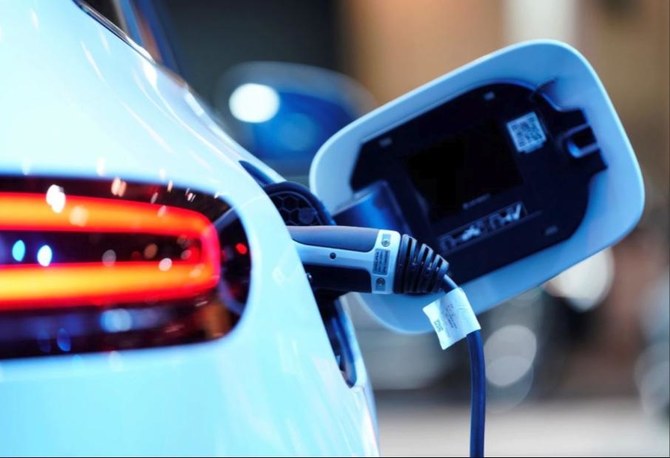
Electric vehicles double market share in Europe in the second quarter

Daimler said yesterday it plans to invest more than $47 billion by 2030 to transition to electric vehicles. (Reuters)
Short Url
Updated 23 July 2021
Follow

Electric vehicles double market share in Europe in the second quarter

  • All-electric vehicles accounted for 7.5 percent of new car sales in Europe
  • Sales of battery electric vehicles more than tripled across Europe to 210,298 cars

PARIS: Electric vehicles more than doubled their share of new car sales in Europe in the second quarter, with hybrids also making gains, the European Automobile Manufacturers’ Association (ACEA) said Friday.
All-electric vehicles accounted for 7.5 percent of new car sales in Europe in the three months from April through June, against 3.5 percent during that period last year.
In absolute terms, sales of battery electric vehicles more than tripled across Europe to reach 210,298 cars.
The ACEA said there were substantial gains in the region’s top four markets, led by sales more than quadrupling in Spain and Germany.
“Plug-in hybrid electric vehicles (PHEVs) had an even more impressive second quarter of 2021, with registrations jumping by 255.8 percent to 235,730 units,” said the ACEA.
Sales of hybrids also more than tripled to 541,162 vehicles, remaining the largest category of alternatively-powered cars.
Meanwhile, registrations of new petrol and diesel vehicles increased given the low number of vehicles sold in the second quarter last year, when many European countries had severe restrictions on businesses due to the pandemic.
But in terms of market share, both petrol and diesel saw huge drops.
Diesel saw its market share plunge to 20.4 percent from 29.4 percent.
Petrol had a bigger contraction, to 41.8 percent from 51.9 percent.
Automakers are stepping up their plans to shift to all-electric production.
Yesterday, Mercedes-Benz maker Daimler said it plans to invest more than 40 billion euros ($47 billion) by 2030 to be ready to take on Tesla in an all-electric car market, but warned the shift in technology would lead to job cuts.

Outlining its strategy for an electric future, the inventor of the modern motor car said on Thursday it would, with partners, build eight battery plants as it ramps up electric vehicle (EV) production.

From 2025, all new vehicle platforms will only make EVs, the German luxury automaker added.

“We really want to go for it ... and be dominantly, if not all electric, by the end of the decade,” Chief Executive Ola Källenius told Reuters, adding that spending on traditional combustion-engine technology would be “close to zero” by 2025.

However, Daimler — to be renamed Mercedes-Benz as part of plans to spin off its trucks division later this year — stopped short of giving a hard deadline for ending sales of fossil-fuel cars.

Some carmakers like Geely-owned Volvo Cars have committed to going all electric by 2030, while General Motors Co. (GM.N) says it aspires to be fully electric by 2035, as they all try to close the gap to industry leader Tesla.


Saudi investment pipeline active as reforms advance, says Pakistan minister

Updated 08 February 2026
Follow

Saudi investment pipeline active as reforms advance, says Pakistan minister

ALULA: Pakistan’s Finance Minister Mohammed Aurangzeb described Saudi Arabia as a “longstanding partner” and emphasized the importance of sustainable, mutually beneficial cooperation, particularly in key economic sectors.

Speaking to Arab News on the sidelines of the AlUla Conference for Emerging Market Economies, Aurangzeb said the relationship between Pakistan and Saudi Arabia remains resilient despite global geopolitical tensions.

“The Kingdom has been a longstanding partner of Pakistan for the longest time, and we are very grateful for how we have been supported through thick and thin, through rough patches and, even now that we have achieved macroeconomic stability, I think we are now well positioned for growth.”

Aurangzeb said the partnership has facilitated investment across several sectors, including minerals and mining, information technology, agriculture, and tourism. He cited an active pipeline of Saudi investments, including Wafi’s entry into Pakistan’s downstream oil and gas sector.

“The Kingdom has been very public about their appetite for the country, and the sectors are minerals and mining, IT, agriculture, tourism; and there are already investments which have come in. For example, Wafi came in (in terms of downstream oil and gas stations). There’s a very active pipeline.”

He said private sector activity is driving growth in these areas, while government-to-government cooperation is focused mainly on infrastructure development.

Acknowledging longstanding investor concerns related to bureaucracy and delays, Aurangzeb said Pakistan has made progress over the past two years through structural reforms and fiscal discipline, alongside efforts to improve the business environment.

“The last two years we have worked very hard in terms of structural reforms, in terms of what I call getting the basic hygiene right, in terms of the fiscal situation, the current economic situation (…) in terms of all those areas of getting the basic hygiene in a good place.”

Aurangzeb highlighted mining and refining as key areas of engagement, including discussions around the Reko Diq project, while stressing that talks with Saudi investors extend beyond individual ventures.

“From my perspective, it’s not just about one mine, the discussions will continue with the Saudi investors on a number of these areas.”

He also pointed to growing cooperation in the IT sector, particularly in artificial intelligence, noting that several Pakistani tech firms are already in discussions with Saudi counterparts or have established offices in the Kingdom.

Referring to recent talks with Saudi Minister of Economy and Planning Faisal Alibrahim, Aurangzeb said Pakistan’s large freelance workforce presents opportunities for deeper collaboration, provided skills development keeps pace with demand.

“I was just with (Saudi) minister of economy and planning, and he was specifically referring to the Pakistani tech talent, and he is absolutely right. We have the third-largest freelancer population in the world, and what we need to do is to ensure that we upscale, rescale, upgrade them.”

Aurangzeb also cited opportunities to benefit from Saudi Arabia’s experience in the energy sector and noted continued cooperation in defense production.

Looking ahead, he said Pakistan aims to recalibrate its relationship with Saudi Arabia toward trade and investment rather than reliance on aid.

“Our prime minister has been very clear that we want to move this entire discussion as we go forward from aid and support to trade and investment.”