

UN human rights chief condemns Iranian attacks on water-crisis protesters

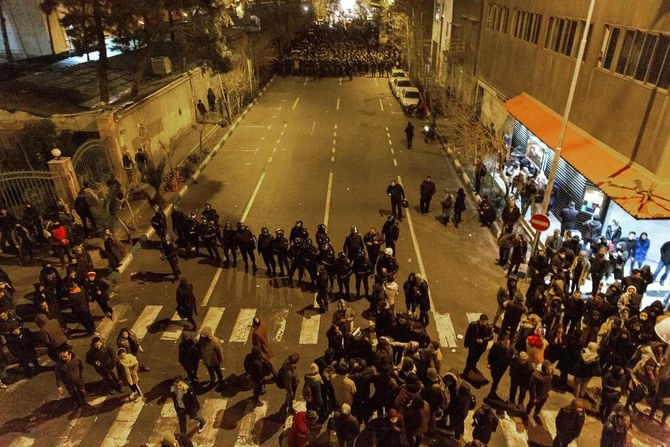
UN rights chief Michelle Bachelet told Iran on Friday to address the chronic water shortage in Khuzestan province rather than use excessive force to crush protests. (File/AFP)
Short Url
Updated 24 July 2021
Follow

UN human rights chief condemns Iranian attacks on water-crisis protesters

  • “Shooting and arresting people will simply add to the anger and desperation,” said Michelle Bachelet
  • The protests are in Khuzestan province which is home to much of Iran’s ethnically Arab population

LONDON: The UN’s leading human rights official on Friday condemned recent deadly assaults on protesters in Iran.

High Commissioner for Human Rights Michelle Bachelet called on the Iranian government to focus on addressing the “chronic water shortage” in Khuzestan province, which sparked the demonstrations, rather than “crushing protests.”

“The impact of the devastating water crisis on life, health and prosperity of the people of Khuzestan should be the focus of the government’s attention, not the protests carried out by people driven to desperation by years of neglect,” she said.

“I am extremely concerned about the deaths and injuries that have occurred over the past week, as well as the widespread arrests and detention.”

The UN and rights groups have condemned the Iranian regime’s “disproportionate” response to the protests. According to Amnesty International, at least eight people have been killed by security forces since the demonstrations began last week in the south-eastern province, which is home to many of the country’s ethnically Arab residents.

Khuzestan used to be the country’s main and most reliable source of water, according to the UN, but “mismanagement over many years, including the diversion of water to other parts of the country, coupled with nationwide droughts, has drained the province of its precious, life-saving resource.”

BACKGROUND

One person was shot dead when rioting erupted in western Iran late on Thursday in sympathy with the drought-hit province of Khuzestan.

Desperate for water, people took to the streets chanting: “I am thirsty, water is my right.” Bachelet said that the UN, through a General Assembly ruling, agrees that access to safe drinking water is a basic human right.

“Water is indeed a right,” she said. “But instead of heeding the legitimate calls by citizens for that right to be upheld, the authorities have for the most part concentrated on oppressing those making those calls.

“The situation is catastrophic and has been building up for many years. The authorities need to recognize that and act accordingly. Shooting and arresting people will simply add to the anger and desperation.”

Ethnic minorities in Iran have long faced oppression at the hands of the state, which favors Shiites and Persian-speakers to the detriment of religious and linguistic minorities. Non-Persian ethnicities, including Arabs, Azeris, Kurds and others, face economic marginalization, unfair treatment by the legal system, disappearances and even executions following sham trials, according to Amnesty.

Last year, “ethnic and religious minorities faced entrenched discrimination as well as violence,” the organization said in a report. “Enforced disappearances, torture and other ill treatment were committed with impunity on a widespread and systematic basis.”

However it “is never too late to change tack,” Bachelet said. “And the government of Iran desperately needs to change tack, beginning with issuing clear instructions to security forces to abide by international standards on the use of force.”


Trump warns Iran of ‘very traumatic’ outcome if no nuclear deal

Updated 12 February 2026
Follow

Trump warns Iran of ‘very traumatic’ outcome if no nuclear deal

  • Speaking a day after he hosted Netanyahu at the White House, Trump said he hoped for a result “over the next month”

WASHINGTON: US President Donald Trump threatened Iran Thursday with “very traumatic” consequences if it fails to make a nuclear deal — but Israeli Prime Minister Benjamin Netanyahu said he was skeptical about the quality of any such agreement.
Speaking a day after he hosted Netanyahu at the White House, Trump said he hoped for a result “over the next month” from Washington’s negotiations with Tehran over its nuclear program.
“We have to make a deal, otherwise it’s going to be very traumatic, very traumatic. I don’t want that to happen, but we have to make a deal,” Trump told reporters.
“This will be very traumatic for Iran if they don’t make a deal.”
Trump — who is considering sending a second aircraft carrier to the Middle East to pressure Iran — recalled the US military strikes he ordered on Tehran’s nuclear facilities during Israel’s 12-day war with Iran in July last year.
“We’ll see if we can get a deal with them, and if we can’t, we’ll have to go to phase two. Phase two will be very tough for them,” Trump said.
Netanyahu had traveled to Washington to push Trump to take a harder line in the Iran nuclear talks, particularly on including the Islamic Republic’s arsenal of ballistic missiles.
But the Israeli and US leaders apparently remained at odds, with Trump saying after their meeting at the White House on Wednesday that he had insisted the negotiations should continue.

- ‘General skepticism’ -

Netanyahu said in Washington on Thursday before departing for Israel that Trump believed he was laying the ground for a deal.
“He believes that the conditions he is creating, combined with the fact that they surely understand they made a mistake last time when they didn’t reach an agreement, may create the conditions for achieving a good deal,” Netanyahu said, according to a video statement from his office.
But the Israeli premier added: “I will not hide from you that I expressed general skepticism regarding the quality of any agreement with Iran.”
Any deal “must include the elements that are very important from our perspective,” Netanyahu continued, listing Iran’s ballistic missile program and its support for armed groups such as the Palestinian movement Hamas, Yemen’s Houthi rebels and Hezbollah in Lebanon.
“It’s not just the nuclear issue,” he said.
Despite their differences on Iran, Trump signaled his strong personal support for Netanyahu as he criticized Israeli President Isaac Herzog for rejecting his request to pardon the prime minister on corruption charges.
“You have a president that refuses to give him a pardon. I think that man should be ashamed of himself,” Trump said on Thursday.
Trump has repeatedly hinted at potential US military action against Iran following its deadly crackdown on protests last month, even as Washington and Tehran restarted talks last week with a meeting in Oman.
The last round of talks between the two foes was cut short by Israel’s war with Iran and the US strikes.
So far, Iran has rejected expanding the new talks beyond the issue of its nuclear program. Tehran denies seeking a nuclear weapon, and has said it will not give in to “excessive demands” on the subject.