Saudi sculptor spends 8 years carving words of Qur’an onto 30 marble slabs

1 / 5
Husban bin Ahmad Al-Enizi used Ottoman calligraphy to create his Qur’an sculpture on green marble slabs. (SPA)
2 / 5
Husban bin Ahmad Al-Enizi used Ottoman calligraphy to create his Qur’an sculpture on green marble slabs. (SPA)
3 / 5
Husban bin Ahmad Al-Enizi used Ottoman calligraphy to create his Qur’an sculpture on green marble slabs. (SPA)
4 / 5
Husban bin Ahmad Al-Enizi used Ottoman calligraphy to create his Qur’an sculpture on green marble slabs. (SPA)
5 / 5
Husban bin Ahmad Al-Enizi used Ottoman calligraphy to create his Qur’an sculpture on green marble slabs. (SPA)
Short Url
Updated 15 July 2021
Follow

Saudi sculptor spends 8 years carving words of Qur’an onto 30 marble slabs

TABUK: A Saudi sculptor who spent eight years carving the words of the Holy Qur’an onto 30 marble slabs hopes his feat will be recognized by Guinness World Records.

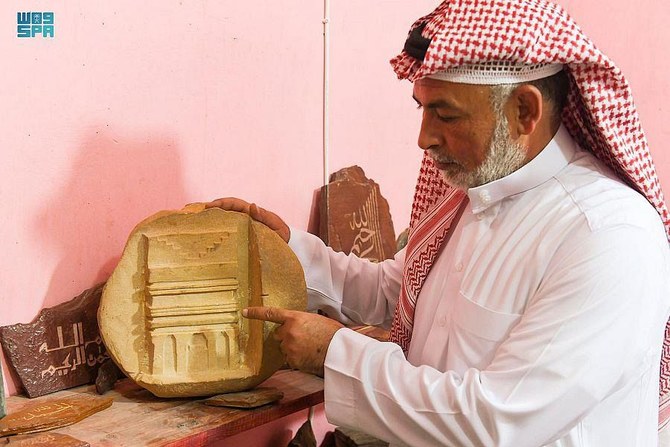
Husban bin Ahmad Al-Enizi’s passion for the art started 20 years ago after he developed an interest in the Arabic language.

He went on to sculpt a stone encyclopedia of basmalah (the opening part of the Qur’an) on blocks and granite sourced from his base in the Tabuk region.
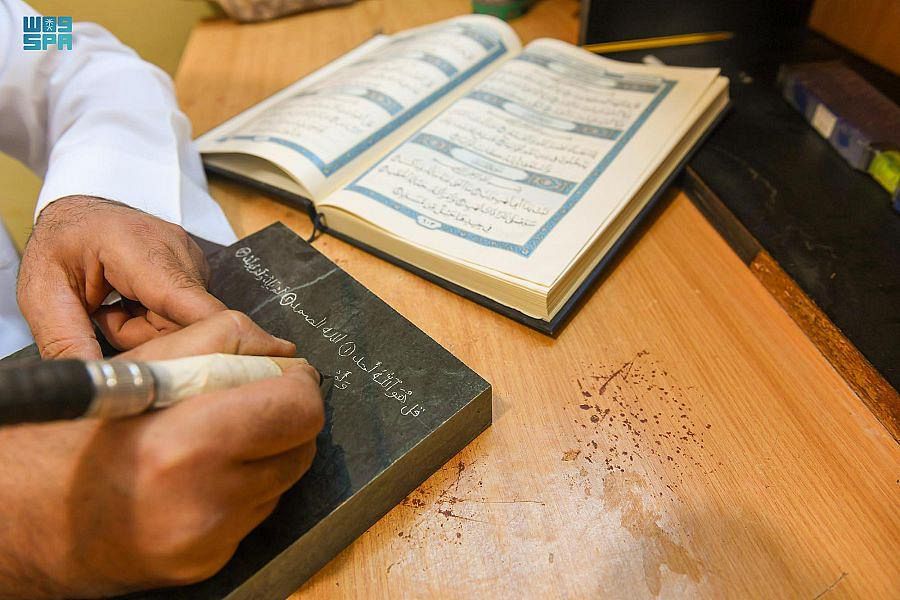


Husban bin Ahmad Al-Enizi used Ottoman calligraphy to create his Qur’an sculpture on green marble slabs. (SPA) 

The artist has taken part in numerous craft events and festivals held throughout the Kingdom and he aims to establish a center to train young people in the art and produce the next generation of Saudi sculptors.

Al-Enizi used Ottoman calligraphy to create his Qur’an sculpture on green marble slabs and said that the Tabuk region, in northwestern Saudi Arabia, with its many castles and palaces, had inspired artists down through the centuries.

The region has been home to the Thamud, Aramean, and Nabataean people, among other tribes, and archaeological sites show human presence dating back several centuries B.C.

Ancient inhabitants of the area produced ploughs, boats, and even houses by carving in wood and stone and Al-Enizi noted that the Saudi government had helped to keep sculpting and other traditional arts and crafts alive through the establishment of the Heritage Commission.
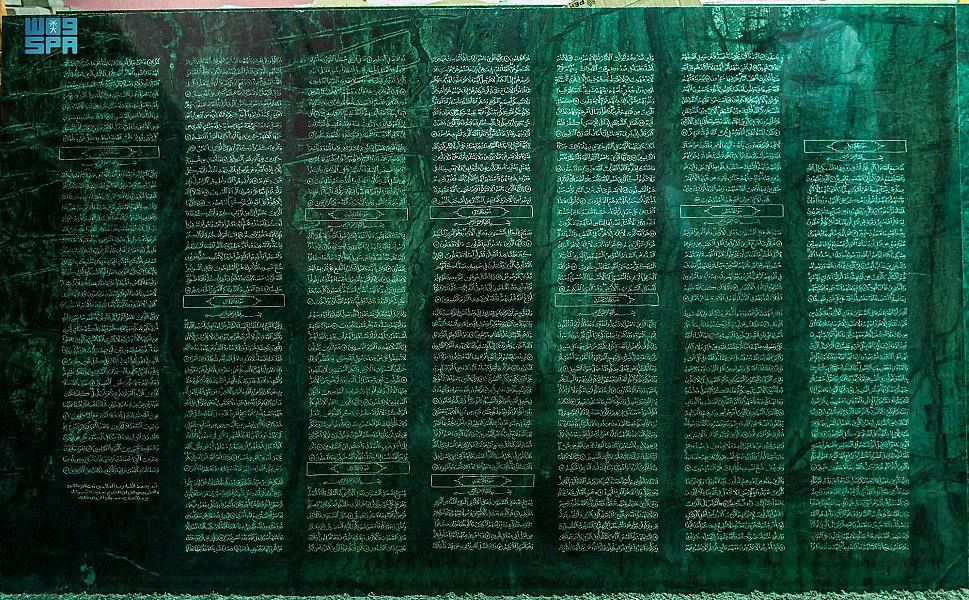


Husban bin Ahmad Al-Enizi used Ottoman calligraphy to create his Qur’an sculpture on green marble slabs. (SPA) 


King Abdulaziz Foundation reveals rare images from king’s 1916 Basra visit

Updated 20 December 2025
Follow

King Abdulaziz Foundation reveals rare images from king’s 1916 Basra visit

  • Photographs form part of a wider collection documented by British photographer Gertrude Bell

RIYADH: The King Abdulaziz Foundation has revealed archival photographs documenting King Abdulaziz’s tour of the outskirts of Basra in 1916, a visit that came at an early stage of his efforts to build regional relationships.

One of the photographs, taken by British photographer Gertrude Bell, shows King Abdulaziz standing with his men in the Basra desert, the Saudi Press Agency reported. 

The image reflects his early political and diplomatic engagement in the region, as he sought to strengthen ties with neighboring areas and engage with the wider Arab and international community, SPA added.

The photograph forms part of a wider collection documented by Bell, which records key developments and transformations across the Arabian Peninsula during the early 20th century.

The Basra visit holds particular significance in King Abdulaziz’s journey as a unifying leader. 

Rather than crossing borders in pursuit of power, the visit reflected an approach focused on stability, cooperation and long-term regional harmony, laying the groundwork for a leadership style defined by pragmatism and openness, SPA said.